Google Aggregator Unit Adds Things To Do Queries in the EEA
The Google aggregator unit and supplier unit now support things to do queries in the EEA. What changed on November 9 and how tour sellers can prepare.


In this article
The Google aggregator unit now covers one more kind of search. On November 9, 2026, Google’s Search documentation changelog added an entry saying the aggregator unit and the supplier unit “now support ‘things to do’ queries.” That means searches for tours, attractions and activities can now show these special units for users in the European Economic Area (EEA).
This matters to two groups: booking platforms and directories that list activities, and the tour operators, museums and attractions that sell directly. Both now have a dedicated place in EEA results for this type of query.
It is also the second expansion in two months. On September 18, 2026, Google added local business queries to the same units. Here is what the units are, what changed, and what to do if you sell experiences to European users.
What the Google aggregator unit and supplier unit are
According to Google’s aggregator unit documentation, the aggregator unit is a search feature that shows results from several Vertical Search Services, such as online travel agencies, comparison shopping services, metasearch engines and directories. The top ranked provider is expanded by default, users can switch to other providers, and only one aggregator unit appears at a time.
The supplier unit is the companion feature for direct providers, such as a single hotel, a store or a service business. Google says it only appears when the aggregator unit is shown, and that it gathers supplier information through normal crawling, so no extra data is required for a supplier to appear. Optional supplier feeds can improve the results.
Both units apply only to users in EEA countries.
What changed on November 9
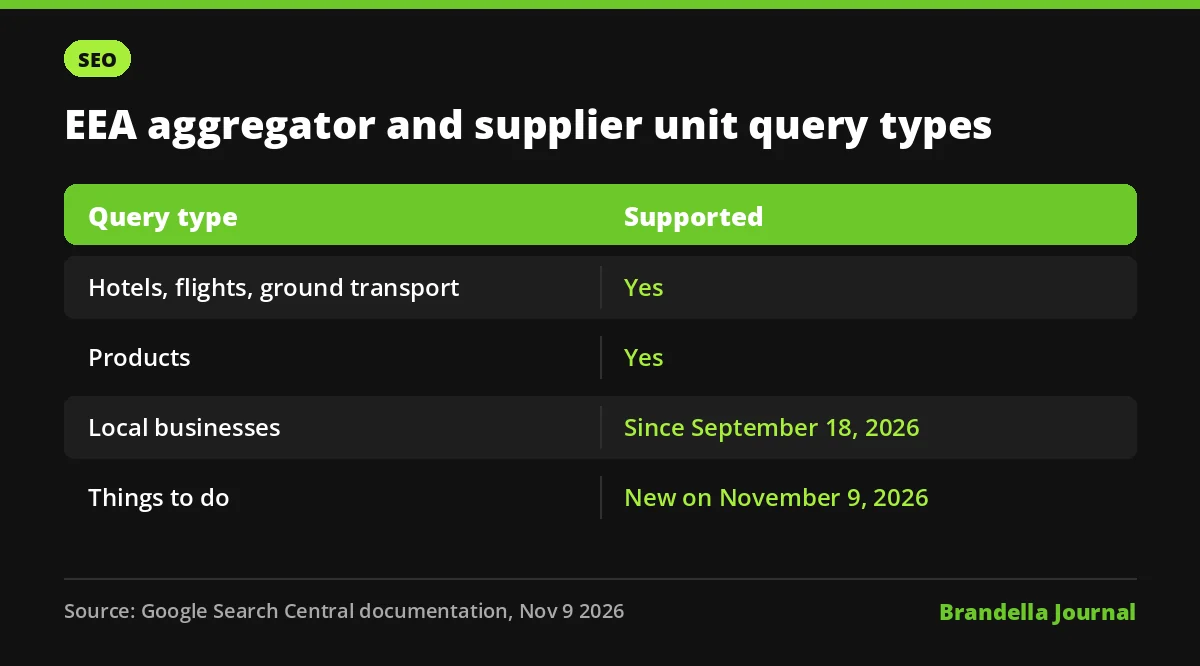
Google’s page on regional differences in Search, also updated November 9, 2026, now lists these query types for both units.
| Query type | Before September 18 | From September 18 | From November 9 |
|---|---|---|---|
| Hotels | Yes | Yes | Yes |
| Flights | Yes | Yes | Yes |
| Ground transportation | Yes | Yes | Yes |
| Products | Yes | Yes | Yes |
| Local businesses | No | Yes | Yes |
| Things to do | No | No | Yes |
The same page lists things to do as a supported type for structured data carousels (beta) in the EEA, South Africa and Türkiye. Google says those carousels require structured data markup on your site.
One thing to note: the changelog does not give a rollout date for the live search results or details of a things to do data feed. When we read the aggregator unit page, its feed section still listed only hotels, ground transportation, flights, products and local businesses. Check the live documentation before you plan any integration work.
Who the Google aggregator unit change affects
Activity platforms and directories. If you run a site that compares or books tours, tickets or experiences for European users, you may now be eligible for the aggregator unit on these queries. Google says aggregators must be approved as a Vertical Search Service, provide the required data, meet quality standards, have relevant content for the query type and follow Search content policies.
Direct sellers. Tour operators, attractions, museums and activity providers are the suppliers in this setup. Because the supplier unit uses crawled data, your own website content is what Google works from.
Sites outside Europe. If your audience is not in the EEA, nothing changes in your results. But if you sell to European tourists from anywhere, these units can appear when those users search.
What tour operators and activity sites should do now
These steps are Brandella’s recommendations based on Google’s documentation, not official Google guidance.
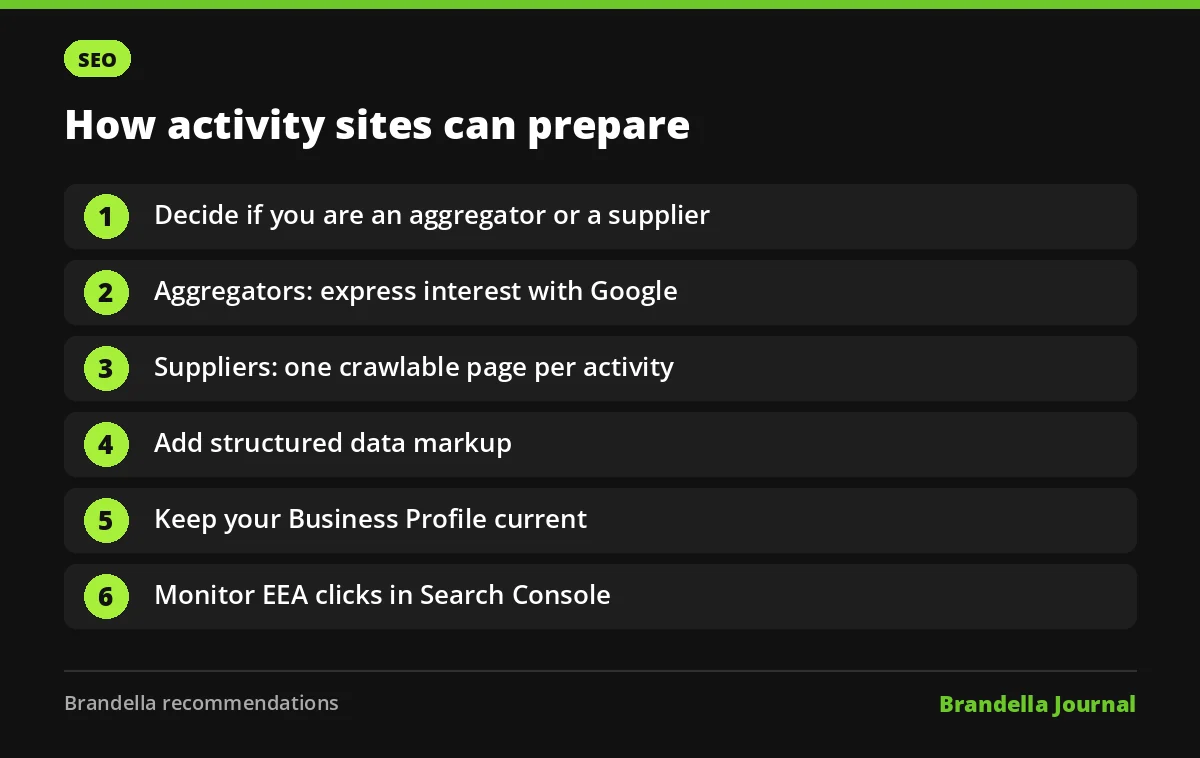
- Decide which role fits you. If you list many providers, you are an aggregator. If you sell your own tours or tickets, you are a supplier. The work is different for each.
- Aggregators: express interest. Google’s aggregator documentation points EEA businesses to the Google Search Aggregator Features form for travel and local business types. Check that page for the current route for things to do.
- Suppliers: make each activity crawlable. Give every tour or attraction its own indexable page with a clear name, location, duration, price and availability. Google’s best practices for these units ask for rich details, accurate names without promotional text and good images.
- Add structured data. Since structured data carousels require markup, mark up your pages properly. Our guides on what schema markup is and how to add JSON-LD cover the basics, and LocalBusiness schema helps if you have a physical venue.
- Keep your Business Profile current. Attractions with a physical location should keep hours, photos and categories accurate. See our Google Business Profile guide.
- Monitor EEA traffic. In the Search Console Performance report, filter by EEA countries and watch clicks and impressions on your activity pages over the next few weeks.
Why this update is worth watching
Google has now expanded these EEA units twice in about two months, first to local businesses and now to things to do. Each step brings a new set of businesses into a results layout where aggregators and direct suppliers are shown side by side.
For travel and leisure brands that rely on European visitors, this is a good moment to audit activity pages before peak booking season. Clean, crawlable pages with accurate details are what both units draw on, and that work also helps your regular organic rankings.