LinkedIn Profile Relevance: How the Feed Now Matches Your Posts
LinkedIn Profile Relevance uses LLM embeddings to match posts with members outside your network. How it works and how to adjust your LinkedIn content.

In this article
LinkedIn Profile Relevance is a new part of the LinkedIn feed that decides which posts from people outside your network you get to see. LinkedIn’s engineering team described the system in a post titled Profile Relevance: Boosting Feed Relevance with LLMs at LinkedIn, which Social Media Today covered on November 9, 2026.
In short, LinkedIn uses large language models to read a member’s profile and a post, then scores how well the two fit. For creators, brands and B2B marketers, that changes what helps a post travel beyond its first circle of connections.
This post explains how the model works, the results LinkedIn reported, and what you can change in your profile and content today.
How LinkedIn Profile Relevance works
According to a daily.dev summary of the engineering post, Profile Relevance is a retrieval system that uses LLM generated embeddings to match members with posts from outside their network. It builds an embedding from a member’s public profile, including headline, skills, and work and education history, and compares it with post embeddings.
Social Media Today, citing LinkedIn engineer Shiyong Lin, says the system condenses each member’s profile and posting history into a summary of likely interests. It then “evaluates how well each post matches a member’s professional context” across topic, location, job title, company, industry, seniority and education.
So the feed is not only asking whether a post is popular. It is asking whether this post fits this professional.
Two ways LinkedIn reads a post
The daily.dev summary describes two approaches LinkedIn tested:
| Approach | How it works | Trade off |
|---|---|---|
| Rewrite | A large generative model condenses the post and extracts topics before embedding | Cheaper, but loses some context |
| Non Rewrite | A retrieval optimised embedding model reads the raw text | Keeps richer context |
LinkedIn also found that the Rewrite approach lost geographic signal, and that appending country names recovered it. For anyone targeting a specific market, that is a useful detail: location is part of how relevance is judged.
The results LinkedIn reported
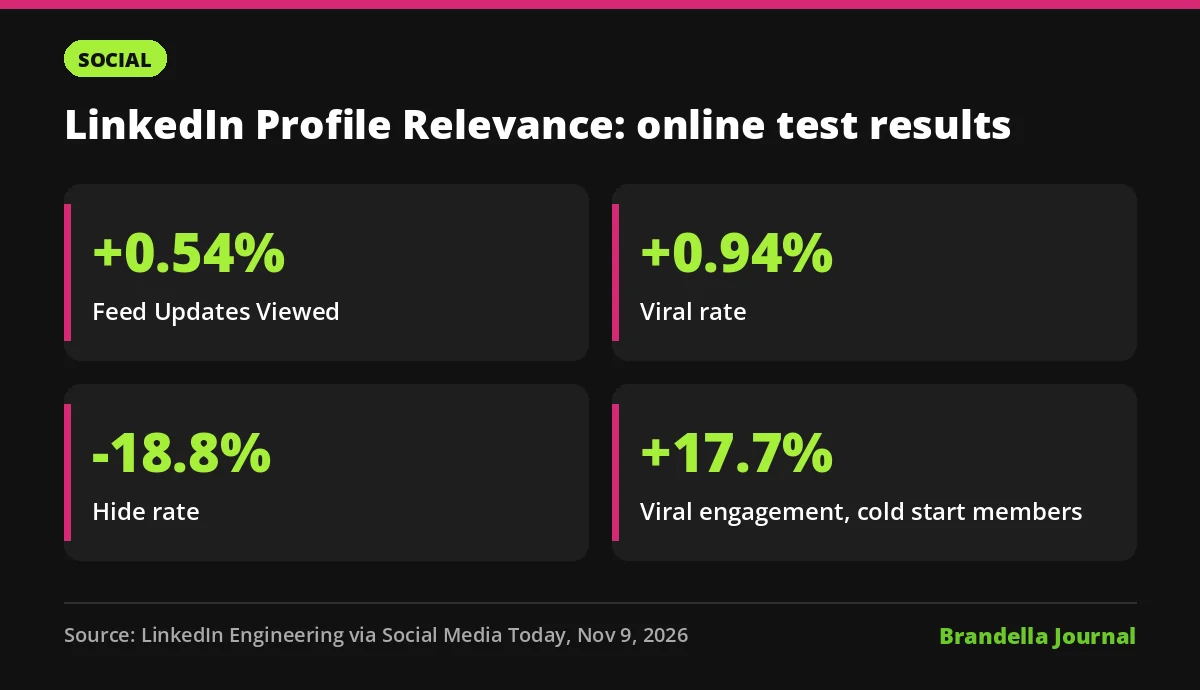
Social Media Today reports these results from LinkedIn’s online experiments:
- Feed Updates Viewed rose by 0.54%.
- Viral rate rose by 0.94%.
- Hide rate fell by 18.8%.
- For cold start members with little activity, viral engagement rose 17.7% and daily active users rose 1.8%.
The biggest number is the drop in hide rate. People were far less likely to hide posts they were shown, which suggests the matches felt more relevant. LinkedIn says the change should also help creators reach relevant audiences beyond their immediate networks.
What LinkedIn Profile Relevance means for B2B marketers
If the feed compares posts with member profiles, then clarity about who a post is for matters more than ever. A vague, general post gives the model little to match. A post that clearly speaks to, say, finance leaders in India gives it topic, role, seniority and location signals all at once.
Your own profile matters too. The same system reads the profiles of the people who might see your post, so posting consistently on one professional theme helps LinkedIn understand which audience you serve. This builds on LinkedIn’s earlier move to LLM based feed ranking reported in March 2026, and on why LinkedIn is so often cited in AI answers, which we covered in LinkedIn AI search citations.
What to do now on LinkedIn
These steps are Brandella’s recommendations based on how LinkedIn describes the system. LinkedIn has not published a posting guide for Profile Relevance.
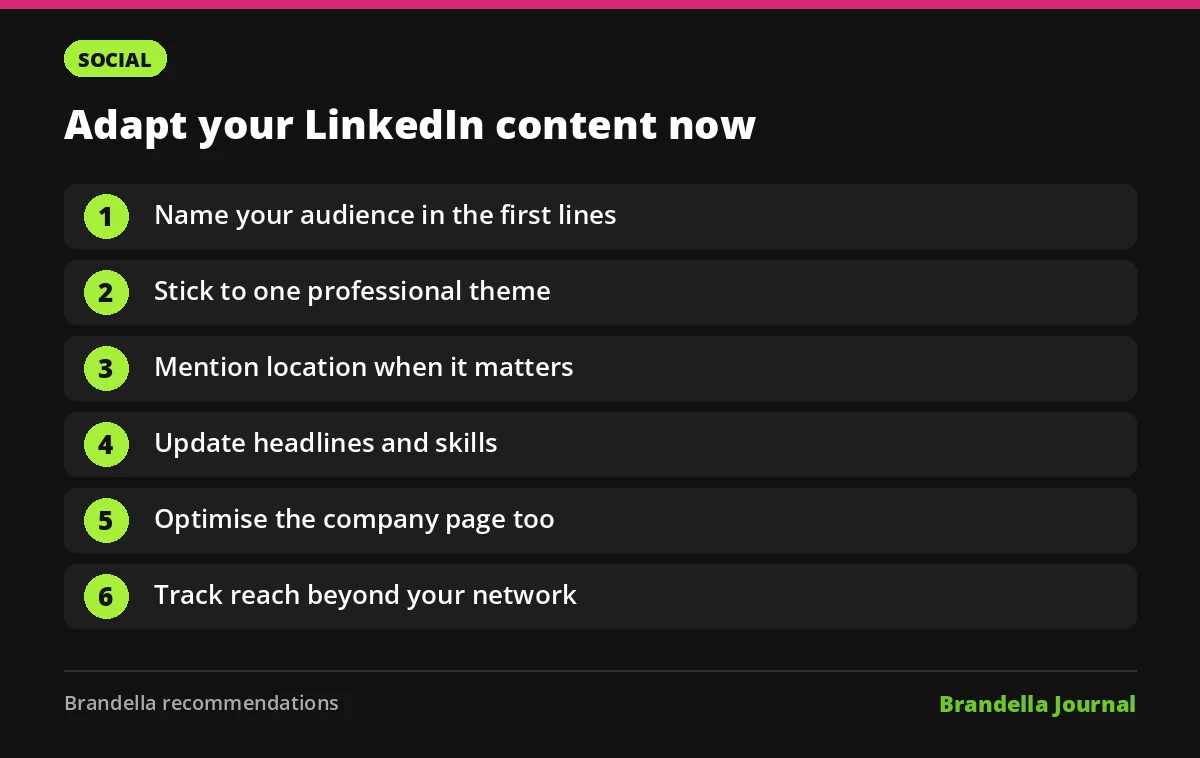
- Name your audience in the first lines. Say plainly who the post is for, such as “for SaaS marketers” or “for HR heads in Bengaluru”, so the topic and role are easy to read.
- Stick to one professional theme. Post repeatedly on a clear area of expertise instead of jumping between topics. Our LinkedIn marketing strategy guide covers how to choose content pillars.
- Mention location when it matters. LinkedIn found geography was part of relevance, so name the city or country when your offer is local.
- Update headlines and skills. Make sure your profile, and your team’s profiles, describe the work you do in plain terms. The model reads headline, skills and work history.
- Optimise the company page too. Apply the same clarity to your page description and posts, using our tips on growing a LinkedIn company page.
- Track reach beyond your network. Compare impressions from followers and non followers each month, along with the metrics in our list of social media KPIs.
Worth watching
LinkedIn has described the results of experiments, not a fixed rule set, so expect the system to keep changing. The direction is clear though: relevance to a professional’s context is now a core part of how posts get distributed.
For brands, that rewards focus. Pick the audience you want to reach, write in a way that makes that audience obvious, and keep your profiles aligned with the topics you post about.