Microsoft Discover Feed Ads: 35% Fewer Ads per Page
Microsoft Discover feed ads run on the Edge new tab page and Windows with 35% fewer ads per page than MSN. What changed, where it is live and what to do.

In this article
Microsoft Discover feed ads are the headline change in Microsoft Advertising’s November product update, published on November 19, 2026. Discover is a new AI-powered content feed on the Edge desktop new tab page and on Windows. It replaces the classic MSN experience, and Microsoft says it carries 35% fewer ads per page.
If your ads have run on MSN or the Edge new tab page, fewer slots per page changes the inventory you are buying. Microsoft reports that viewability and click-through rates went up in early results, but the numbers come from its own internal data, so treat them as a starting point to test against.
The same post also confirms that AI Max URL inclusions are rolling out now, which matters for anyone running Search campaigns with AI Max.
What Microsoft Discover is
Microsoft describes Discover as a feed split into three zones: a catch-up area, stories picked by editors, and an interest-based section. It draws on trusted publishers and more than 3,500 creators. Microsoft’s own line is that “Discover clears the clutter and puts discovery first.”
Discover is live in five markets: the US, Canada, the UK, Australia and India. Microsoft did not give a date for other markets.
Microsoft Discover feed ads: the numbers Microsoft shared
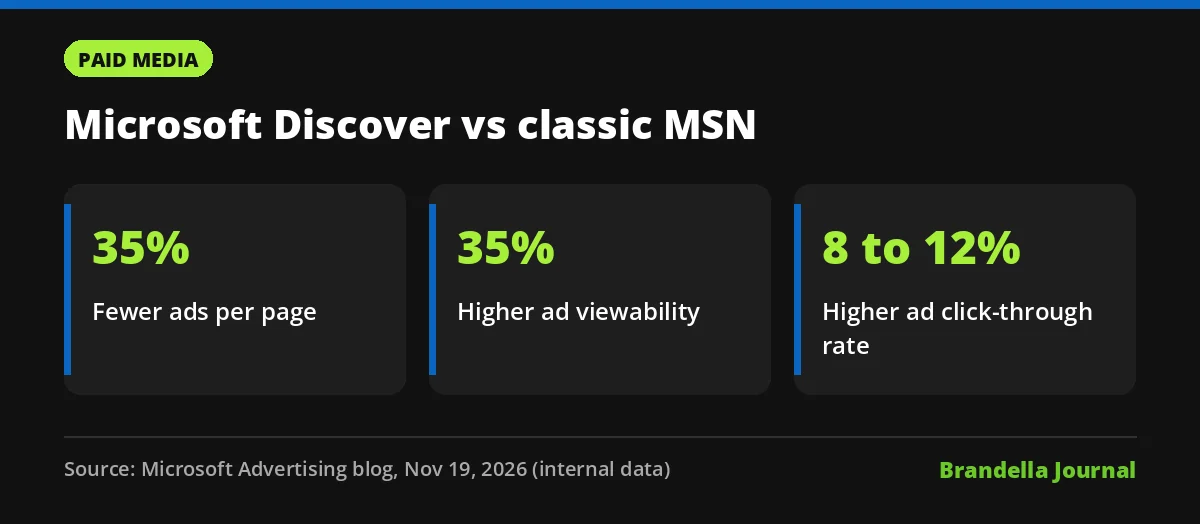
Here is what Microsoft published, with the footnote it attached. All three figures compare Discover with classic MSN, using Microsoft internal data from October 2026.
| Metric | Discover vs classic MSN |
|---|---|
| Ads per page | 35% fewer |
| Ad viewability | 35% higher |
| Ad click-through rate | 8 to 12% higher |
Microsoft calls these “early results.” The post does not say which viewability standard it used or how large the sample was, so we would not plug these numbers straight into a forecast.
The post does not list a new campaign type or a setup step for Discover. For details, Microsoft tells advertisers to talk to their Microsoft Advertising account team.
AI Max URL inclusions and other November changes
The rest of the roundup gathers several updates, some announced earlier in the month:
| Update | Status in the November 19 post |
|---|---|
| AI Max URL inclusions | Rolling out now |
| Ads in AI Overviews on Bing | Available in all markets except China, through existing campaigns |
| AI content transparency controls | Generally available |
| Xbox Video for Brands | Introduced earlier in November |
| Microsoft Advertising MCP server | Open pilot since July |
URL inclusions let you name sections of your site that AI Max should use as landing page destinations. AI Max also uses those pages as a source for ad text and search term matching. Microsoft’s example is a home goods store adding its gift guide pages. This pairs with the messaging guidelines Microsoft added in October 2026.
We have already covered the ads in AI Overviews on Bing launch, the new AI labels for images and video and the automated bidding upgrade that the post recaps from Microsoft’s November 18 bidding post, so this article sticks to Discover and URL inclusions.
Who this affects
Microsoft compares Discover with classic MSN, so advertisers whose ads have appeared on MSN and the Edge new tab page should watch this change most closely in the five launch markets.
URL inclusions affect Search advertisers using AI Max. If you have left AI Max free to pick landing pages, you now have a way to point it at the sections you want it to use.
Microsoft also opens the post with its own holiday research: 76% of US shoppers, 74% in Australia and 70% in the UK plan to use conversational AI for gift ideas. Microsoft’s footnote cites its July 2026 consumer trends research.
What advertisers should do now
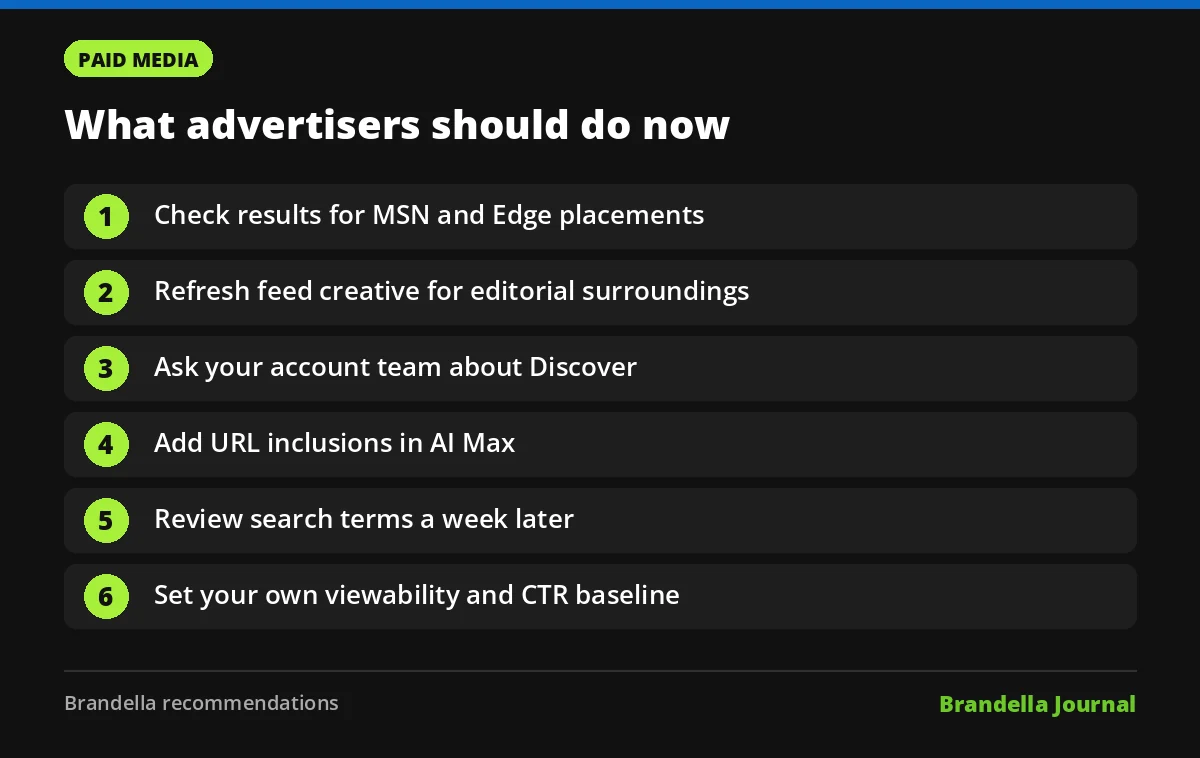
These steps are Brandella’s recommendations, not Microsoft instructions.
- Check results for MSN and Edge placements. Compare the weeks before and after Discover reached your markets, and look at viewability and click-through rate separately.
- Refresh your feed creative. With fewer ads on each page, each ad sits among editorial stories. Make sure images and headlines still read well at feed size.
- Ask your account team about Discover. Microsoft names the account team as the contact, so ask how Discover placements are reported in your account.
- Add URL inclusions in AI Max. List the site sections you want AI Max to use, such as seasonal gift guides or core category pages, and leave out pages that do not convert.
- Review search terms after the change. URL inclusions also feed search term matching, so check the search terms report a week after adding them. Our guide to separating AI Max clicks explains one way to track this in Google Ads, and the same habit helps here.
- Set your own baseline. Microsoft’s 35% and 8 to 12% figures are averages from its data. Record your current viewability and click-through rate so you can judge the change in your own account.
FAQ about Microsoft Discover feed ads
Where does Microsoft Discover appear?
On the Edge desktop new tab page and on Windows. Microsoft says it is live in the US, Canada, the UK, Australia and India.
Does Discover need a new campaign?
The November 19 post does not mention a new campaign type or setup step. Microsoft tells advertisers to contact their Microsoft Advertising account team about Discover.
Are the 35% figures independent?
No. Microsoft says they come from its internal data for October 2026, comparing Discover with classic MSN.
What are AI Max URL inclusions?
A setting that lets you choose site sections AI Max uses as landing pages and as a source for ad text and search term matching. Microsoft says it is rolling out now.