LinkedIn AI Search Visibility: Why Employee Posts Get Cited
LinkedIn AI search visibility depends on people, not just company pages. What LinkedIn and Meltwater data show and a content plan for B2B brands.

In this article
LinkedIn AI search visibility is less about your company page than many brands assume. In a new post on the LinkedIn Marketing Blog, Robert Yanik, AI Search Marketing Lead for LinkedIn Ads, argues that brands can raise their chances of being cited in AI chatbot answers by tapping the credibility of employees and creators. Social Media Today covered the advice on November 15, 2026.
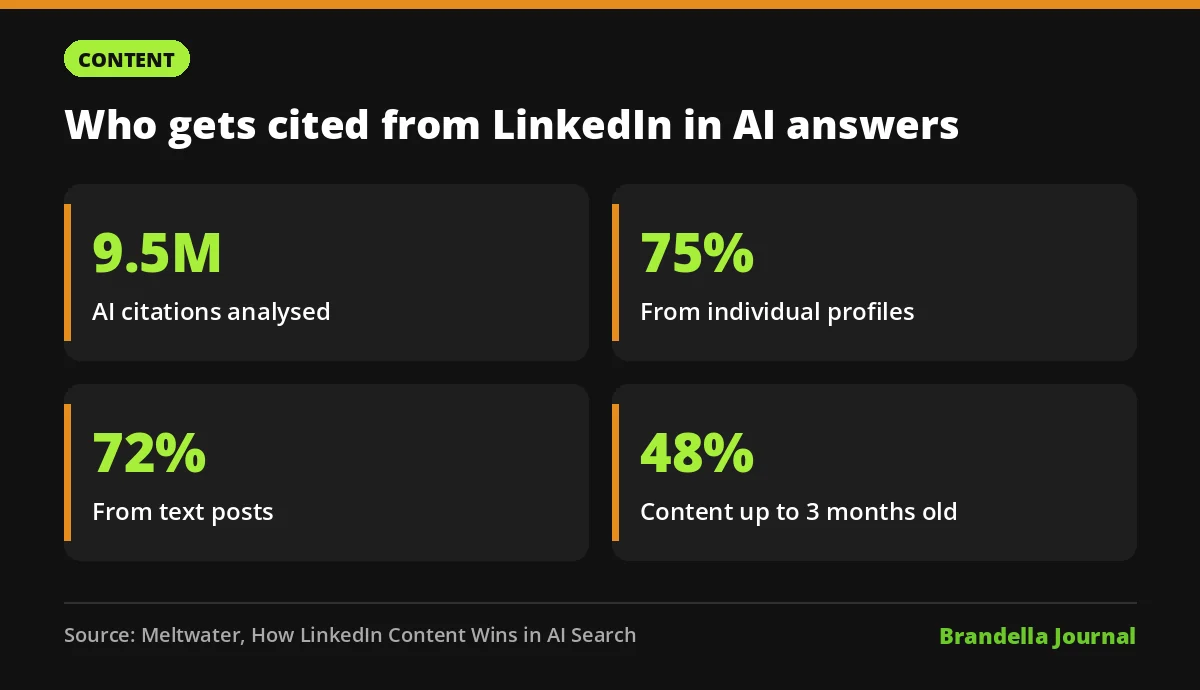
The data behind it comes from Meltwater. Its report, How LinkedIn Content Wins in AI Search, produced with LinkedIn, analysed 9.5 million AI citations across Copilot, Google AI Mode, Google AI Overviews, Claude Sonnet 4, ChatGPT-5 and Gemini 2.5 Pro.
For B2B marketers, the message is clear: the people in your company are a content channel for AI answers. We first looked at this trend in March in our piece on LinkedIn AI search citations. This follow up focuses on the new advice and what to do with it.
What LinkedIn says drives AI search visibility
According to Social Media Today’s summary, Yanik says AI models reward credibility, and LinkedIn ties each post to a verified identity. He reports that accounts with more than 10,000 followers and company pages make up 65% of LinkedIn citations in AI chatbot responses, while users under 10,000 followers account for 35%.
He also says C-suite and VP level articles earn higher citation rates per article than non executive content. His suggested plan has three parts: pick three or four themes to own, encourage credible employees to post consistently on them, and partner with one or two creators whose audience overlaps with your buyers.
Social Media Today rightly adds a caveat. LinkedIn does not explain how each AI tool chooses sources, so these findings are correlations, not proof of cause. The advice also, naturally, encourages more activity on LinkedIn.
What the Meltwater data shows
The Meltwater report gives a fuller picture. These numbers come straight from it:
| Finding | Number |
|---|---|
| LinkedIn citations from individual profiles | 75% |
| LinkedIn citations from Company Pages | 25% |
| Citations from text posts | 72% |
| Citations from articles | 12% |
| Cited content that was original, not reshared | 72% |
| Cited content aged 0 to 3 months | 48% |
| Median length of top cited articles | 1,725 words |
The report also found that 51% of citations came from members with under 10,000 followers, and it says expertise matters more than follower count. That sits slightly at odds with the way LinkedIn’s post frames influencer reach, so read both together. Our takeaway: big audiences help, but a credible specialist with a modest following can still be cited.
Top cited articles shared clear structure. Every one used bulleted or numbered lists, 92% used clear H2 or H3 headings, and 67% included hard numbers and data. Formats such as “Best X” lists and side by side comparisons led the pack. Note that the report itself contains a few inconsistent totals, so treat exact shares as directional.
Why people beat pages in AI answers
AI systems look for signals that a real, accountable expert stands behind a claim. A named engineer explaining a trade off reads as more trustworthy than a brand page announcing a webinar. That lines up with what Google calls E-E-A-T, or experience, expertise, authority and trust, even though LinkedIn citations work outside Google’s ranking systems.
It also explains why low effort engagement is being squeezed. LinkedIn is now demoting AI-generated comments, and AI tools appear to favour original, structured posts. Both point the same way: real expertise, clearly written.
A content plan to improve LinkedIn AI search visibility
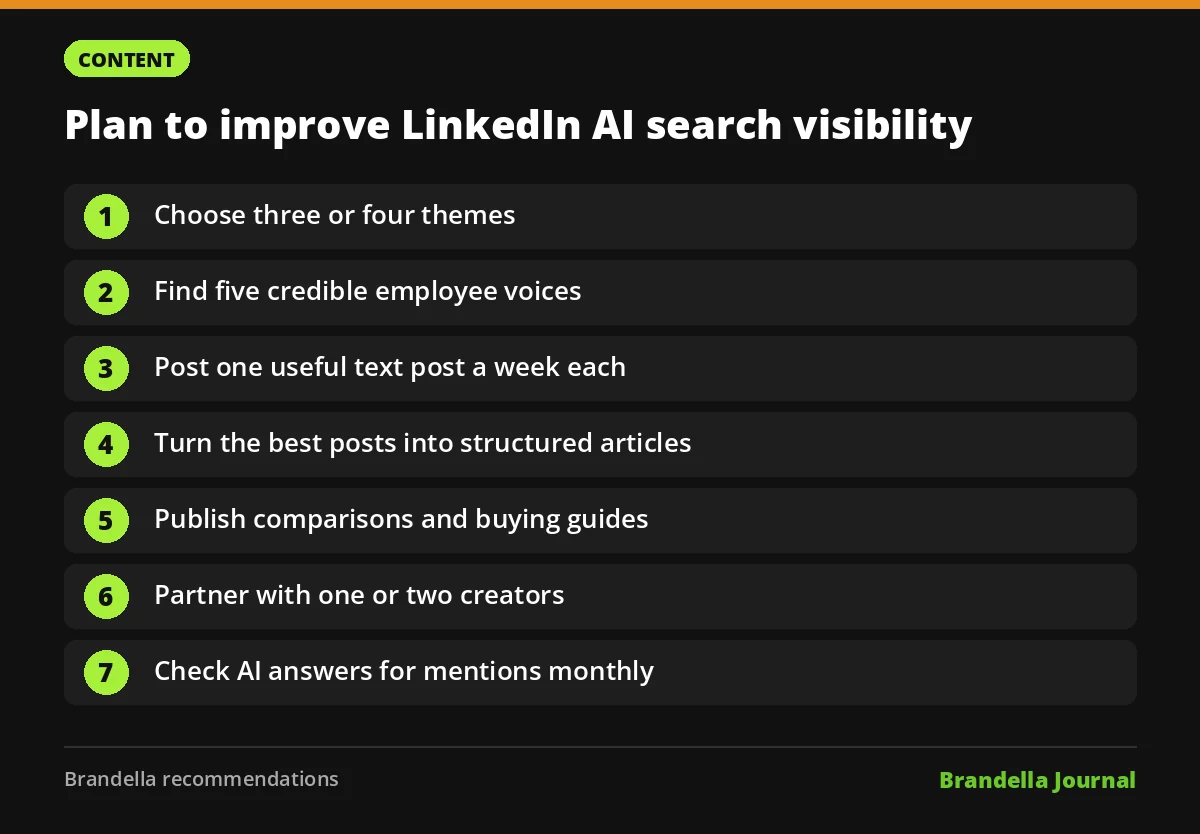
These steps are Brandella’s recommendations based on the LinkedIn advice and Meltwater data.
- Choose three or four themes. Pick topics where your company has real expertise and buyers ask AI tools for help.
- Find five credible voices. Look beyond the CEO to product leads, engineers and customer success managers who know the details.
- Set a light posting rhythm. One useful text post a week per person is enough. Fresh content dominates citations.
- Write structured long form pieces. Turn the best posts into LinkedIn articles with headings, lists, named tools and numbers.
- Publish comparisons and buying guides. “How to choose” and side by side formats are cited often, according to Meltwater.
- Partner with one or two creators. Choose creators whose followers match your buyers, as Yanik suggests.
- Measure AI mentions. Ask common buyer questions in ChatGPT, Gemini and Copilot every month and log whether your people are cited.
For more on employee and creator programmes, see our guide to influencer marketing best practices for B2B, and our B2B thought leadership report coverage for how buyers now read content through AI summaries.
FAQ about LinkedIn AI search visibility
Do AI chatbots cite LinkedIn company pages?
Yes, but less often than people. Meltwater found 25% of LinkedIn citations came from Company Pages and 75% from individual member profiles.
Do you need 10,000 followers to be cited?
No. LinkedIn’s post links larger accounts to more citations, but Meltwater found 51% of citations came from members with under 10,000 followers.
Which LinkedIn formats get cited most?
Text posts made up 72% of citations in the Meltwater study, followed by articles at 12% and video at 11%.
Which AI platforms did the study cover?
Copilot, Google AI Mode, Google AI Overviews, Claude Sonnet 4, ChatGPT-5 and Gemini 2.5 Pro.