
- Home
- SEODiscover the latest updates from across the United States, including politics, culture, economy, and trending stories. Stay informed on the key events shaping the nation and the topics everyone’s talking about.
- Technical SEOLearn technical SEO concepts including crawling, indexing, XML sitemaps, robots.txt, canonical tags, site architecture, and website performance.
- Local SEOOptimize your business for local seo with Google Business Profile, local citations, reviews, maps, and location-based SEO.
- Mobile SEOImprove your website’s mobile seo performance with responsive design, mobile-first indexing, usability, and page speed optimization.
- On-Page SEOExplore on-page seo optimization techniques such as title tags, meta descriptions, headings, URLs, internal linking, and content optimization.
- Off-Page SEODiscover off-page SEO strategies such as backlinks, digital PR, brand mentions, outreach, and authority building.
- SEO ToolsExplore the best SEO tools for keyword research, technical audits, backlink analysis, rank tracking, and website optimization.
- Core Web VitalsLearn how to improve Core Web Vitals including LCP, INP, CLS, page speed, and overall user experience for better rankings.
- Keyword ResearchLearn how to find profitable keywords, analyze search intent, evaluate competition, and build effective keyword strategies.
- Link BuildingMaster ethical link building techniques, backlink analysis, outreach methods, guest posting, and authority growth strategies.
- Google Search ConsoleLearn how to use Google Search Console to monitor indexing, fix errors, analyze search performance, and improve SEO.
- SEO BasicsLearn the fundamentals of search engine optimization (SEO Basics), including how search engines work, SEO terminology, and beginner-friendly best practices.
- Paid Media
- Display AdvertisingLearn display advertising strategies, banner ads, audience targeting, remarketing, Google Display campaigns, and optimization techniques.
- Google AdsLearn Google Ads strategies, campaign setup, bidding, keywords, Performance Max, Search Ads, and optimization techniques.
- LinkedIn AdsLearn LinkedIn Ads strategies for B2B marketing, lead generation, audience targeting, campaign optimization, and paid social advertising.
- Meta AdsLearn Meta Ads strategies for Facebook and Instagram, including campaign setup, targeting, retargeting, and performance optimization.
- Paid Media AnalyticsLearn paid media analytics, including CPC, CTR, CPA, ROAS, conversion tracking, attribution, reporting, and campaign performance analysis.
- PPC StrategyLearn effective PPC strategies, campaign planning, bidding, keyword targeting, landing pages, conversion optimization, and more.
- ContentTransform your living spaces with inspiration, tips, and trends in interior design. From minimalist decor to bold statements, find ideas for every style and budget.
- Social
- Digital MarketingExplore stories and advice on living your best life. From personal growth to entertainment, dive into the latest in lifestyle trends and inspiration.
- Artificial IntelligenceStay informed about health and wellness with expert advice, fitness tips, and the latest medical breakthroughs. Your guide to a healthier and happier life.
- DevelopmentYou will find development related educational articles
- GTMLearn Google Tag Manager (GTM) with practical guides for tags, triggers, variables, tracking, conversions, and website analytics implementation.
- HTMLLearn HTML with simple tutorials, examples, tags, elements, attributes, and best practices for building modern web pages.
- HTML CSSLearn HTML CSS together with practical tutorials, examples, layouts, styling techniques, responsive design, and modern web development practices.
- HTML JSLearn HTML JS – JavaScript with practical tutorials and examples for adding interactivity, dynamic content, events, and functionality to web pages.
- JavaScriptExplore JavaScript tutorials, examples, concepts, and practical techniques for creating interactive and dynamic websites and web applications.
- PHPLearn PHP programming with practical tutorials, examples, functions, syntax, and web development techniques for beginners and developers.
- PythonLearn Python programming with practical tutorials, examples, syntax, functions, automation techniques, and useful programming concepts.
- Home
- SEODiscover the latest updates from across the United States, including politics, culture, economy, and trending stories. Stay informed on the key events shaping the nation and the topics everyone’s talking about.
- Technical SEOLearn technical SEO concepts including crawling, indexing, XML sitemaps, robots.txt, canonical tags, site architecture, and website performance.
- Local SEOOptimize your business for local seo with Google Business Profile, local citations, reviews, maps, and location-based SEO.
- Mobile SEOImprove your website’s mobile seo performance with responsive design, mobile-first indexing, usability, and page speed optimization.
- On-Page SEOExplore on-page seo optimization techniques such as title tags, meta descriptions, headings, URLs, internal linking, and content optimization.
- Off-Page SEODiscover off-page SEO strategies such as backlinks, digital PR, brand mentions, outreach, and authority building.
- SEO ToolsExplore the best SEO tools for keyword research, technical audits, backlink analysis, rank tracking, and website optimization.
- Core Web VitalsLearn how to improve Core Web Vitals including LCP, INP, CLS, page speed, and overall user experience for better rankings.
- Keyword ResearchLearn how to find profitable keywords, analyze search intent, evaluate competition, and build effective keyword strategies.
- Link BuildingMaster ethical link building techniques, backlink analysis, outreach methods, guest posting, and authority growth strategies.
- Google Search ConsoleLearn how to use Google Search Console to monitor indexing, fix errors, analyze search performance, and improve SEO.
- SEO BasicsLearn the fundamentals of search engine optimization (SEO Basics), including how search engines work, SEO terminology, and beginner-friendly best practices.
- Paid Media
- Display AdvertisingLearn display advertising strategies, banner ads, audience targeting, remarketing, Google Display campaigns, and optimization techniques.
- Google AdsLearn Google Ads strategies, campaign setup, bidding, keywords, Performance Max, Search Ads, and optimization techniques.
- LinkedIn AdsLearn LinkedIn Ads strategies for B2B marketing, lead generation, audience targeting, campaign optimization, and paid social advertising.
- Meta AdsLearn Meta Ads strategies for Facebook and Instagram, including campaign setup, targeting, retargeting, and performance optimization.
- Paid Media AnalyticsLearn paid media analytics, including CPC, CTR, CPA, ROAS, conversion tracking, attribution, reporting, and campaign performance analysis.
- PPC StrategyLearn effective PPC strategies, campaign planning, bidding, keyword targeting, landing pages, conversion optimization, and more.
- ContentTransform your living spaces with inspiration, tips, and trends in interior design. From minimalist decor to bold statements, find ideas for every style and budget.
- Social
- Digital MarketingExplore stories and advice on living your best life. From personal growth to entertainment, dive into the latest in lifestyle trends and inspiration.
- Artificial IntelligenceStay informed about health and wellness with expert advice, fitness tips, and the latest medical breakthroughs. Your guide to a healthier and happier life.
- DevelopmentYou will find development related educational articles
- GTMLearn Google Tag Manager (GTM) with practical guides for tags, triggers, variables, tracking, conversions, and website analytics implementation.
- HTMLLearn HTML with simple tutorials, examples, tags, elements, attributes, and best practices for building modern web pages.
- HTML CSSLearn HTML CSS together with practical tutorials, examples, layouts, styling techniques, responsive design, and modern web development practices.
- HTML JSLearn HTML JS – JavaScript with practical tutorials and examples for adding interactivity, dynamic content, events, and functionality to web pages.
- JavaScriptExplore JavaScript tutorials, examples, concepts, and practical techniques for creating interactive and dynamic websites and web applications.
- PHPLearn PHP programming with practical tutorials, examples, functions, syntax, and web development techniques for beginners and developers.
- PythonLearn Python programming with practical tutorials, examples, syntax, functions, automation techniques, and useful programming concepts.
Now Reading: Broken Link Building: 5 Proven Steps to Earn Real Backlinks
-
01
Broken Link Building: 5 Proven Steps to Earn Real Backlinks
- Home//
- SEO//Discover the latest updates from across the United States, including politics, culture, economy, and trending stories. Stay informed on the key events shaping the nation and the topics everyone’s talking about.
- Technical SEO//Learn technical SEO concepts including crawling, indexing, XML sitemaps, robots.txt, canonical tags, site architecture, and website performance.
- Local SEO//Optimize your business for local seo with Google Business Profile, local citations, reviews, maps, and location-based SEO.
- Mobile SEO//Improve your website’s mobile seo performance with responsive design, mobile-first indexing, usability, and page speed optimization.
- On-Page SEO//Explore on-page seo optimization techniques such as title tags, meta descriptions, headings, URLs, internal linking, and content optimization.
- Off-Page SEO//Discover off-page SEO strategies such as backlinks, digital PR, brand mentions, outreach, and authority building.
- SEO Tools//Explore the best SEO tools for keyword research, technical audits, backlink analysis, rank tracking, and website optimization.
- Core Web Vitals//Learn how to improve Core Web Vitals including LCP, INP, CLS, page speed, and overall user experience for better rankings.
- Keyword Research//Learn how to find profitable keywords, analyze search intent, evaluate competition, and build effective keyword strategies.
- Link Building//Master ethical link building techniques, backlink analysis, outreach methods, guest posting, and authority growth strategies.
- Google Search Console//Learn how to use Google Search Console to monitor indexing, fix errors, analyze search performance, and improve SEO.
- SEO Basics//Learn the fundamentals of search engine optimization (SEO Basics), including how search engines work, SEO terminology, and beginner-friendly best practices.
- Paid Media//
- Display Advertising//Learn display advertising strategies, banner ads, audience targeting, remarketing, Google Display campaigns, and optimization techniques.
- Google Ads//Learn Google Ads strategies, campaign setup, bidding, keywords, Performance Max, Search Ads, and optimization techniques.
- LinkedIn Ads//Learn LinkedIn Ads strategies for B2B marketing, lead generation, audience targeting, campaign optimization, and paid social advertising.
- Meta Ads//Learn Meta Ads strategies for Facebook and Instagram, including campaign setup, targeting, retargeting, and performance optimization.
- Paid Media Analytics//Learn paid media analytics, including CPC, CTR, CPA, ROAS, conversion tracking, attribution, reporting, and campaign performance analysis.
- PPC Strategy//Learn effective PPC strategies, campaign planning, bidding, keyword targeting, landing pages, conversion optimization, and more.
- Content//Transform your living spaces with inspiration, tips, and trends in interior design. From minimalist decor to bold statements, find ideas for every style and budget.
- Social//
- Digital Marketing//Explore stories and advice on living your best life. From personal growth to entertainment, dive into the latest in lifestyle trends and inspiration.
- Artificial Intelligence//Stay informed about health and wellness with expert advice, fitness tips, and the latest medical breakthroughs. Your guide to a healthier and happier life.
- Development//You will find development related educational articles
- GTM//Learn Google Tag Manager (GTM) with practical guides for tags, triggers, variables, tracking, conversions, and website analytics implementation.
- HTML//Learn HTML with simple tutorials, examples, tags, elements, attributes, and best practices for building modern web pages.
- HTML CSS//Learn HTML CSS together with practical tutorials, examples, layouts, styling techniques, responsive design, and modern web development practices.
- HTML JS//Learn HTML JS – JavaScript with practical tutorials and examples for adding interactivity, dynamic content, events, and functionality to web pages.
- JavaScript//Explore JavaScript tutorials, examples, concepts, and practical techniques for creating interactive and dynamic websites and web applications.
- PHP//Learn PHP programming with practical tutorials, examples, functions, syntax, and web development techniques for beginners and developers.
- Python//Learn Python programming with practical tutorials, examples, syntax, functions, automation techniques, and useful programming concepts.
- Home
- SEO
- Link Building
- Broken Link Building: 5 Proven Steps to Earn Real Backlinks
Broken Link Building: 5 Proven Steps to Earn Real Backlinks

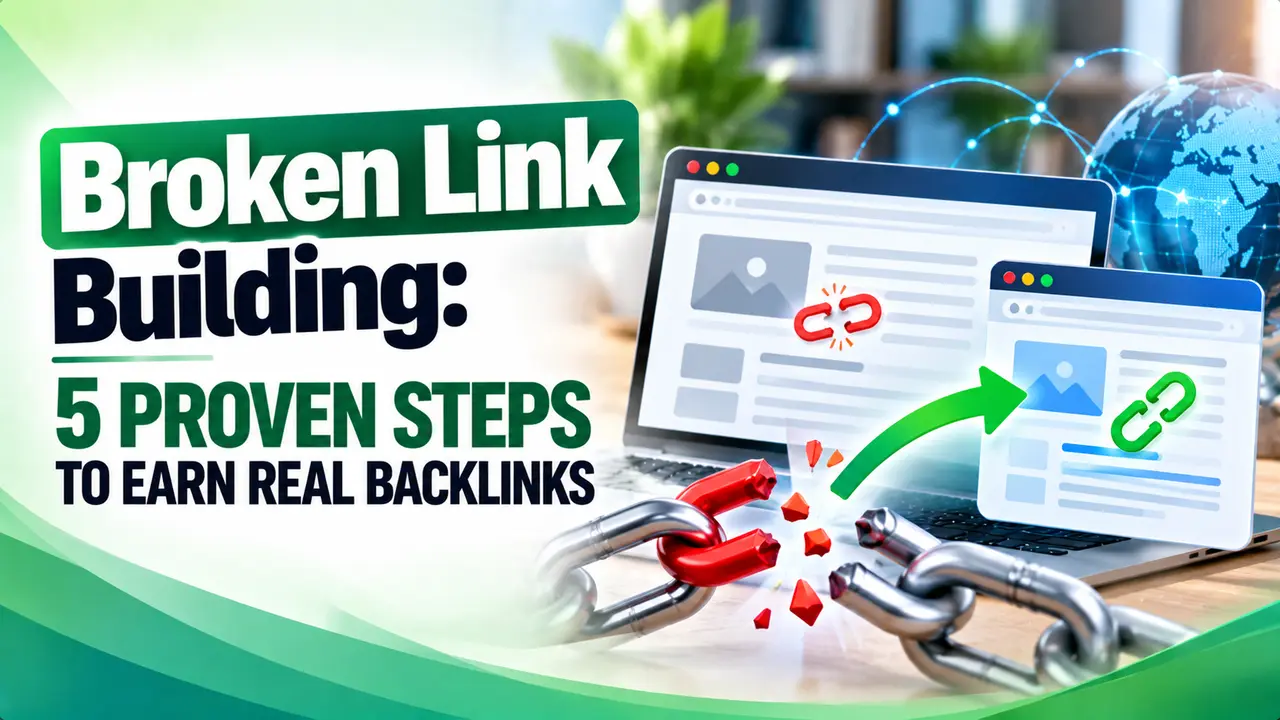
Every dead link on a trusted site is a backlink opportunity nobody else has noticed yet. This guide explains how broken link building actually works, the outreach pitches that get ignored versus the ones that land, and how many backlinks a single campaign can realistically earn.
Table of Contents
ToggleHey! If you have ever clicked an old link on a trusted site and landed on a dead page, you have already met the opportunity this guide is about. Most people just hit the back button. A few people turn that dead page into a backlink.
Picture a resource page that has been linked to from dozens of sites for years, except the page itself went offline a while back and nobody ever noticed. Every one of those old links is now pointing at nothing. Broken link building is the practice of finding pages exactly like that one, building something better in their place, and asking the sites that linked to the original to send that traffic your way instead.
What Is Broken Link Building?
Broken link building is a link acquisition tactic built around a simple fact: pages die constantly, but the links pointing at them usually do not get cleaned up. Ahrefs describes the process as finding a dead page with backlinks, creating a similar or better page of your own, then asking the sites linking to the dead page to swap that link for yours.
It works in three parts. First you find a page that now returns a 404 or some other error but still has real sites linking to it. Second you publish a page covering the same ground, ideally better than what was lost. Third you email the webmasters who linked to the dead page and point out that their link is broken, with your page offered as the fix.
This is different from most link building tactics because you are not asking for a favor out of nowhere. You are flagging a genuine problem on someone else's site and handing them a ready made solution, which is exactly why this approach keeps showing up in SEO guides more than a decade after it was first popularized.
Why Broken Link Building Still Works in 2026
A dead link is a small but real problem for whoever owns the page it sits on. It sends visitors to an error page, it wastes the link equity that page once passed along, and on a resource list it makes the whole page look unmaintained.
Broken link building succeeds because you are not interrupting someone's day with an unrelated request. You are telling them something they would want to know anyway and offering the easiest possible fix, a single find and replace in their own content management system.
That is also why this tactic reads as a genuinely white hat approach rather than a trick. Semrush frames it plainly: broken link building is the process of finding dead links on other sites and convincing the people who run those sites to replace them with working links to your own content.
Tip
Keep a short, polite tone in every email. You found a real issue on their site. You are not asking for charity, you are doing them a small favor first.
Step 1: Find Broken Pages With Real Backlinks
Everything starts with finding a dead page that other sites still link to. A handful of real tools make this practical rather than a guessing game.
The most direct route is Ahrefs Site Explorer. Drop in a competitor's domain or a relevant resource page, filter outgoing links by status code, and you get a list of every link on that page or domain that now returns a 404 or similar error, along with how many sites link to each one. Respona's own walkthrough of the process notes that defunct websites with a large backlink profile are especially good targets, since a single abandoned domain can surface a dozen broken pages at once, each with its own set of linking sites.
For checking a single page rather than a whole domain, the free Check My Links browser extension does the job in seconds. It scans every link on the page you are viewing, color coding working links green and broken ones red, with the specific error code shown next to each one. The project is open source and actively maintained on GitHub, so it is worth running directly against resource pages and link roundups in your niche.
| Tool | What It Finds | Best Use |
|---|---|---|
| Ahrefs Broken Link Checker | Dead outgoing links on any domain, plus how many sites link to each one | Scanning competitors and whole resource hubs at once |
| Check My Links | Every broken link on the single page open in your browser | Quickly auditing one resource page or article |
| Wayback Machine | Archived snapshots of what a dead page used to contain | Matching your replacement page to the original content |
Tip
Resource and link pages are the richest hunting ground for this tactic. They exist purely to collect outbound links, so a single old roundup can contain several dead pages worth pursuing at once.
Step 2: Vet Every Opportunity Before You Pitch
Not every dead page is worth chasing. A site that only has a handful of weak, spammy links pointing to it is not going to move the needle, so check the authority and relevance of the linking sites before you invest time in a replacement page.
Equally important is understanding what the dead page actually covered, since your replacement needs to match that intent closely, not just the general topic. This is where the Wayback Machine earns its place in every broken link building workflow. Pulling up an archived snapshot shows you the original headings, the data it cited, and the exact angle it took, so your new page can genuinely replace it rather than loosely resemble it.
Checking the anchor text the dead link used on each referring page is worth the extra minute too. If a dozen sites all linked using the same phrase, that tells you exactly what those readers expected to find when they clicked, and your pitch should speak to that expectation directly.
The Internet Archive rolled out a dedicated browser extension in 2026 built specifically to tackle the web's broken link problem, automatically offering an archived version of a page the moment it detects a dead link, per TechCrunch's coverage of the launch.
Step 3: Build a Replacement Page That Is Actually Better
This step is where most broken link building campaigns quietly fail before a single email is sent. If your replacement page is thinner, older, or less useful than what disappeared, nobody has a good reason to link to it.
Semrush's own research into why site owners respond to this kind of pitch is blunt about it: they are more likely to update a link when the new page is contextually relevant and genuinely high quality, and less likely to respond if a better alternative already exists elsewhere or the replacement looks outdated.
Use what you pulled from the archived snapshot as a floor, not a ceiling. Cover everything the original page did, then add what it was missing, a clearer structure, more current data, a simpler explanation, or examples the old page never had.
Step 4: Find the Right Contact and Send a Personal Pitch
With a finished replacement page ready, the next step is finding an actual person to email, not a generic contact form. An editor, a content manager, or whoever wrote the page with the broken link is a far better recipient than a general info address.
Your email needs three things to land: the exact broken URL you found, a one line note on what your page covers, and a link to it. Mention the specific page their link sits on, since that single detail proves you actually looked at their site rather than mass mailing a template.
Response rates for outreach like this are modest by nature, which is worth knowing going in. An analysis of 12 million outreach emails by Backlinko and Pitchbox found that only 8.5 percent of outreach emails receive any reply at all, and the same study found that outreach specifically about link building, guest posts, and resource roundups performed above that overall average.
Tip
The same Backlinko and Pitchbox research found that a personalized message body lifted response rates by roughly 32 percent on its own. Spend that extra minute per email, it pays for itself.
Step 5: Follow Up, Avoid These Mistakes, and Scale What Works
A quiet inbox does not always mean no. The same large scale outreach study found that sending a single polite follow up message increased reply rates by roughly 66 percent, so one short nudge a week later is worth the thirty seconds it takes to write.
Most broken link building pitches that get ignored fail for the same handful of reasons, and they are easy to spot once you know what to look for.
Once a handful of pitches start landing, keep a simple log of which prospects responded, which niches reply most often, and which email framing worked best. This approach rewards patience far more than volume, a dozen genuinely relevant, well matched placements from one campaign is a realistic, solid outcome.
Treat broken link building as one tool in a wider kit rather than your only source of links. Running a backlink profile analysis on a few competitors first often surfaces several dead pages worth pursuing before you even start building a replacement.
Yes, though it works best as a steady, ongoing tactic rather than a one time push. Pages keep going offline every day, so there is always a fresh supply of dead links with real backlinks attached, and the core appeal, a genuinely helpful heads up plus a ready made fix, has not changed.
Finding opportunities and building a replacement page can take anywhere from a few days to a couple of weeks depending on the topic. Outreach itself tends to trickle in over a month or more, since most webmasters only check their inbox occasionally and a follow up round adds extra time.
A generic, unpersonalized email is the single biggest reason. Pitching a replacement that is not actually relevant to the dead page, or offering content that is weaker than what was lost, are close behind. Both come across as a request for a favor rather than a genuine fix.
Not strictly. The Check My Links browser extension is free and can audit a single resource page in seconds, and the Wayback Machine is free as well. A paid tool like Ahrefs mostly speeds up finding dead pages across an entire domain or competitor at once, which matters more once you are running this at real scale.
Expect modest numbers per campaign rather than a flood. A dozen or so quality backlinks from a single focused campaign, targeting one dead page with a strong backlink profile, is a genuinely good outcome, and quality here matters far more than raw count.
Learn Today
Broken Link Building
Finding dead pages that still have backlinks and pitching your own content as the replacement.
404 Error
The status code a server returns when a requested page no longer exists.
Link Equity
The ranking value a link passes from the linking page to the page it points to.
Resource Page
A page built specifically to list and link out to helpful content on a given topic.
Anchor Text
The clickable, visible words a hyperlink uses, often describing the page it leads to.
Outreach Email
A direct message sent to a site owner asking them to add, update, or swap a link.
Related Articles
Ready to Turn Dead Pages Into Real Backlinks?
Explore more Brandella Journal guides on SEO and digital marketing.
Related Posts
Previous Post
Next Post
Previous Post
Next Post



- Artificial Intelligence
- Content
- Core Web Vitals
- Development
- Digital Marketing
- Display Advertising
- Google Ads
- Google Search Console
- GTM
- HTML
- HTML CSS
- JavaScript
- Keyword Research
- Link Building
- LinkedIn Ads
- Local SEO
- Meta Ads
- Mobile SEO
- Off-Page SEO
- On-Page SEO
- Paid Media
- Paid Media Analytics
- PHP
- PPC Strategy
- Python
- SEO
- SEO Basics
- SEO Tools
- Social
- Technical SEO