
- Home
- SEODiscover the latest updates from across the United States, including politics, culture, economy, and trending stories. Stay informed on the key events shaping the nation and the topics everyone’s talking about.
- Technical SEOLearn technical SEO concepts including crawling, indexing, XML sitemaps, robots.txt, canonical tags, site architecture, and website performance.
- Local SEOOptimize your business for local seo with Google Business Profile, local citations, reviews, maps, and location-based SEO.
- Mobile SEOImprove your website’s mobile seo performance with responsive design, mobile-first indexing, usability, and page speed optimization.
- On-Page SEOExplore on-page seo optimization techniques such as title tags, meta descriptions, headings, URLs, internal linking, and content optimization.
- Off-Page SEODiscover off-page SEO strategies such as backlinks, digital PR, brand mentions, outreach, and authority building.
- SEO ToolsExplore the best SEO tools for keyword research, technical audits, backlink analysis, rank tracking, and website optimization.
- Core Web VitalsLearn how to improve Core Web Vitals including LCP, INP, CLS, page speed, and overall user experience for better rankings.
- Keyword ResearchLearn how to find profitable keywords, analyze search intent, evaluate competition, and build effective keyword strategies.
- Link BuildingMaster ethical link building techniques, backlink analysis, outreach methods, guest posting, and authority growth strategies.
- Google Search ConsoleLearn how to use Google Search Console to monitor indexing, fix errors, analyze search performance, and improve SEO.
- SEO BasicsLearn the fundamentals of search engine optimization (SEO Basics), including how search engines work, SEO terminology, and beginner-friendly best practices.
- Paid Media
- Display AdvertisingLearn display advertising strategies, banner ads, audience targeting, remarketing, Google Display campaigns, and optimization techniques.
- Google AdsLearn Google Ads strategies, campaign setup, bidding, keywords, Performance Max, Search Ads, and optimization techniques.
- LinkedIn AdsLearn LinkedIn Ads strategies for B2B marketing, lead generation, audience targeting, campaign optimization, and paid social advertising.
- Meta AdsLearn Meta Ads strategies for Facebook and Instagram, including campaign setup, targeting, retargeting, and performance optimization.
- Paid Media AnalyticsLearn paid media analytics, including CPC, CTR, CPA, ROAS, conversion tracking, attribution, reporting, and campaign performance analysis.
- PPC StrategyLearn effective PPC strategies, campaign planning, bidding, keyword targeting, landing pages, conversion optimization, and more.
- ContentTransform your living spaces with inspiration, tips, and trends in interior design. From minimalist decor to bold statements, find ideas for every style and budget.
- Social
- Digital MarketingExplore stories and advice on living your best life. From personal growth to entertainment, dive into the latest in lifestyle trends and inspiration.
- Artificial IntelligenceStay informed about health and wellness with expert advice, fitness tips, and the latest medical breakthroughs. Your guide to a healthier and happier life.
- DevelopmentYou will find development related educational articles
- GTMLearn Google Tag Manager (GTM) with practical guides for tags, triggers, variables, tracking, conversions, and website analytics implementation.
- HTMLLearn HTML with simple tutorials, examples, tags, elements, attributes, and best practices for building modern web pages.
- HTML CSSLearn HTML CSS together with practical tutorials, examples, layouts, styling techniques, responsive design, and modern web development practices.
- HTML JSLearn HTML JS – JavaScript with practical tutorials and examples for adding interactivity, dynamic content, events, and functionality to web pages.
- JavaScriptExplore JavaScript tutorials, examples, concepts, and practical techniques for creating interactive and dynamic websites and web applications.
- PHPLearn PHP programming with practical tutorials, examples, functions, syntax, and web development techniques for beginners and developers.
- PythonLearn Python programming with practical tutorials, examples, syntax, functions, automation techniques, and useful programming concepts.
- Home
- SEODiscover the latest updates from across the United States, including politics, culture, economy, and trending stories. Stay informed on the key events shaping the nation and the topics everyone’s talking about.
- Technical SEOLearn technical SEO concepts including crawling, indexing, XML sitemaps, robots.txt, canonical tags, site architecture, and website performance.
- Local SEOOptimize your business for local seo with Google Business Profile, local citations, reviews, maps, and location-based SEO.
- Mobile SEOImprove your website’s mobile seo performance with responsive design, mobile-first indexing, usability, and page speed optimization.
- On-Page SEOExplore on-page seo optimization techniques such as title tags, meta descriptions, headings, URLs, internal linking, and content optimization.
- Off-Page SEODiscover off-page SEO strategies such as backlinks, digital PR, brand mentions, outreach, and authority building.
- SEO ToolsExplore the best SEO tools for keyword research, technical audits, backlink analysis, rank tracking, and website optimization.
- Core Web VitalsLearn how to improve Core Web Vitals including LCP, INP, CLS, page speed, and overall user experience for better rankings.
- Keyword ResearchLearn how to find profitable keywords, analyze search intent, evaluate competition, and build effective keyword strategies.
- Link BuildingMaster ethical link building techniques, backlink analysis, outreach methods, guest posting, and authority growth strategies.
- Google Search ConsoleLearn how to use Google Search Console to monitor indexing, fix errors, analyze search performance, and improve SEO.
- SEO BasicsLearn the fundamentals of search engine optimization (SEO Basics), including how search engines work, SEO terminology, and beginner-friendly best practices.
- Paid Media
- Display AdvertisingLearn display advertising strategies, banner ads, audience targeting, remarketing, Google Display campaigns, and optimization techniques.
- Google AdsLearn Google Ads strategies, campaign setup, bidding, keywords, Performance Max, Search Ads, and optimization techniques.
- LinkedIn AdsLearn LinkedIn Ads strategies for B2B marketing, lead generation, audience targeting, campaign optimization, and paid social advertising.
- Meta AdsLearn Meta Ads strategies for Facebook and Instagram, including campaign setup, targeting, retargeting, and performance optimization.
- Paid Media AnalyticsLearn paid media analytics, including CPC, CTR, CPA, ROAS, conversion tracking, attribution, reporting, and campaign performance analysis.
- PPC StrategyLearn effective PPC strategies, campaign planning, bidding, keyword targeting, landing pages, conversion optimization, and more.
- ContentTransform your living spaces with inspiration, tips, and trends in interior design. From minimalist decor to bold statements, find ideas for every style and budget.
- Social
- Digital MarketingExplore stories and advice on living your best life. From personal growth to entertainment, dive into the latest in lifestyle trends and inspiration.
- Artificial IntelligenceStay informed about health and wellness with expert advice, fitness tips, and the latest medical breakthroughs. Your guide to a healthier and happier life.
- DevelopmentYou will find development related educational articles
- GTMLearn Google Tag Manager (GTM) with practical guides for tags, triggers, variables, tracking, conversions, and website analytics implementation.
- HTMLLearn HTML with simple tutorials, examples, tags, elements, attributes, and best practices for building modern web pages.
- HTML CSSLearn HTML CSS together with practical tutorials, examples, layouts, styling techniques, responsive design, and modern web development practices.
- HTML JSLearn HTML JS – JavaScript with practical tutorials and examples for adding interactivity, dynamic content, events, and functionality to web pages.
- JavaScriptExplore JavaScript tutorials, examples, concepts, and practical techniques for creating interactive and dynamic websites and web applications.
- PHPLearn PHP programming with practical tutorials, examples, functions, syntax, and web development techniques for beginners and developers.
- PythonLearn Python programming with practical tutorials, examples, syntax, functions, automation techniques, and useful programming concepts.
Now Reading: Anchor Text Optimization: Best Practices for Better Rankings in 2026
-
01
Anchor Text Optimization: Best Practices for Better Rankings in 2026
- Home//
- SEO//Discover the latest updates from across the United States, including politics, culture, economy, and trending stories. Stay informed on the key events shaping the nation and the topics everyone’s talking about.
- Technical SEO//Learn technical SEO concepts including crawling, indexing, XML sitemaps, robots.txt, canonical tags, site architecture, and website performance.
- Local SEO//Optimize your business for local seo with Google Business Profile, local citations, reviews, maps, and location-based SEO.
- Mobile SEO//Improve your website’s mobile seo performance with responsive design, mobile-first indexing, usability, and page speed optimization.
- On-Page SEO//Explore on-page seo optimization techniques such as title tags, meta descriptions, headings, URLs, internal linking, and content optimization.
- Off-Page SEO//Discover off-page SEO strategies such as backlinks, digital PR, brand mentions, outreach, and authority building.
- SEO Tools//Explore the best SEO tools for keyword research, technical audits, backlink analysis, rank tracking, and website optimization.
- Core Web Vitals//Learn how to improve Core Web Vitals including LCP, INP, CLS, page speed, and overall user experience for better rankings.
- Keyword Research//Learn how to find profitable keywords, analyze search intent, evaluate competition, and build effective keyword strategies.
- Link Building//Master ethical link building techniques, backlink analysis, outreach methods, guest posting, and authority growth strategies.
- Google Search Console//Learn how to use Google Search Console to monitor indexing, fix errors, analyze search performance, and improve SEO.
- SEO Basics//Learn the fundamentals of search engine optimization (SEO Basics), including how search engines work, SEO terminology, and beginner-friendly best practices.
- Paid Media//
- Display Advertising//Learn display advertising strategies, banner ads, audience targeting, remarketing, Google Display campaigns, and optimization techniques.
- Google Ads//Learn Google Ads strategies, campaign setup, bidding, keywords, Performance Max, Search Ads, and optimization techniques.
- LinkedIn Ads//Learn LinkedIn Ads strategies for B2B marketing, lead generation, audience targeting, campaign optimization, and paid social advertising.
- Meta Ads//Learn Meta Ads strategies for Facebook and Instagram, including campaign setup, targeting, retargeting, and performance optimization.
- Paid Media Analytics//Learn paid media analytics, including CPC, CTR, CPA, ROAS, conversion tracking, attribution, reporting, and campaign performance analysis.
- PPC Strategy//Learn effective PPC strategies, campaign planning, bidding, keyword targeting, landing pages, conversion optimization, and more.
- Content//Transform your living spaces with inspiration, tips, and trends in interior design. From minimalist decor to bold statements, find ideas for every style and budget.
- Social//
- Digital Marketing//Explore stories and advice on living your best life. From personal growth to entertainment, dive into the latest in lifestyle trends and inspiration.
- Artificial Intelligence//Stay informed about health and wellness with expert advice, fitness tips, and the latest medical breakthroughs. Your guide to a healthier and happier life.
- Development//You will find development related educational articles
- GTM//Learn Google Tag Manager (GTM) with practical guides for tags, triggers, variables, tracking, conversions, and website analytics implementation.
- HTML//Learn HTML with simple tutorials, examples, tags, elements, attributes, and best practices for building modern web pages.
- HTML CSS//Learn HTML CSS together with practical tutorials, examples, layouts, styling techniques, responsive design, and modern web development practices.
- HTML JS//Learn HTML JS – JavaScript with practical tutorials and examples for adding interactivity, dynamic content, events, and functionality to web pages.
- JavaScript//Explore JavaScript tutorials, examples, concepts, and practical techniques for creating interactive and dynamic websites and web applications.
- PHP//Learn PHP programming with practical tutorials, examples, functions, syntax, and web development techniques for beginners and developers.
- Python//Learn Python programming with practical tutorials, examples, syntax, functions, automation techniques, and useful programming concepts.
Anchor Text Optimization: Best Practices for Better Rankings in 2026

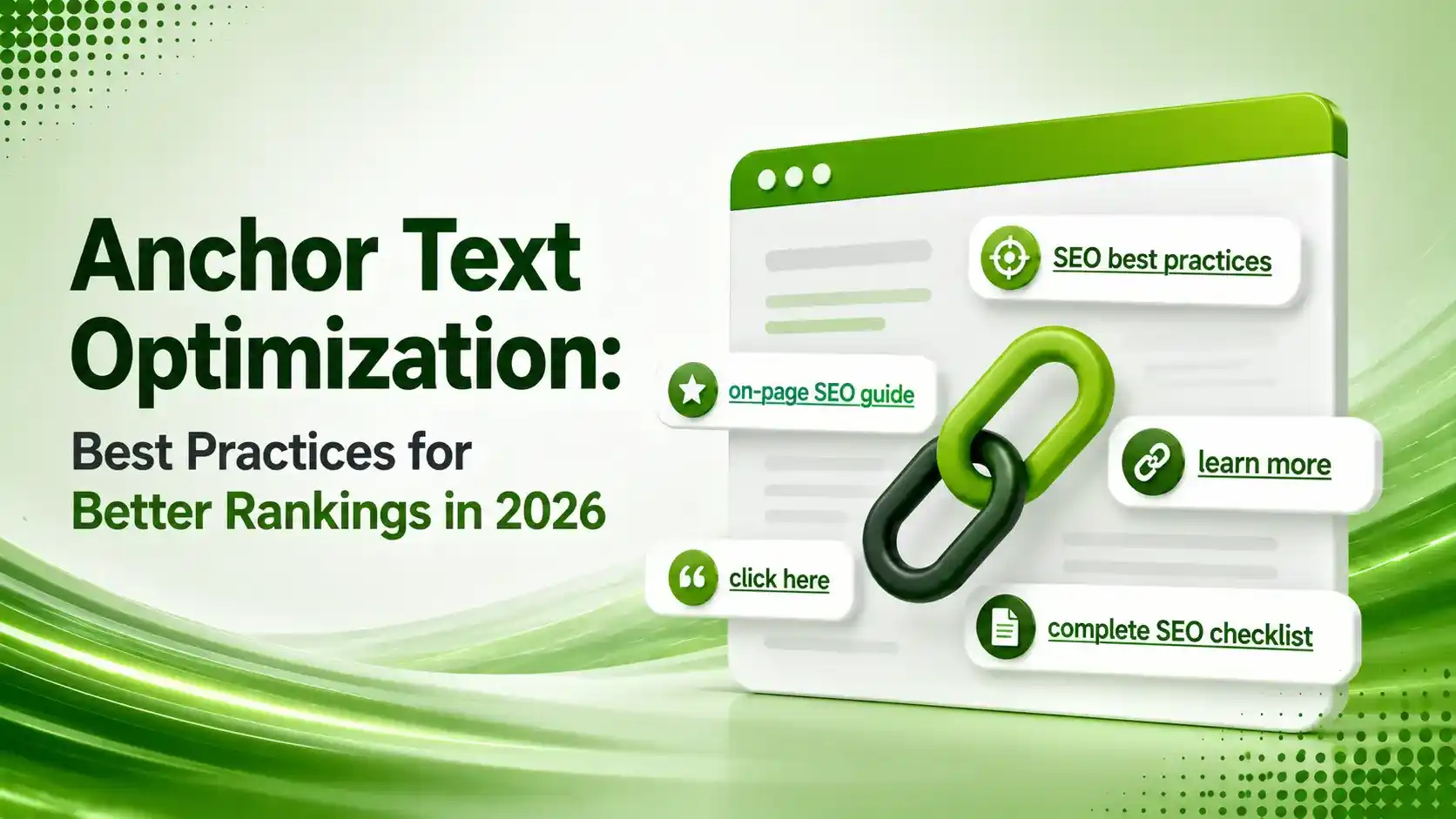
Anchor text optimization is still one of SEO's most misused signals. Here's the ratio that keeps a link profile natural and the practices that avoid penalties.
Table of Contents
ToggleAnchor text optimization is one of the oldest ranking signals in SEO, and still one of the most consistently misused. Too many exact-match anchors pointing at one page reads as manipulation and risks a Penguin-style suppression. Too few keyword-relevant anchors, and you leave real ranking potential on the table.
Google's algorithms no longer treat anchor text as a standalone lever. It's evaluated as part of a broader contextual framework, how naturally the anchor fits the surrounding sentence, where the link originates from, and whether the whole thing aligns with genuine search intent.
That shift means the old advice, stuff exact-match keywords into every link, actively works against you now. The sites that keep ranking through 2026 treat anchor text optimization as one signal among many, balanced against natural link patterns rather than optimized in isolation.
This guide breaks down the anchor text types worth knowing, the ratio that keeps a link profile looking natural, and the specific anchor text optimization practices that build authority without risking a penalty.
01What Anchor Text Optimization Actually Means
Anchor text is the visible, clickable text inside a hyperlink, defined in HTML by the <a> tag. From Google's perspective, Futuristic Marketing's complete anchor text guide explains it serves two functions at once: a relevance signal telling Google what the linked page is about, and a usability signal that improves click-through when the text is specific and descriptive rather than vague.
LinkDoctor's 2026 optimization guide frames the modern approach well: the days of keyword-heavy anchors driving rankings on their own are long gone. What matters now is how naturally an anchor fits the surrounding content and whether it aligns with what a searcher is actually looking for.
02The Anchor Text Types Worth Knowing
TheStacc's complete guide breaks anchor text optimization down to its core mechanics: it's the practice of choosing the right clickable text for hyperlinks to maximize relevance signal without triggering over-optimization penalties, using a diverse mix of types in proportions that look natural.
The main types worth tracking are branded (your site or company name), partial match (a phrase containing part of the target keyword), exact match (the precise target keyword), generic ("click here," "read more"), naked URL, and image anchors, where SEO Sherpa's guide notes a healthy link profile might expect 5% to 25% of links to come from images specifically.
03Why Over-Optimization Still Triggers Penalties
Futuristic Marketing's guide, referenced above, is direct about the single greatest threat in this space: too many exact-match keyword anchors pointing to one page looks unnatural to Google and was the core target of the Penguin algorithm update, first launched in April 2012 and now integrated permanently into Google's core ranking systems.
W3era's 2026 complete guide adds the practical detection method worth understanding: partial-match and LSI anchors now carry most of the relevance benefit that exact-match anchors used to provide, without the same Penguin-related suppression risk.
Futuristic Marketing's guide offers a concrete audit method: compare your page's anchor text distribution against the top 3 results for your target keyword. If your page runs 15% exact match while the top 3 average 4%, that gap itself is a strong signal you're over-optimized.
04The Ideal Anchor Text Optimization Ratio
TheStacc's guide, referenced above, distills multiple studies into a workable baseline: 30% to 50% branded anchors, 15% to 25% partial match, 10% to 20% generic, 5% to 15% naked URL, and just 1% to 5% exact match. Google doesn't penalize individual exact-match anchors, the risk comes from the pattern across your whole profile.
The ideal ratio still shifts by niche, TheStacc's guide notes, so treat this baseline as a starting point and adjust after analyzing the anchor distribution of pages actually ranking for your target keywords.
05How to Audit Your Existing Anchor Text Profile
SE Ranking's practical guide lays out a clear starting workflow: run a full backlink analysis first to surface every existing anchor pointing at your site, then categorize each one by type before comparing the resulting distribution against your target ratio.
Regular re-auditing matters as much as the first pass. SE Ranking's guide recommends checking periodically rather than once, since new links accumulate anchor patterns you didn't necessarily choose, especially ones earned through guest posts, directories, or unsolicited mentions.
A healthy anchor text ratio weights branded and partial match anchors heaviest, keeping exact match as the smallest slice.
06Watch: Anchor Text in SEO Explained
For a plain-English walkthrough of why anchor text matters and how to think about it strategically, this explainer from SEO Sherpa's General Manager covers the fundamentals well.
07Anchor Text Optimization Best Practices That Feel Natural
DesignPlus' practical guide puts the core anchor text optimization test simply: if it feels forced, it probably is. A short, clear, descriptive phrase that fits the sentence naturally beats an over-explained anchor stuffed with modifiers every time.
Write the anchor to fit the sentence, not the other way around; forced phrasing is the clearest tell of manipulation.
Match the anchor to the linked page's actual content, mismatched anchors confuse both users and search engines.
Avoid vague anchors like "click here" for important links; they provide neither SEO nor usability value.
Diversify anchor types across your whole profile, not just within a single page or campaign.
Let internal and external anchor rules differ, internal links can carry slightly more descriptive keyword phrasing since you control both ends.
08Internal vs External Anchor Text Rules
Upward Engine's 2026 internal linking guide sets a practical benchmark: aim for 2 to 5 contextual internal links per 1,000 words, using descriptive, varied anchor text that flows naturally rather than repeating the same exact-match phrase across every internal link.
The same guide draws a useful line for judging any link, internal or external: does this link genuinely help the reader? If the honest answer is no, leave it out, since search engines are increasingly good at spotting links added purely for SEO purposes.
09Anchor Text Examples: Natural vs Over-Optimized
Here's a side-by-side of the same link written as forced exact-match versus natural, context-fitted anchor text.
<!-- Over-optimized: forced exact match, repeated pattern -->
<a href="/best-running-shoes">best running shoes for beginners</a>
<a href="/best-running-shoes">best running shoes for beginners</a>
<a href="/best-running-shoes">best running shoes for beginners</a>

<!-- Natural: varied, context-fitted, still relevant -->
<a href="/best-running-shoes">our running shoe guide</a>
<a href="/best-running-shoes">this comparison of beginner-friendly shoes</a>
<a href="/best-running-shoes">https://example.com/best-running-shoes</a>
10Priority Workflow Stepper
Five steps cover a practical anchor text optimization workflow. Tap each one for the specific action.
Audit the Current Profile
Pull your full backlink list and categorize every anchor by type: branded, partial match, exact match, generic, naked URL, or image.
11Anchor Text Health Score
Score your current anchor text profile against the factors that determine over-optimization risk.
Anchor Text Health Score
Select the option that matches your current backlink profile
12FAQs on Anchor Text Optimization
Around 1% to 5% of your total anchor profile. Google doesn't penalize individual exact-match links, but a heavy concentration looks unnatural.
Yes, but as one contextual signal among many rather than a standalone ranking lever. Natural placement and page relevance matter more than keyword density in the anchor itself.
Exact match uses your precise target keyword. Partial match includes part of it within a more natural phrase, carrying most of the relevance benefit with less over-optimization risk.
Quarterly at minimum. New backlinks accumulate anchor patterns over time that you didn't specifically choose, especially from guest posts and directories.
Mostly, though internal links can carry slightly more descriptive keyword phrasing since you control both the source and destination pages.
Related Articles
What We Learn Today
Anchor text is now evaluated as part of a broader contextual signal
A healthy profile stays under 5% exact-match anchors
Branded anchors should make up the largest single share
Over-optimization patterns are what trigger Penguin-style penalties
Natural, sentence-fitted anchors beat forced keyword phrasing
Quarterly audits catch drift before it becomes a real problem
Build a Complete Off-Page SEO Foundation
Anchor text works alongside a broader link building strategy. Explore our guest blogging and backlink analysis guides next.
Related Posts
Previous Post
Next Post
Previous Post
Next Post



- Artificial Intelligence
- Content
- Core Web Vitals
- Development
- Digital Marketing
- Display Advertising
- Google Ads
- Google Search Console
- GTM
- HTML
- HTML CSS
- JavaScript
- Keyword Research
- Link Building
- LinkedIn Ads
- Local SEO
- Meta Ads
- Mobile SEO
- Off-Page SEO
- On-Page SEO
- Paid Media
- Paid Media Analytics
- PHP
- PPC Strategy
- Python
- SEO
- SEO Basics
- SEO Tools
- Social
- Technical SEO