
- Home
- SEODiscover the latest updates from across the United States, including politics, culture, economy, and trending stories. Stay informed on the key events shaping the nation and the topics everyone’s talking about.
- Technical SEOLearn technical SEO concepts including crawling, indexing, XML sitemaps, robots.txt, canonical tags, site architecture, and website performance.
- Local SEOOptimize your business for local seo with Google Business Profile, local citations, reviews, maps, and location-based SEO.
- Mobile SEOImprove your website’s mobile seo performance with responsive design, mobile-first indexing, usability, and page speed optimization.
- On-Page SEOExplore on-page seo optimization techniques such as title tags, meta descriptions, headings, URLs, internal linking, and content optimization.
- Off-Page SEODiscover off-page SEO strategies such as backlinks, digital PR, brand mentions, outreach, and authority building.
- SEO ToolsExplore the best SEO tools for keyword research, technical audits, backlink analysis, rank tracking, and website optimization.
- Core Web VitalsLearn how to improve Core Web Vitals including LCP, INP, CLS, page speed, and overall user experience for better rankings.
- Keyword ResearchLearn how to find profitable keywords, analyze search intent, evaluate competition, and build effective keyword strategies.
- Link BuildingMaster ethical link building techniques, backlink analysis, outreach methods, guest posting, and authority growth strategies.
- Google Search ConsoleLearn how to use Google Search Console to monitor indexing, fix errors, analyze search performance, and improve SEO.
- SEO BasicsLearn the fundamentals of search engine optimization (SEO Basics), including how search engines work, SEO terminology, and beginner-friendly best practices.
- Paid Media
- Display AdvertisingLearn display advertising strategies, banner ads, audience targeting, remarketing, Google Display campaigns, and optimization techniques.
- Google AdsLearn Google Ads strategies, campaign setup, bidding, keywords, Performance Max, Search Ads, and optimization techniques.
- LinkedIn AdsLearn LinkedIn Ads strategies for B2B marketing, lead generation, audience targeting, campaign optimization, and paid social advertising.
- Meta AdsLearn Meta Ads strategies for Facebook and Instagram, including campaign setup, targeting, retargeting, and performance optimization.
- Paid Media AnalyticsLearn paid media analytics, including CPC, CTR, CPA, ROAS, conversion tracking, attribution, reporting, and campaign performance analysis.
- PPC StrategyLearn effective PPC strategies, campaign planning, bidding, keyword targeting, landing pages, conversion optimization, and more.
- ContentTransform your living spaces with inspiration, tips, and trends in interior design. From minimalist decor to bold statements, find ideas for every style and budget.
- Social
- Digital MarketingExplore stories and advice on living your best life. From personal growth to entertainment, dive into the latest in lifestyle trends and inspiration.
- Artificial IntelligenceStay informed about health and wellness with expert advice, fitness tips, and the latest medical breakthroughs. Your guide to a healthier and happier life.
- DevelopmentYou will find development related educational articles
- GTMLearn Google Tag Manager (GTM) with practical guides for tags, triggers, variables, tracking, conversions, and website analytics implementation.
- HTMLLearn HTML with simple tutorials, examples, tags, elements, attributes, and best practices for building modern web pages.
- HTML CSSLearn HTML CSS together with practical tutorials, examples, layouts, styling techniques, responsive design, and modern web development practices.
- HTML JSLearn HTML JS – JavaScript with practical tutorials and examples for adding interactivity, dynamic content, events, and functionality to web pages.
- JavaScriptExplore JavaScript tutorials, examples, concepts, and practical techniques for creating interactive and dynamic websites and web applications.
- PHPLearn PHP programming with practical tutorials, examples, functions, syntax, and web development techniques for beginners and developers.
- PythonLearn Python programming with practical tutorials, examples, syntax, functions, automation techniques, and useful programming concepts.
- Home
- SEODiscover the latest updates from across the United States, including politics, culture, economy, and trending stories. Stay informed on the key events shaping the nation and the topics everyone’s talking about.
- Technical SEOLearn technical SEO concepts including crawling, indexing, XML sitemaps, robots.txt, canonical tags, site architecture, and website performance.
- Local SEOOptimize your business for local seo with Google Business Profile, local citations, reviews, maps, and location-based SEO.
- Mobile SEOImprove your website’s mobile seo performance with responsive design, mobile-first indexing, usability, and page speed optimization.
- On-Page SEOExplore on-page seo optimization techniques such as title tags, meta descriptions, headings, URLs, internal linking, and content optimization.
- Off-Page SEODiscover off-page SEO strategies such as backlinks, digital PR, brand mentions, outreach, and authority building.
- SEO ToolsExplore the best SEO tools for keyword research, technical audits, backlink analysis, rank tracking, and website optimization.
- Core Web VitalsLearn how to improve Core Web Vitals including LCP, INP, CLS, page speed, and overall user experience for better rankings.
- Keyword ResearchLearn how to find profitable keywords, analyze search intent, evaluate competition, and build effective keyword strategies.
- Link BuildingMaster ethical link building techniques, backlink analysis, outreach methods, guest posting, and authority growth strategies.
- Google Search ConsoleLearn how to use Google Search Console to monitor indexing, fix errors, analyze search performance, and improve SEO.
- SEO BasicsLearn the fundamentals of search engine optimization (SEO Basics), including how search engines work, SEO terminology, and beginner-friendly best practices.
- Paid Media
- Display AdvertisingLearn display advertising strategies, banner ads, audience targeting, remarketing, Google Display campaigns, and optimization techniques.
- Google AdsLearn Google Ads strategies, campaign setup, bidding, keywords, Performance Max, Search Ads, and optimization techniques.
- LinkedIn AdsLearn LinkedIn Ads strategies for B2B marketing, lead generation, audience targeting, campaign optimization, and paid social advertising.
- Meta AdsLearn Meta Ads strategies for Facebook and Instagram, including campaign setup, targeting, retargeting, and performance optimization.
- Paid Media AnalyticsLearn paid media analytics, including CPC, CTR, CPA, ROAS, conversion tracking, attribution, reporting, and campaign performance analysis.
- PPC StrategyLearn effective PPC strategies, campaign planning, bidding, keyword targeting, landing pages, conversion optimization, and more.
- ContentTransform your living spaces with inspiration, tips, and trends in interior design. From minimalist decor to bold statements, find ideas for every style and budget.
- Social
- Digital MarketingExplore stories and advice on living your best life. From personal growth to entertainment, dive into the latest in lifestyle trends and inspiration.
- Artificial IntelligenceStay informed about health and wellness with expert advice, fitness tips, and the latest medical breakthroughs. Your guide to a healthier and happier life.
- DevelopmentYou will find development related educational articles
- GTMLearn Google Tag Manager (GTM) with practical guides for tags, triggers, variables, tracking, conversions, and website analytics implementation.
- HTMLLearn HTML with simple tutorials, examples, tags, elements, attributes, and best practices for building modern web pages.
- HTML CSSLearn HTML CSS together with practical tutorials, examples, layouts, styling techniques, responsive design, and modern web development practices.
- HTML JSLearn HTML JS – JavaScript with practical tutorials and examples for adding interactivity, dynamic content, events, and functionality to web pages.
- JavaScriptExplore JavaScript tutorials, examples, concepts, and practical techniques for creating interactive and dynamic websites and web applications.
- PHPLearn PHP programming with practical tutorials, examples, functions, syntax, and web development techniques for beginners and developers.
- PythonLearn Python programming with practical tutorials, examples, syntax, functions, automation techniques, and useful programming concepts.
Now Reading: Digital PR vs Traditional Link Building: The Complete 2026 Comparison
-
01
Digital PR vs Traditional Link Building: The Complete 2026 Comparison
- Home//
- SEO//Discover the latest updates from across the United States, including politics, culture, economy, and trending stories. Stay informed on the key events shaping the nation and the topics everyone’s talking about.
- Technical SEO//Learn technical SEO concepts including crawling, indexing, XML sitemaps, robots.txt, canonical tags, site architecture, and website performance.
- Local SEO//Optimize your business for local seo with Google Business Profile, local citations, reviews, maps, and location-based SEO.
- Mobile SEO//Improve your website’s mobile seo performance with responsive design, mobile-first indexing, usability, and page speed optimization.
- On-Page SEO//Explore on-page seo optimization techniques such as title tags, meta descriptions, headings, URLs, internal linking, and content optimization.
- Off-Page SEO//Discover off-page SEO strategies such as backlinks, digital PR, brand mentions, outreach, and authority building.
- SEO Tools//Explore the best SEO tools for keyword research, technical audits, backlink analysis, rank tracking, and website optimization.
- Core Web Vitals//Learn how to improve Core Web Vitals including LCP, INP, CLS, page speed, and overall user experience for better rankings.
- Keyword Research//Learn how to find profitable keywords, analyze search intent, evaluate competition, and build effective keyword strategies.
- Link Building//Master ethical link building techniques, backlink analysis, outreach methods, guest posting, and authority growth strategies.
- Google Search Console//Learn how to use Google Search Console to monitor indexing, fix errors, analyze search performance, and improve SEO.
- SEO Basics//Learn the fundamentals of search engine optimization (SEO Basics), including how search engines work, SEO terminology, and beginner-friendly best practices.
- Paid Media//
- Display Advertising//Learn display advertising strategies, banner ads, audience targeting, remarketing, Google Display campaigns, and optimization techniques.
- Google Ads//Learn Google Ads strategies, campaign setup, bidding, keywords, Performance Max, Search Ads, and optimization techniques.
- LinkedIn Ads//Learn LinkedIn Ads strategies for B2B marketing, lead generation, audience targeting, campaign optimization, and paid social advertising.
- Meta Ads//Learn Meta Ads strategies for Facebook and Instagram, including campaign setup, targeting, retargeting, and performance optimization.
- Paid Media Analytics//Learn paid media analytics, including CPC, CTR, CPA, ROAS, conversion tracking, attribution, reporting, and campaign performance analysis.
- PPC Strategy//Learn effective PPC strategies, campaign planning, bidding, keyword targeting, landing pages, conversion optimization, and more.
- Content//Transform your living spaces with inspiration, tips, and trends in interior design. From minimalist decor to bold statements, find ideas for every style and budget.
- Social//
- Digital Marketing//Explore stories and advice on living your best life. From personal growth to entertainment, dive into the latest in lifestyle trends and inspiration.
- Artificial Intelligence//Stay informed about health and wellness with expert advice, fitness tips, and the latest medical breakthroughs. Your guide to a healthier and happier life.
- Development//You will find development related educational articles
- GTM//Learn Google Tag Manager (GTM) with practical guides for tags, triggers, variables, tracking, conversions, and website analytics implementation.
- HTML//Learn HTML with simple tutorials, examples, tags, elements, attributes, and best practices for building modern web pages.
- HTML CSS//Learn HTML CSS together with practical tutorials, examples, layouts, styling techniques, responsive design, and modern web development practices.
- HTML JS//Learn HTML JS – JavaScript with practical tutorials and examples for adding interactivity, dynamic content, events, and functionality to web pages.
- JavaScript//Explore JavaScript tutorials, examples, concepts, and practical techniques for creating interactive and dynamic websites and web applications.
- PHP//Learn PHP programming with practical tutorials, examples, functions, syntax, and web development techniques for beginners and developers.
- Python//Learn Python programming with practical tutorials, examples, syntax, functions, automation techniques, and useful programming concepts.
Digital PR vs Traditional Link Building: The Complete 2026 Comparison

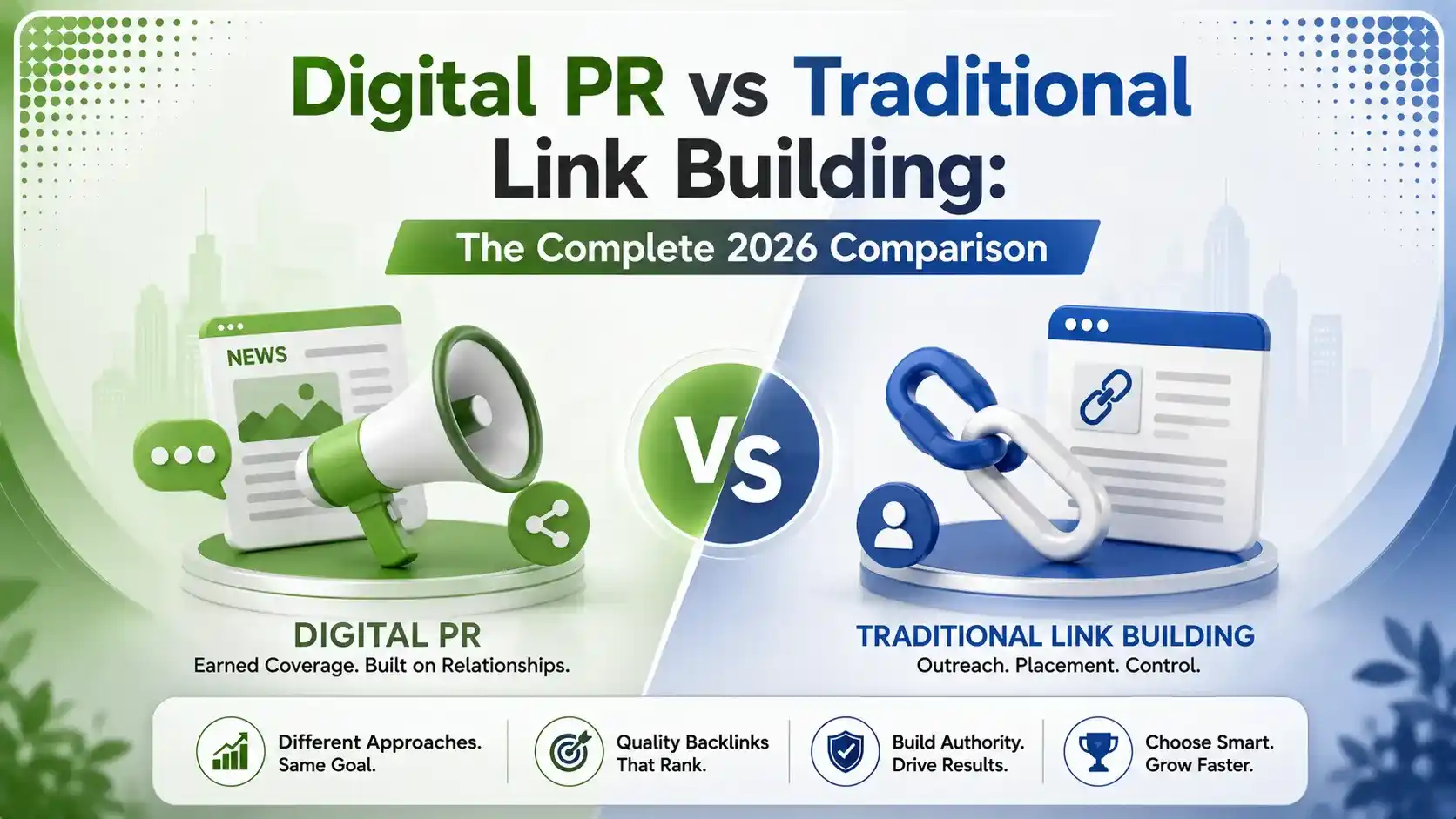
Google devalued 94% of link farm equity in January 2026. Here's how digital PR and traditional link building actually compare now cost, speed, and authority.
Table of Contents
ToggleDigital PR vs traditional link building isn't really a fair fight anymore. Google's January 2026 Link Spam Update reduced the equity value of roughly 94% of links from link farms, PBNs, and low-quality paid placements to near zero, and that single change reshaped which of these two strategies actually pays off.
Both approaches still aim at the same outcome, backlinks from authoritative external sites. But they start from opposite directions. Traditional link building starts with the goal, you need a link, and works backward to find a reason someone would give you one. Digital PR starts with a genuinely newsworthy story and lets links follow naturally. Midland Marketing's 2026 comparison sums up the trade-off well: traditional link building works faster but requires restraint, while digital PR grows more slowly but compounds over time.
That difference in origin is exactly what determines which links survive an algorithm update and which ones evaporate. 48.6% of SEO professionals now rank digital PR as their most effective link-building method, nearly triple guest posting's share.
This guide breaks down what each strategy actually delivers, what each costs, and the specific business situations where one clearly beats the other.
01Digital PR vs Traditional Link Building: The Core Difference
Acemindtech's 2026 comparison defines the split cleanly: traditional link building is the active pursuit of backlinks through direct outreach and tactics designed specifically to earn one. Digital PR is the practice of creating newsworthy content and stories designed to earn media coverage, with backlinks as a key byproduct rather than the primary ask.
Pressfrolic's May 2026 breakdown puts it in even sharper terms: traditional links are negotiated or purchased, digital PR links are earned through genuine editorial value. That earned-versus-acquired distinction is exactly what Google's algorithms increasingly reward and increasingly detect.
02How Google's 2026 Link Spam Update Changed the Math
Semola Digital's June 2026 analysis lays out the scale of the shift: Google's January 2026 Link Spam Update applied a retroactive quality filter across the entire index, reducing the equity value of 94% of links originating from link farms, private blog networks, and low-quality paid placements to approximately zero.
Outpaceseo's authority guide frames the underlying reason plainly: Google has gotten far better at identifying and devaluing manipulative link building. What it can't devalue is a genuine editorial mention in a publication a journalist chose to write on their own.
Pressfrolic's analysis is careful on this point: traditional link building isn't dead, but its risk-to-reward ratio has shifted unfavorably. Utility-driven content, genuinely useful guides and resources that earn organic references, still works. Bulk, low-quality tactics are what took the hit.
03Where Traditional Link Building Still Wins
Speed and volume remain traditional link building's genuine strengths. Acemindtech's comparison, referenced above, notes a well-targeted broken link building campaign can produce new links within days of outreach, while digital PR campaigns typically take weeks to plan and execute.
Systematic outreach-based link building can also produce a consistent stream of 5 to 15 new referring domains per month with sustained effort, a predictability digital PR campaigns don't offer since a single pitch might land three placements or none at all.
04Where Digital PR Pulls Ahead
Semola Digital's 10-dimension head-to-head comparison scores digital PR the winner across 8 of 10 metrics, losing only on speed to initial results and raw volume scalability. The gap widens further once AI search enters the picture.
Wytlabs' June 2026 core-differences breakdown explains why: digital PR earns links from high-authority publications that lift domain-level trust, while link building tends to improve page-level rankings through anchor-text context on specific URLs. Editorial mentions also produce entity co-occurrence signals, AI systems increasingly rely on brand mentions rather than just backlinks to decide who to cite.
05What Each Strategy Actually Costs in 2026
Instantpress's 2026 statistics roundup puts the industry-wide cost per earned digital PR link at roughly $750, with 76% of SEOs paying $300 or more per placement. Digital PR retainers commonly run $5,000 to $15,000+ per month depending on scope and agency tier.
Traditional link-building retainers land in a similar or slightly lower range, typically $3,000 to $10,000 per month, but with a materially different unit economics story: per-link cost for traditional placements averages closer to $509, while digital PR's per-link cost runs $1,250 to $1,500 once campaign strategy, creative assets, and journalist outreach are factored in, figures Reporter Outreach's 2026 pricing research backs up closely.
06Digital PR vs Traditional Link Building at a Glance
Tattvammedia's 2026 comparison guide lands on a similar breakdown across the dimensions that matter most to a real budgeting decision.
| Dimension | Traditional Link Building | Digital PR |
|---|---|---|
| Speed to first result | Days to weeks | Weeks to months |
| Volume predictability | Higher; scales systematically | Lower; campaign-dependent |
| Typical link authority | DR 30-50 range | DR 60-85, often Tier 1 publications |
| Cost per link | ~$509 average | $1,250-$1,500 average |
| AI citation eligibility | Limited | Strong; earned media drives most AI citations |
| Algorithm resilience | Vulnerable to spam updates | High; editorial links are hard to devalue |
07When to Choose Each Strategy
Growresolve's guide to the two approaches lands on the same conclusion most current research points to: they complement rather than compete. Traditional link building provides scalable, predictable backlink volume. Digital PR earns high-authority links that enhance trust, visibility, and increasingly, AI citation eligibility.
Choose traditional link building when you need predictable monthly volume and have utility-driven content worth referencing.
Choose digital PR when you need durable, algorithm-resistant authority and have data or expertise worth turning into a story.
Combine both if budget allows; digital PR sets the authority ceiling while consistent outreach builds the referring domain base underneath it.
Start with link building if your site is new and needs foundational authority fast, then shift toward digital PR as credibility builds.
08Digital PR Data-Story Pitch Template
The pitch angle for digital PR is fundamentally different from a link-building outreach email. Journalists respond to a genuinely newsworthy story, not a resource request.
Subject: New data: [surprising finding] in [industry/topic]

Hi [Journalist name],

I noticed your recent piece on [related story they covered]. We just
completed original research on [topic], analyzing [data source/sample
size], and found something that might interest your readers:

[One-sentence surprising or newsworthy finding]

Happy to share the full dataset, a summary graphic, or a quote from
our [relevant expert] if it's useful for a story. No obligation either
way, just thought the timing lined up with what you've been covering.

[Your name]
[Link to full data/methodology if available]
09Priority Workflow Stepper
Five decisions shape a smart digital PR vs link building strategy. Tap each one for the specific consideration.
Assess Your Timeline
Need links fast? Traditional link building delivers within days. Digital PR typically takes weeks to plan and execute a full campaign.
10Which Strategy Fits You Score
Score your situation to see whether digital PR, traditional link building, or a hybrid mix fits best.
Which Strategy Fits You Score
Select the option that best matches your current situation
11FAQs on Digital PR vs Traditional Link Building
Digital PR wins on authority, algorithm resilience, and AI citation eligibility. Traditional link building wins on speed and predictable monthly volume. Most strategies benefit from both.
Digital PR averages $1,250 to $1,500 per earned link, versus roughly $509 for a typical traditional backlink, though digital PR links tend to carry higher domain authority.
Yes. Google's January 2026 Link Spam Update applied a retroactive quality filter that reduced equity value for links from link farms, PBNs, and low-quality paid placements to near zero.
Yes, though it takes more hands-on effort. A single original data point or genuine expert insight, pitched directly to relevant journalists, can earn coverage without a large retainer.
Yes, more than traditional link building. Earned media and brand mentions correlate more strongly with AI Overview and chatbot citations than backlinks alone.
Related Articles
What We Learn Today
Digital PR is earned; traditional link building is negotiated or purchased
Google's 2026 update devalued 94% of link farm and PBN equity
Link building wins on speed; digital PR wins on authority
Digital PR costs more per link but earns higher DR placements
Earned media drives most AI citation and brand recognition signals
A hybrid approach outperforms relying on either strategy alone
Build a Complete Off-Page SEO Foundation
Whichever strategy you choose, pair it with a strong internal link and content foundation. Explore our guest blogging and backlink analysis guides next.
Related Posts
Previous Post
Next Post
Previous Post
Next Post



- Artificial Intelligence
- Content
- Core Web Vitals
- Development
- Digital Marketing
- Display Advertising
- Google Ads
- Google Search Console
- GTM
- HTML
- HTML CSS
- JavaScript
- Keyword Research
- Link Building
- LinkedIn Ads
- Local SEO
- Meta Ads
- Mobile SEO
- Off-Page SEO
- On-Page SEO
- Paid Media
- Paid Media Analytics
- PHP
- PPC Strategy
- Python
- SEO
- SEO Basics
- SEO Tools
- Social
- Technical SEO