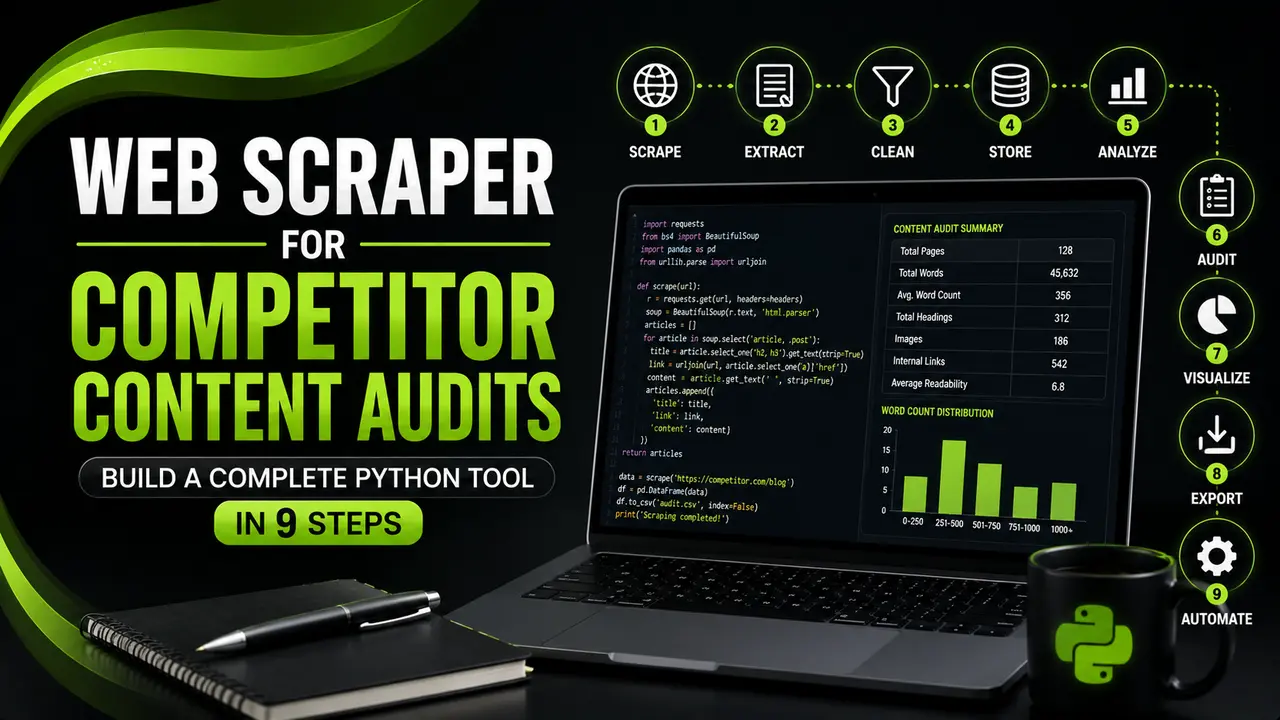
This guide builds a working web scraper for competitor content audits step by step, using Python, requests, and BeautifulSoup to pull structured data from competitor pages.



This guide builds a working web scraper for competitor content audits step by step, using Python, requests, and BeautifulSoup to pull structured data from competitor pages.
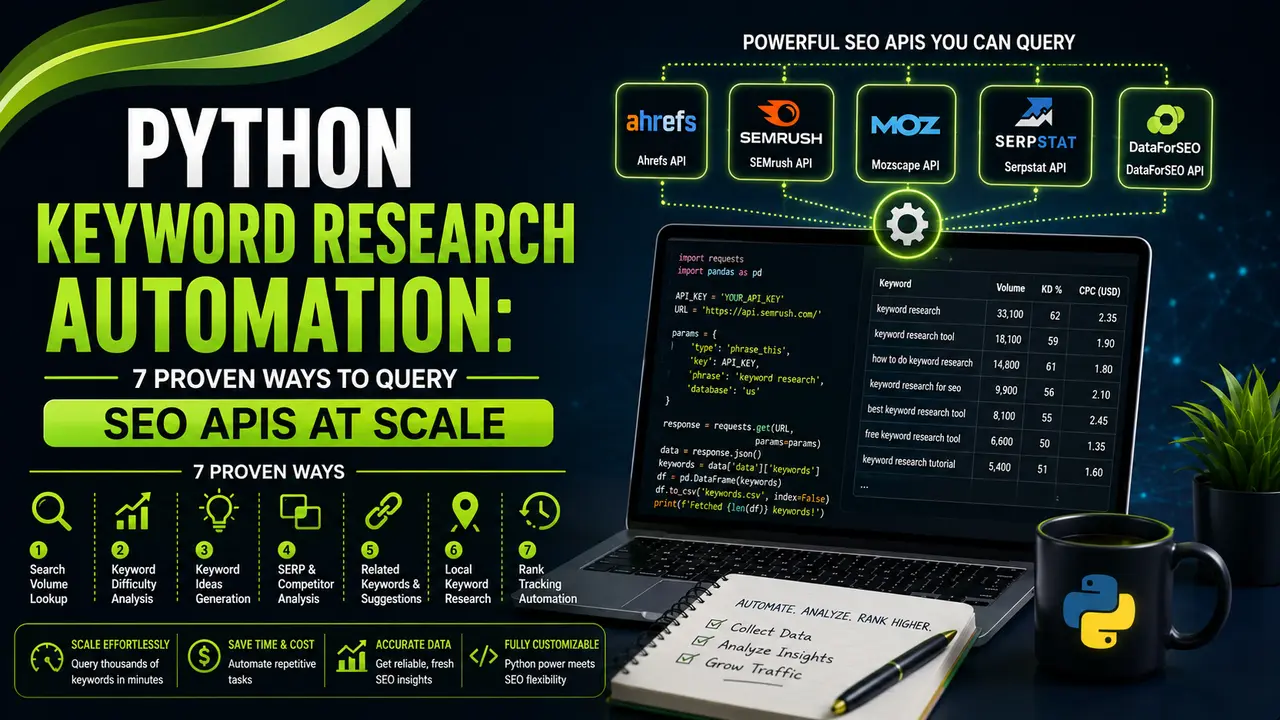
This guide walks through python keyword research automation step by step, from authenticating with the Google Ads and DataForSEO APIs to clustering thousands of keywords automatically with Python.
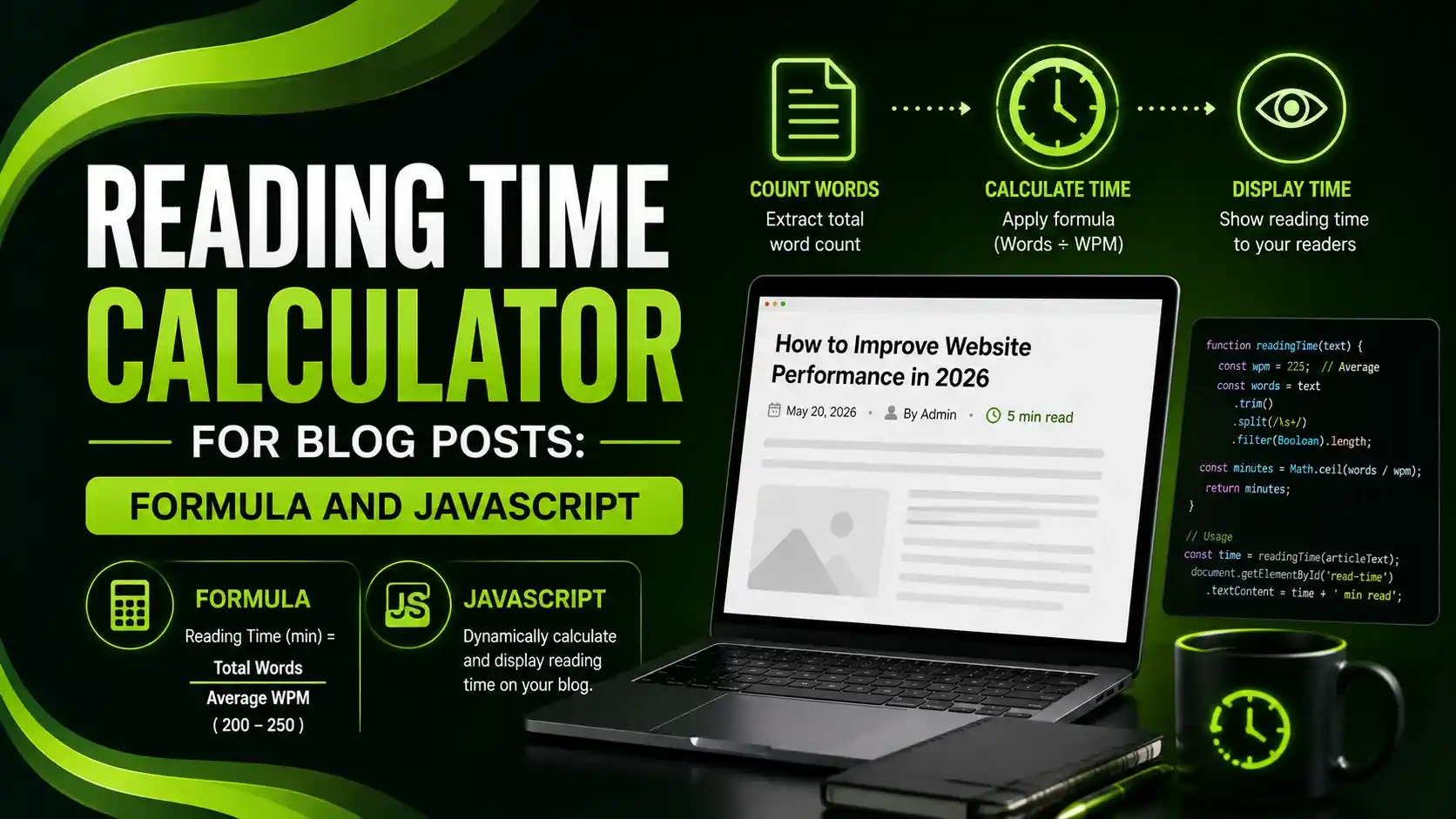
A reading time calculator for blog posts uses one formula: word count divided by reading speed — 200-265 WPM depending on your source.
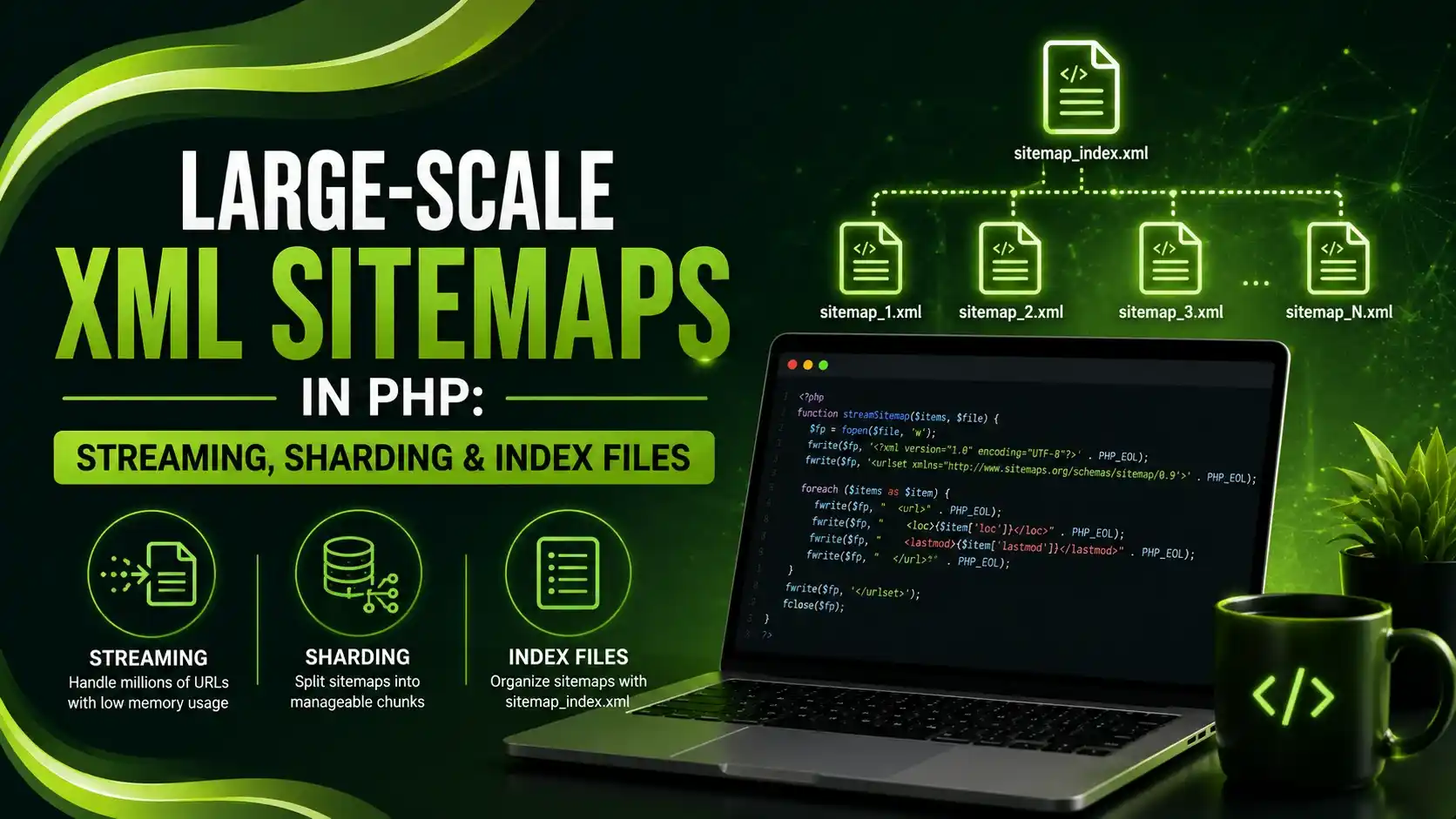
A large-scale XML sitemap in PHP needs streaming, not fetchAll — XMLWriter, unbuffered PDO, and automatic sharding at the 50,000 URL wall.

Google Tag Manager is the tool that lets you add or change tracking codes on your website without touching the site's code every time.

A dark mode toggle using JavaScript needs to check localStorage, then OS preference, then default — and apply it before the page even renders.

Build an AI image generator using an API — real Express code, three response formats handled correctly, and a security-first approach to your API key.
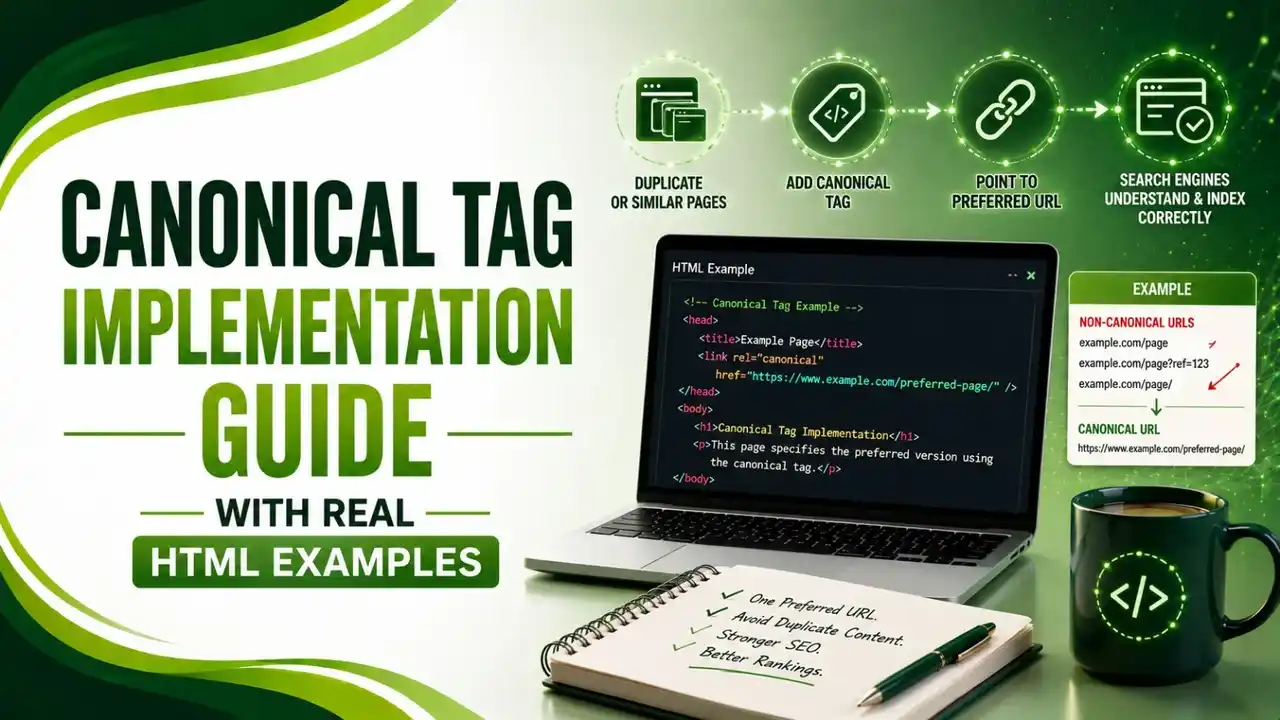
Canonical tag implementation looks simple, but small mistakes cause Google to ignore it entirely. Here's the real HTML for every common scenario.
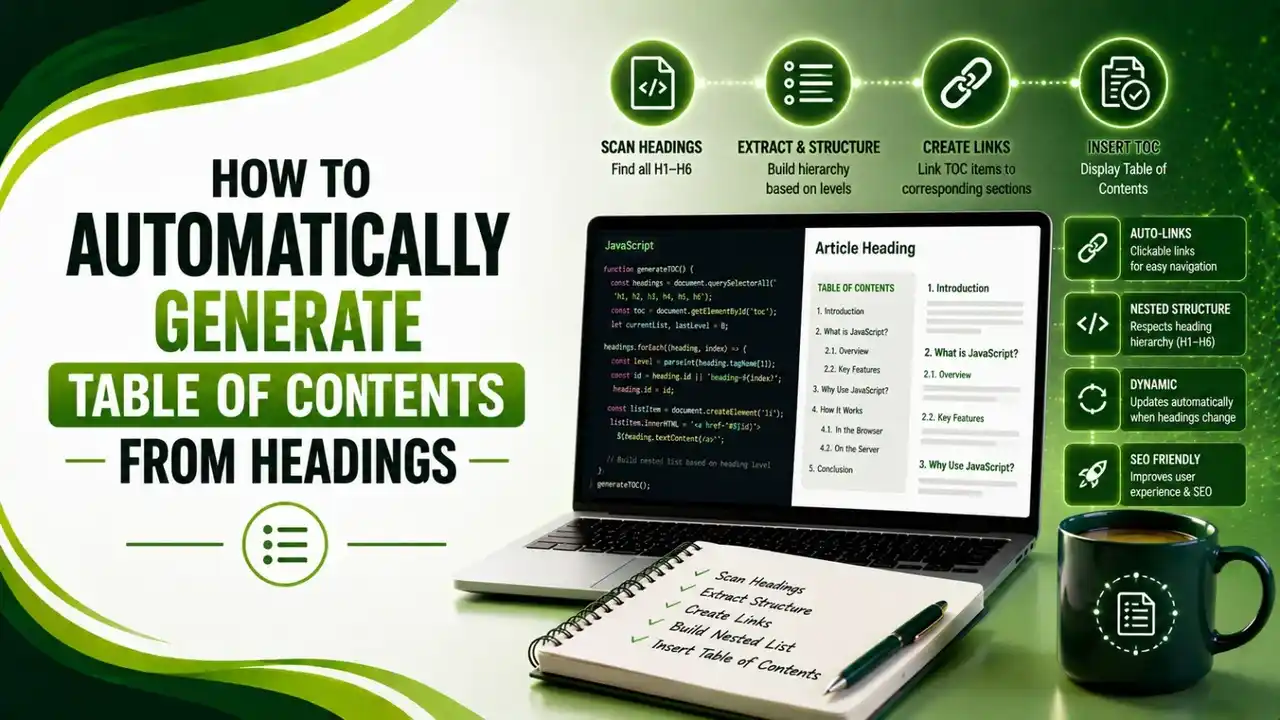
Automatically generate table of contents from headings using vanilla JS — no library needed. Slugified IDs, nesting, and active-section highlighting.
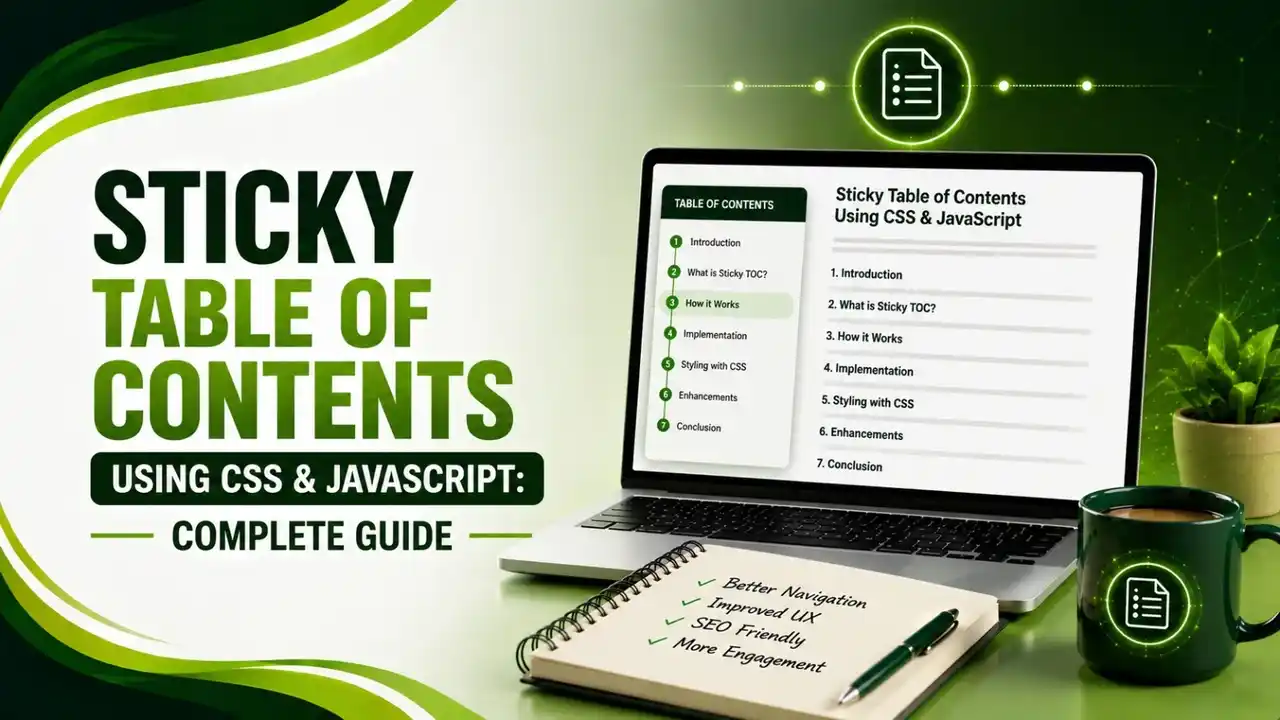
A sticky table of contents using CSS & JavaScript combines position: sticky with IntersectionObserver — plus a look at the emerging CSS-only method.