
- Home
- SEODiscover the latest updates from across the United States, including politics, culture, economy, and trending stories. Stay informed on the key events shaping the nation and the topics everyone’s talking about.
- Technical SEOLearn technical SEO concepts including crawling, indexing, XML sitemaps, robots.txt, canonical tags, site architecture, and website performance.
- Local SEOOptimize your business for local seo with Google Business Profile, local citations, reviews, maps, and location-based SEO.
- Mobile SEOImprove your website’s mobile seo performance with responsive design, mobile-first indexing, usability, and page speed optimization.
- On-Page SEOExplore on-page seo optimization techniques such as title tags, meta descriptions, headings, URLs, internal linking, and content optimization.
- Off-Page SEODiscover off-page SEO strategies such as backlinks, digital PR, brand mentions, outreach, and authority building.
- SEO ToolsExplore the best SEO tools for keyword research, technical audits, backlink analysis, rank tracking, and website optimization.
- Core Web VitalsLearn how to improve Core Web Vitals including LCP, INP, CLS, page speed, and overall user experience for better rankings.
- Keyword ResearchLearn how to find profitable keywords, analyze search intent, evaluate competition, and build effective keyword strategies.
- Link BuildingMaster ethical link building techniques, backlink analysis, outreach methods, guest posting, and authority growth strategies.
- Google Search ConsoleLearn how to use Google Search Console to monitor indexing, fix errors, analyze search performance, and improve SEO.
- SEO BasicsLearn the fundamentals of search engine optimization (SEO Basics), including how search engines work, SEO terminology, and beginner-friendly best practices.
- Paid Media
- Display AdvertisingLearn display advertising strategies, banner ads, audience targeting, remarketing, Google Display campaigns, and optimization techniques.
- Google AdsLearn Google Ads strategies, campaign setup, bidding, keywords, Performance Max, Search Ads, and optimization techniques.
- LinkedIn AdsLearn LinkedIn Ads strategies for B2B marketing, lead generation, audience targeting, campaign optimization, and paid social advertising.
- Meta AdsLearn Meta Ads strategies for Facebook and Instagram, including campaign setup, targeting, retargeting, and performance optimization.
- Paid Media AnalyticsLearn paid media analytics, including CPC, CTR, CPA, ROAS, conversion tracking, attribution, reporting, and campaign performance analysis.
- PPC StrategyLearn effective PPC strategies, campaign planning, bidding, keyword targeting, landing pages, conversion optimization, and more.
- ContentTransform your living spaces with inspiration, tips, and trends in interior design. From minimalist decor to bold statements, find ideas for every style and budget.
- Social
- Digital MarketingExplore stories and advice on living your best life. From personal growth to entertainment, dive into the latest in lifestyle trends and inspiration.
- Artificial IntelligenceStay informed about health and wellness with expert advice, fitness tips, and the latest medical breakthroughs. Your guide to a healthier and happier life.
- DevelopmentYou will find development related educational articles
- GTMLearn Google Tag Manager (GTM) with practical guides for tags, triggers, variables, tracking, conversions, and website analytics implementation.
- HTMLLearn HTML with simple tutorials, examples, tags, elements, attributes, and best practices for building modern web pages.
- HTML CSSLearn HTML CSS together with practical tutorials, examples, layouts, styling techniques, responsive design, and modern web development practices.
- HTML JSLearn HTML JS – JavaScript with practical tutorials and examples for adding interactivity, dynamic content, events, and functionality to web pages.
- JavaScriptExplore JavaScript tutorials, examples, concepts, and practical techniques for creating interactive and dynamic websites and web applications.
- PHPLearn PHP programming with practical tutorials, examples, functions, syntax, and web development techniques for beginners and developers.
- PythonLearn Python programming with practical tutorials, examples, syntax, functions, automation techniques, and useful programming concepts.
- Home
- SEODiscover the latest updates from across the United States, including politics, culture, economy, and trending stories. Stay informed on the key events shaping the nation and the topics everyone’s talking about.
- Technical SEOLearn technical SEO concepts including crawling, indexing, XML sitemaps, robots.txt, canonical tags, site architecture, and website performance.
- Local SEOOptimize your business for local seo with Google Business Profile, local citations, reviews, maps, and location-based SEO.
- Mobile SEOImprove your website’s mobile seo performance with responsive design, mobile-first indexing, usability, and page speed optimization.
- On-Page SEOExplore on-page seo optimization techniques such as title tags, meta descriptions, headings, URLs, internal linking, and content optimization.
- Off-Page SEODiscover off-page SEO strategies such as backlinks, digital PR, brand mentions, outreach, and authority building.
- SEO ToolsExplore the best SEO tools for keyword research, technical audits, backlink analysis, rank tracking, and website optimization.
- Core Web VitalsLearn how to improve Core Web Vitals including LCP, INP, CLS, page speed, and overall user experience for better rankings.
- Keyword ResearchLearn how to find profitable keywords, analyze search intent, evaluate competition, and build effective keyword strategies.
- Link BuildingMaster ethical link building techniques, backlink analysis, outreach methods, guest posting, and authority growth strategies.
- Google Search ConsoleLearn how to use Google Search Console to monitor indexing, fix errors, analyze search performance, and improve SEO.
- SEO BasicsLearn the fundamentals of search engine optimization (SEO Basics), including how search engines work, SEO terminology, and beginner-friendly best practices.
- Paid Media
- Display AdvertisingLearn display advertising strategies, banner ads, audience targeting, remarketing, Google Display campaigns, and optimization techniques.
- Google AdsLearn Google Ads strategies, campaign setup, bidding, keywords, Performance Max, Search Ads, and optimization techniques.
- LinkedIn AdsLearn LinkedIn Ads strategies for B2B marketing, lead generation, audience targeting, campaign optimization, and paid social advertising.
- Meta AdsLearn Meta Ads strategies for Facebook and Instagram, including campaign setup, targeting, retargeting, and performance optimization.
- Paid Media AnalyticsLearn paid media analytics, including CPC, CTR, CPA, ROAS, conversion tracking, attribution, reporting, and campaign performance analysis.
- PPC StrategyLearn effective PPC strategies, campaign planning, bidding, keyword targeting, landing pages, conversion optimization, and more.
- ContentTransform your living spaces with inspiration, tips, and trends in interior design. From minimalist decor to bold statements, find ideas for every style and budget.
- Social
- Digital MarketingExplore stories and advice on living your best life. From personal growth to entertainment, dive into the latest in lifestyle trends and inspiration.
- Artificial IntelligenceStay informed about health and wellness with expert advice, fitness tips, and the latest medical breakthroughs. Your guide to a healthier and happier life.
- DevelopmentYou will find development related educational articles
- GTMLearn Google Tag Manager (GTM) with practical guides for tags, triggers, variables, tracking, conversions, and website analytics implementation.
- HTMLLearn HTML with simple tutorials, examples, tags, elements, attributes, and best practices for building modern web pages.
- HTML CSSLearn HTML CSS together with practical tutorials, examples, layouts, styling techniques, responsive design, and modern web development practices.
- HTML JSLearn HTML JS – JavaScript with practical tutorials and examples for adding interactivity, dynamic content, events, and functionality to web pages.
- JavaScriptExplore JavaScript tutorials, examples, concepts, and practical techniques for creating interactive and dynamic websites and web applications.
- PHPLearn PHP programming with practical tutorials, examples, functions, syntax, and web development techniques for beginners and developers.
- PythonLearn Python programming with practical tutorials, examples, syntax, functions, automation techniques, and useful programming concepts.
Now Reading: Large Scale XML Sitemaps in PHP: Streaming, Sharding & Index Files
-
01
Large Scale XML Sitemaps in PHP: Streaming, Sharding & Index Files
- Home//
- SEO//Discover the latest updates from across the United States, including politics, culture, economy, and trending stories. Stay informed on the key events shaping the nation and the topics everyone’s talking about.
- Technical SEO//Learn technical SEO concepts including crawling, indexing, XML sitemaps, robots.txt, canonical tags, site architecture, and website performance.
- Local SEO//Optimize your business for local seo with Google Business Profile, local citations, reviews, maps, and location-based SEO.
- Mobile SEO//Improve your website’s mobile seo performance with responsive design, mobile-first indexing, usability, and page speed optimization.
- On-Page SEO//Explore on-page seo optimization techniques such as title tags, meta descriptions, headings, URLs, internal linking, and content optimization.
- Off-Page SEO//Discover off-page SEO strategies such as backlinks, digital PR, brand mentions, outreach, and authority building.
- SEO Tools//Explore the best SEO tools for keyword research, technical audits, backlink analysis, rank tracking, and website optimization.
- Core Web Vitals//Learn how to improve Core Web Vitals including LCP, INP, CLS, page speed, and overall user experience for better rankings.
- Keyword Research//Learn how to find profitable keywords, analyze search intent, evaluate competition, and build effective keyword strategies.
- Link Building//Master ethical link building techniques, backlink analysis, outreach methods, guest posting, and authority growth strategies.
- Google Search Console//Learn how to use Google Search Console to monitor indexing, fix errors, analyze search performance, and improve SEO.
- SEO Basics//Learn the fundamentals of search engine optimization (SEO Basics), including how search engines work, SEO terminology, and beginner-friendly best practices.
- Paid Media//
- Display Advertising//Learn display advertising strategies, banner ads, audience targeting, remarketing, Google Display campaigns, and optimization techniques.
- Google Ads//Learn Google Ads strategies, campaign setup, bidding, keywords, Performance Max, Search Ads, and optimization techniques.
- LinkedIn Ads//Learn LinkedIn Ads strategies for B2B marketing, lead generation, audience targeting, campaign optimization, and paid social advertising.
- Meta Ads//Learn Meta Ads strategies for Facebook and Instagram, including campaign setup, targeting, retargeting, and performance optimization.
- Paid Media Analytics//Learn paid media analytics, including CPC, CTR, CPA, ROAS, conversion tracking, attribution, reporting, and campaign performance analysis.
- PPC Strategy//Learn effective PPC strategies, campaign planning, bidding, keyword targeting, landing pages, conversion optimization, and more.
- Content//Transform your living spaces with inspiration, tips, and trends in interior design. From minimalist decor to bold statements, find ideas for every style and budget.
- Social//
- Digital Marketing//Explore stories and advice on living your best life. From personal growth to entertainment, dive into the latest in lifestyle trends and inspiration.
- Artificial Intelligence//Stay informed about health and wellness with expert advice, fitness tips, and the latest medical breakthroughs. Your guide to a healthier and happier life.
- Development//You will find development related educational articles
- GTM//Learn Google Tag Manager (GTM) with practical guides for tags, triggers, variables, tracking, conversions, and website analytics implementation.
- HTML//Learn HTML with simple tutorials, examples, tags, elements, attributes, and best practices for building modern web pages.
- HTML CSS//Learn HTML CSS together with practical tutorials, examples, layouts, styling techniques, responsive design, and modern web development practices.
- HTML JS//Learn HTML JS – JavaScript with practical tutorials and examples for adding interactivity, dynamic content, events, and functionality to web pages.
- JavaScript//Explore JavaScript tutorials, examples, concepts, and practical techniques for creating interactive and dynamic websites and web applications.
- PHP//Learn PHP programming with practical tutorials, examples, functions, syntax, and web development techniques for beginners and developers.
- Python//Learn Python programming with practical tutorials, examples, syntax, functions, automation techniques, and useful programming concepts.
- Home
- Development
- PHP
- Large Scale XML Sitemaps in PHP: Streaming, Sharding & Index Files
Large Scale XML Sitemaps in PHP: Streaming, Sharding & Index Files

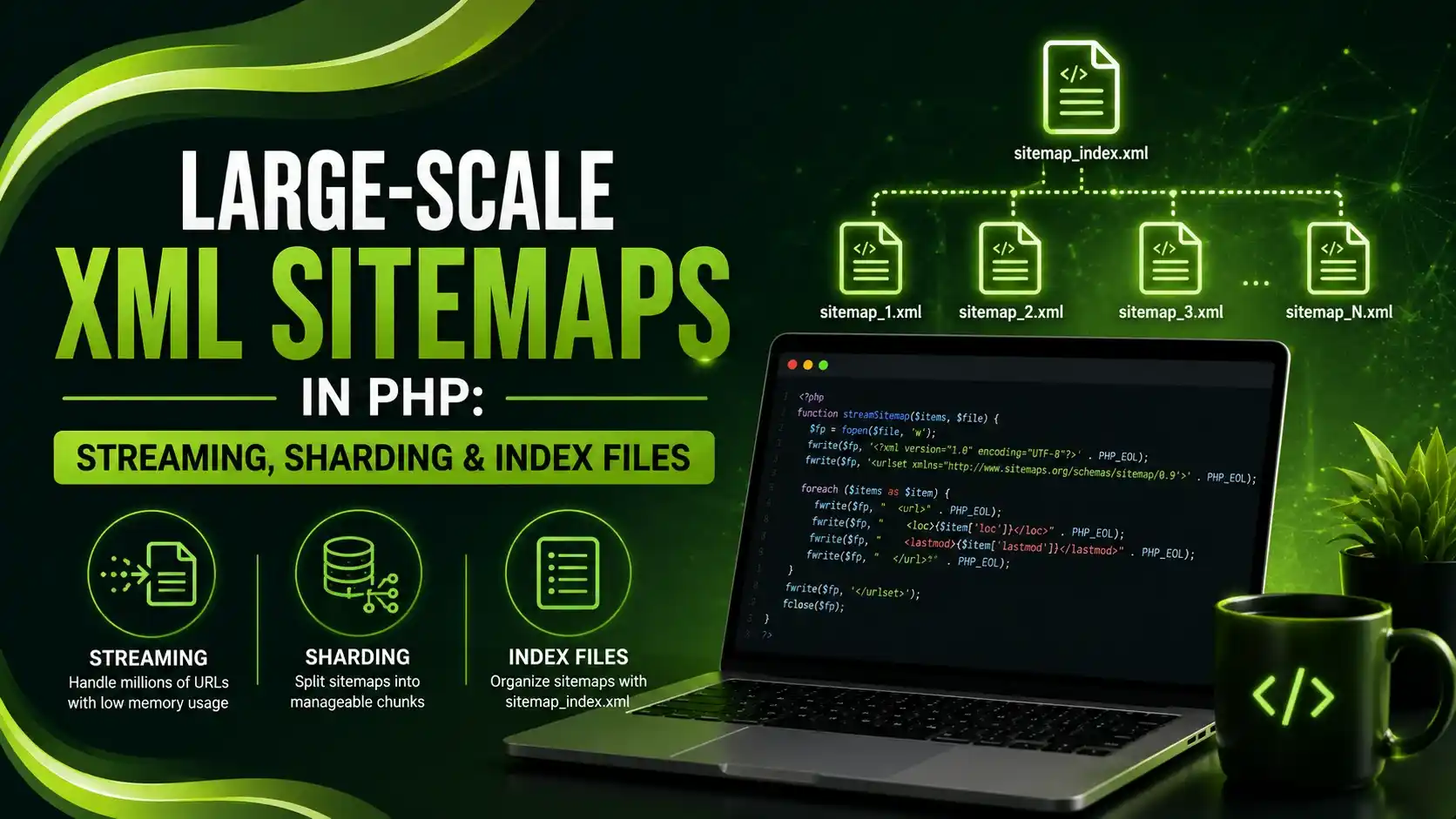
A large-scale XML sitemap in PHP needs streaming, not fetchAll — XMLWriter, unbuffered PDO, and automatic sharding at the 50,000 URL wall.
Table of Contents
ToggleAn XML sitemap for a large site in PHP hits a wall that small-site tutorials never mention: the 50,000 URL and 50MB-uncompressed limits defined in the Sitemaps protocol. Once a site crosses that line, building one flat sitemap file isn't just wrong, it can produce a file search engines silently reject or truncate.
01Large Scale XML Sitemaps in PHP: Why the Approach Changes
The official Sitemaps protocol is explicit: each sitemap file must contain no more than 50,000 URLs and must be no larger than 50MB uncompressed. Cross either limit, and you need multiple sitemap files referenced by a single sitemap index file instead of one giant document.
The second wall is memory, not the URL protocol. Jasmine Directory's guide is direct about the fix: use XMLWriter for streaming generation and PDO with unbuffered queries, and avoid loading entire result sets into arrays. Stream everything, don't build the whole document in memory first.
02Streaming a Sitemap File With XMLWriter
Instead of building a DOM object in memory and serializing it at the end, PHP's XMLWriter class writes elements incrementally, directly to a file or output stream, keeping memory usage flat regardless of how many URLs you write.
function writeSitemapFile($filePath, $urlGenerator) {
  $writer = new XMLWriter();
  $writer->openUri($filePath);
  $writer->startDocument('1.0', 'UTF-8');
  $writer->startElement('urlset');
  $writer->writeAttribute('xmlns', 'http://www.sitemaps.org/schemas/sitemap/0.9');

  // $urlGenerator is a PHP generator, one row is held in memory at a time
  foreach ($urlGenerator as $row) {
    $writer->startElement('url');
    $writer->writeElement('loc', $row['url']);
    $writer->writeElement('lastmod', $row['updated_at']);
    $writer->endElement(); //
  }

  $writer->endElement(); //
  $writer->endDocument();
  $writer->flush();
}
03Feeding It From an Unbuffered PDO Query
The writer above expects a generator, not an array. PDO's MySQL driver buffers full result sets in memory by default, defeating the point of streaming. Disabling buffered queries and wrapping the cursor in a PHP generator keeps only one row in memory at any time, regardless of table size.
$pdo->setAttribute(PDO::MYSQL_ATTR_USE_BUFFERED_QUERY, false);

function fetchIndexableUrls($pdo) {
  $stmt = $pdo->query(
    'SELECT url, updated_at FROM pages WHERE noindex = 0 ORDER BY id'
  );

  // yield hands over one row and pauses, this is the memory-saving part
  while ($row = $stmt->fetch(PDO::FETCH_ASSOC)) {
    yield $row;
  }
}

writeSitemapFile('sitemaps/sitemap-1.xml', fetchIndexableUrls($pdo));
Only indexable, published pages belong in the query. Unpublish a page and forget to exclude it here, and you're actively asking search engines to crawl and index content you no longer want in results, which wastes crawl budget on exactly the pages that matter least.
04Sharding Into Multiple Files at the 50,000 Mark
Once total URLs exceed 50,000, the generator needs to close the current file and open a new one automatically, rather than one script writing a single oversized file that violates the protocol.
function generateShardedSitemaps($urlGenerator, $outputDir, $limitPerFile = 50000) {
  $fileIndex = 1;
  $count = 0;
  $writer = null;
  $generatedFiles = [];

  foreach ($urlGenerator as $row) {
    if ($count % $limitPerFile === 0) {
      if ($writer) {
        $writer->endElement();
        $writer->endDocument();
        $writer->flush();
      }
      $fileName = "sitemap-{$fileIndex}.xml";
      $generatedFiles[] = $fileName;
      $writer = new XMLWriter();
      $writer->openUri($outputDir . '/' . $fileName);
      $writer->startDocument('1.0', 'UTF-8');
      $writer->startElement('urlset');
      $writer->writeAttribute('xmlns', 'http://www.sitemaps.org/schemas/sitemap/0.9');
      $fileIndex++;
    }

    $writer->startElement('url');
    $writer->writeElement('loc', $row['url']);
    $writer->writeElement('lastmod', $row['updated_at']);
    $writer->endElement();

    $count++;
  }

  if ($writer) {
    $writer->endElement();
    $writer->endDocument();
    $writer->flush();
  }

  return $generatedFiles;
}
05Building the Sitemap Index File
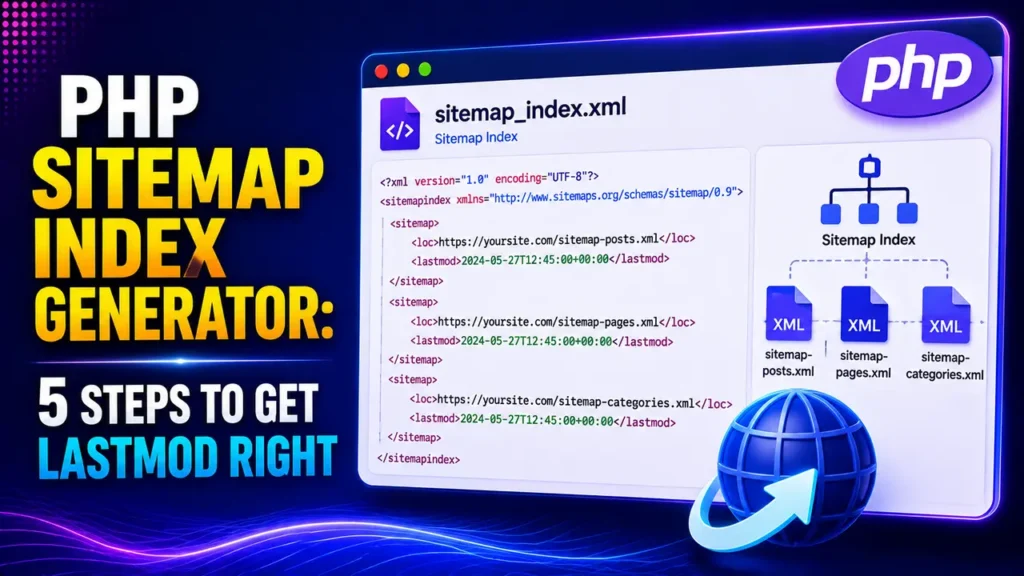
Once URLs are split across multiple files, a single sitemap index file lists each one. This is the only file you submit to Search Console and reference in robots.txt, search engines follow it to discover the rest.
function writeSitemapIndex($generatedFiles, $baseUrl, $outputPath) {
  $writer = new XMLWriter();
  $writer->openUri($outputPath . '/sitemap-index.xml');
  $writer->startDocument('1.0', 'UTF-8');
  $writer->startElement('sitemapindex');
  $writer->writeAttribute('xmlns', 'http://www.sitemaps.org/schemas/sitemap/0.9');

  foreach ($generatedFiles as $fileName) {
    $writer->startElement('sitemap');
    $writer->writeElement('loc', $baseUrl . '/' . $fileName);
    $writer->writeElement('lastmod', date('c'));
    $writer->endElement();
  }

  $writer->endElement();
  $writer->endDocument();
  $writer->flush();
}
A documented real-world case handled 60 million URLs across 20 languages in PHP and Laravel. The team's original approach kept every processed item in memory until hitting the 50,000 limit, which meant items sat in RAM the whole time. Switching to write-and-stream in small batches, opening and closing the sitemap file as needed, was what actually made the process viable at that scale.
06Gzip Compression Without Blowing Up Memory
Letter Counter's guide notes gzip compression can reduce actual transfer size by 70-90% without affecting how the 50MB limit is calculated, since the cap applies to the uncompressed content. For large sitemaps, compress the already-written file rather than trying to gzip inline during the write loop.
function gzipSitemapFile($filePath) {
  $gzPath = $filePath . '.gz';
  $source = fopen($filePath, 'rb');
  $dest = gzopen($gzPath, 'wb9');

  while (!feof($source)) {
    gzwrite($dest, fread($source, 1048576)); // 1MB chunks
  }

  fclose($source);
  gzclose($dest);
}
07Buffered vs Streaming Approach Compared
A quick reference for why the streaming approach matters as URL counts grow.
| Factor | Buffered (fetchAll + DOMDocument) | Streaming (Generator + XMLWriter) |
|---|---|---|
| Memory usage at 1M URLs | Scales with total URL count | Stays flat regardless of total count |
| Risk of memory limit crash | High on large sites | Effectively eliminated |
| Code complexity | Simpler to write initially | Slightly more setup, generators + sharding |
| Suitable site size | Small sites, under a few thousand URLs | Any size, including tens of millions |
08Implementation Checklist
A short list to confirm before deploying a large-scale sitemap generator.
Use XMLWriter, not DOMDocument, for anything beyond a few thousand URLs, to keep memory flat.
Disable PDO query buffering, wrap the cursor in a generator so only one row loads at a time.
Shard automatically at 50,000 URLs, don't rely on manual file splitting.
Generate a sitemap index file, this is the single file you submit and reference in robots.txt.
Exclude noindexed and unpublished content from the source query, don't waste crawl budget on it.
09Common Questions
It violates the Sitemaps protocol and may be rejected or truncated by search engines. Split URLs across multiple files, each under the 50,000 limit, and reference them all from a single sitemap index file.
No. The 50MB cap applies to the uncompressed file size, regardless of how small the compressed version ends up being. Gzip saves bandwidth, it doesn't raise the limit.
Usually because the entire URL set is loaded into an array or DOMDocument before writing. Switch to a PHP generator feeding an XMLWriter stream to keep memory usage flat regardless of total URL count.
Submit the sitemap index file. Search engines follow it to discover and crawl each individual sitemap file automatically, so you only need to reference one URL in Search Console and robots.txt.
Not by default. MySQL's PDO driver buffers full result sets in memory. Disable this with PDO::MYSQL_ATTR_USE_BUFFERED_QUERY set to false, and wrap the fetch loop in a generator using yield.
Related Articles
What We Learn Today
The protocol caps every sitemap at 50,000 URLs and 50MB uncompressed
XMLWriter streams output instead of building a DOM in memory
Unbuffered PDO queries plus generators keep memory flat at any scale
Sharding must happen automatically once the URL count crosses the limit
A sitemap index file is the single file you submit and reference
Gzip cuts transfer size but never changes the uncompressed size limit
Build a Complete PHP Technical SEO Toolkit
Large-scale sitemap generation pairs naturally with dynamic meta tags and sitemap type comparisons. Explore both guides next.
Related Posts
Previous Post
Next Post
Previous Post

Next Post





- Artificial Intelligence
- Content
- Core Web Vitals
- Development
- Digital Marketing
- Display Advertising
- Google Ads
- Google Search Console
- GTM
- HTML
- HTML CSS
- JavaScript
- Keyword Research
- Link Building
- LinkedIn Ads
- Local SEO
- Meta Ads
- Mobile SEO
- Off-Page SEO
- On-Page SEO
- Paid Media
- Paid Media Analytics
- PHP
- PPC Strategy
- Python
- SEO
- SEO Basics
- SEO Tools
- Social
- Technical SEO