
Now Reading: Google Display Network Targeting: 7 Proven Options
-
01
Google Display Network Targeting: 7 Proven Options
Google Display Network Targeting: 7 Proven Options

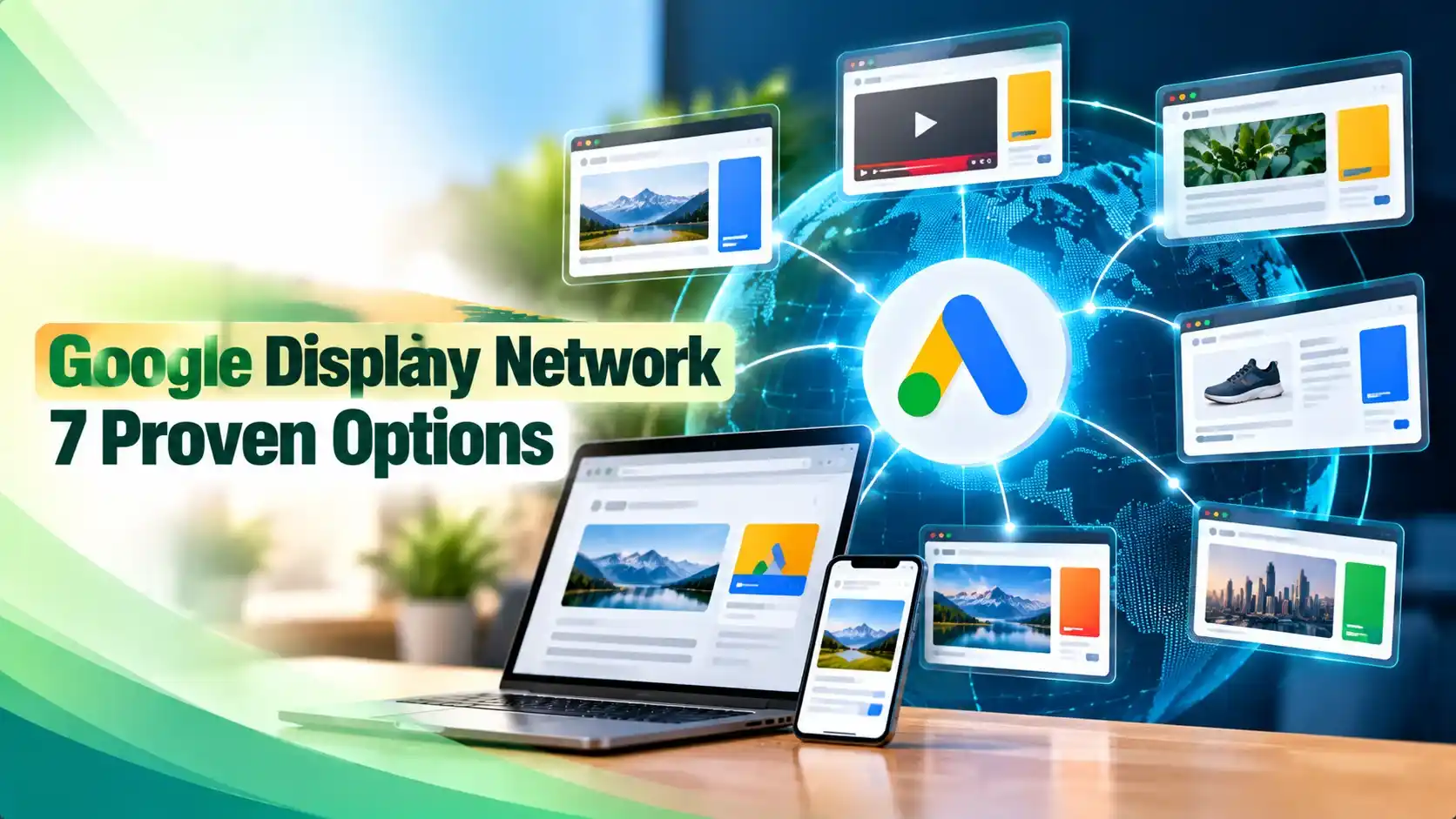
Most wasted Display budget comes down to loose targeting, not bad creative. This guide breaks down the seven real Google Ads options, from affinity and in market segments to remarketing, contextual targeting, demographics, and optimized targeting, so you can set up campaigns that reach actual buyers instead of random placements.
Hey! If you have ever switched on a new Display campaign and watched half your budget land on random game apps, this one is for you. We are walking through the real targeting options Google gives you, and how to use each one.
Picture this: it is week two of a new campaign, the dashboard shows thousands of impressions, and conversions are nowhere close to where they should be. That gap almost always traces back to one thing: Google Display Network targeting that was switched on by default and never actually configured for the business. Get the setup right and the same network turns from a budget drain into one of the cheapest ways to stay in front of real buyers.
Google Display Network Targeting Options at a Glance
The Google Display Network spans more than two million websites, videos, and apps, and Google says those properties reach over 90% of internet users worldwide, citing Comscore data. That reach is exactly why loose Google Display Network targeting is so expensive: a tiny mismatch gets multiplied across millions of placements.
Google groups the controls into two families. Audience targeting follows people based on who they are, while content targeting follows the page itself, based on its topic, keywords, or the specific site. Optimized targeting then layers on top of both, looking beyond whatever you selected manually.
This guide walks through seven practical options: affinity segments, in market and custom segments, remarketing lists, contextual targeting, demographic targeting, and optimized targeting paired with placement exclusions. Treat them as building blocks, not a checklist to switch on all at once.
Tip
Before touching any audience settings, read through our Google Ads optimization tips rundown. Several of those habits, like checking the Audiences view weekly, apply directly to Display campaigns.
Affinity Segments Reach People by Lifestyle and Interest
Affinity segments target people according to their passions, lifestyles, habits, and interests, the way Google Ads Help describes groups such as home cooking enthusiasts or outdoor adventure fans. They describe who someone is over the long run, not what they happen to be shopping for this week.
That makes affinity segments a strong fit for top of funnel awareness goals, where the job is repeated reach in front of a relevant crowd rather than an immediate click. They tend to perform best with creative that sells a lifestyle, not a spec sheet.
One common mistake is expecting direct response numbers from an awareness audience. Judge affinity segments on reach, frequency, and assisted conversions rather than first click sales, and the picture usually looks a lot healthier.
Affinity segments are one of the simplest Google Display Network targeting options to turn on, but also the easiest to misjudge if you expect search level intent from what is really a lifestyle audience.
In Market and Custom Segments Target Active Shoppers
In market segments flip the logic around. Google Ads Help defines them as a way to reach people based on their recent purchase intent, shoppers who are currently researching and seriously considering a purchase like yours right now.
Custom segments go a step further by letting you define the audience yourself. You enter keywords, URLs, and apps related to your product, and Google shows ads to people who show similar interest or behavior. Our breakdown of Google Ads audience signals covers exactly how to build these inputs so Display, Demand Gen, and Performance Max all pull from the same reliable signal set.
Search Engine Journal also notes that combined segments let you stack multiple segments together with logical "and" conditions, plus exclusions, which is useful once a single segment is converting well but feels too broad on its own.
PPC Hero's audience research walkthrough recommends starting with demographics in Analytics, then sorting the resulting in market interests by revenue before layering on any keyword overlay.
| Segment type | Built from | Best used for |
|---|---|---|
| Affinity | Google's long term interest and lifestyle data | Brand awareness, reach |
| In market | Recent purchase research signals | Mid funnel consideration |
| Custom | Your own keywords, URLs, and apps | Niche or new product categories |
| Your data (remarketing) | Visitors, customers, app users | Lower funnel, repeat purchase |
Remarketing Lists Bring Past Visitors Back
What used to be called remarketing now lives under "your data segments" inside Google Ads, but the idea has not changed. It targets people who have already engaged with your business, whether that is a site visitor, an app user, or a customer who shared their contact details with you.
Search Engine Journal breaks this family into three practical sources: a standard visitor list built from your tracking tag, Customer Match lists uploaded from your own email or phone data, and audiences imported straight from Google Analytics based on engagement rules you define.
Remarketing quality is only as good as the conversion data feeding it, so tightening up tracking pays off twice. Our guide to enhanced conversions explains how cleaner first party signals make these lists more accurate for both bidding and audience building. Done well, this is often the highest converting Google Display Network targeting option in the whole account, since it only shows ads to people who already know your business.
The Google Display Network reaches more than two million websites, videos, and apps worldwide, according to Google Ads Help, which is a large part of why precise targeting matters so much more here than on Search.
Contextual Targeting Uses Topics Placements and Keywords
Contextual targeting ignores the person and focuses on the content of the moment. Google Ads Help splits it into topic targeting, which runs ads next to content in categories Google has already classified, and placement targeting, which lets you hand pick specific websites, apps, or YouTube channels.
Keyword targeting on the Display Network behaves differently than it does on Search. Search Engine Journal points out that there are no match types here; Google simply matches your keywords broadly to page content, so it functions closer to broad match than anything else in your account.
Placements deserve special care during setup. Portent's PPC team recommends using Display Planner to pull placement ideas from a landing page, and warns that typing "YouTube" alone can surface lookalike video sites instead of the real thing, so you need the full "YouTube.com" placement to target it correctly.
Contextual settings are among the oldest Google Display Network targeting options available, and they still earn their place today when an audience pool is too new or too thin for segments to have enough data to work with.
Tip
If your content strategy already leans on automated placement discovery, compare it against our Demand Gen campaigns guide, since Demand Gen hands placement decisions to Google entirely while standard Display still lets you choose manually.
Demographic Targeting Narrows Who Sees Your Ads
Demographic targeting on Display covers age, gender, parental status, and in certain countries, household income. Each category includes an "Unknown" bucket, since some sites simply do not share demographic data back to Google.
You can apply this two ways: bid adjustments that raise or lower what you pay for a group while still showing ads to everyone, or hard exclusions that stop a group from seeing your ads at all. Google Ads Help warns against excluding "Unknown" by default, since that bucket can hide real buyers.
Portent's advice lines up with Google's own caution here: gather performance data first, then refine with exclusions once the numbers justify it, rather than narrowing the audience on day one based on assumptions. Demographics rarely work as a stand alone Google Display Network targeting option; they earn their keep as a layer on top of a segment or a placement list.
Optimized Targeting Audience Expansion and Placement Exclusions
Optimized targeting is now the default layer on top of everything else. Google Ads Help describes it as a way to find new, relevant audience segments that drive impressions, clicks, or conversions, using your chosen audiences and content signals as an optional starting point, not a hard boundary.
It effectively absorbed what used to be a separate feature called audience expansion. Search Engine Land reported that when Google merged Smart and standard Display campaigns, optimized targeting rolled out to all Display campaigns and was turned on by default, which means most advertisers are already running it whether they chose to or not. WordStream's analysis adds a useful distinction: audience expansion mainly finds lookalikes of what you picked, while optimized targeting can match people to your recent converters even if they fall outside any segment you selected.
Because it can reach further than you expect, pair it with placement exclusions. Google Ads Help confirms you can exclude specific websites, apps, YouTube videos or channels, and whole content categories or labels, applied at the campaign, ad group, or account level. Teams running Performance Max alongside Display should recognize the pattern; our Performance Max optimization walkthrough covers the same signals plus exclusions logic from the automated bidding side. Taken together, optimized targeting has quietly become the most influential Google Display Network targeting option in most accounts, whether or not anyone ever opens its settings.
Optimized targeting is now turned on by default across standard Display campaigns, not just the old Smart Display option, following Google's merge of the two campaign types, as reported by Search Engine Land.
Google Display Network targeting is the combination of settings that decide who sees your Display ads and where. It blends audience based options like affinity, in market, custom, and remarketing segments with content based options like topics, placements, and keywords, and optimized targeting can then extend reach beyond whatever you picked manually.
Affinity segments describe a person's long term interests and lifestyle, such as being a fitness enthusiast, while in market segments describe active purchase intent, meaning Google believes that person is researching a purchase like yours right now.
You build a custom segment by entering keywords, URLs, and apps that describe your product or service. Google Ads then finds people whose browsing and app behavior shows a similar pattern and shows them your ads.
Optimized targeting looks for new audience segments likely to drive impressions, clicks, or conversions. You can give it optional signals, like audiences or keywords, but it is also able to find converters outside those signals while still respecting your existing content exclusions.
Google Ads Help states the network spans more than two million websites, videos, and apps, and that its properties reach over 90% of internet users worldwide, based on Comscore data.
Learn Today
Affinity Segment
An audience grouped by long term interests, lifestyle, and habits rather than immediate shopping intent.
In Market Segment
An audience Google identifies as actively researching or considering a purchase in a specific category.
Custom Segment
An audience you build yourself from chosen keywords, URLs, and apps related to your product.
Remarketing List
A group built from people who already visited your site, used your app, or shared contact data with you.
Contextual Targeting
Showing ads based on a page's content, through topics, keywords, or hand picked placements.
Optimized Targeting
An automated layer that finds additional likely converters beyond your manually selected audiences.
Ready to Fix Your Google Display Network Targeting?
Explore more Brandella Journal guides on SEO and digital marketing.