
- Home
- SEODiscover the latest updates from across the United States, including politics, culture, economy, and trending stories. Stay informed on the key events shaping the nation and the topics everyone’s talking about.
- Technical SEOLearn technical SEO concepts including crawling, indexing, XML sitemaps, robots.txt, canonical tags, site architecture, and website performance.
- Local SEOOptimize your business for local seo with Google Business Profile, local citations, reviews, maps, and location-based SEO.
- Mobile SEOImprove your website’s mobile seo performance with responsive design, mobile-first indexing, usability, and page speed optimization.
- On-Page SEOExplore on-page seo optimization techniques such as title tags, meta descriptions, headings, URLs, internal linking, and content optimization.
- Off-Page SEODiscover off-page SEO strategies such as backlinks, digital PR, brand mentions, outreach, and authority building.
- SEO ToolsExplore the best SEO tools for keyword research, technical audits, backlink analysis, rank tracking, and website optimization.
- Core Web VitalsLearn how to improve Core Web Vitals including LCP, INP, CLS, page speed, and overall user experience for better rankings.
- Keyword ResearchLearn how to find profitable keywords, analyze search intent, evaluate competition, and build effective keyword strategies.
- Link BuildingMaster ethical link building techniques, backlink analysis, outreach methods, guest posting, and authority growth strategies.
- Google Search ConsoleLearn how to use Google Search Console to monitor indexing, fix errors, analyze search performance, and improve SEO.
- SEO BasicsLearn the fundamentals of search engine optimization (SEO Basics), including how search engines work, SEO terminology, and beginner-friendly best practices.
- Paid Media
- Display AdvertisingLearn display advertising strategies, banner ads, audience targeting, remarketing, Google Display campaigns, and optimization techniques.
- Google AdsLearn Google Ads strategies, campaign setup, bidding, keywords, Performance Max, Search Ads, and optimization techniques.
- LinkedIn AdsLearn LinkedIn Ads strategies for B2B marketing, lead generation, audience targeting, campaign optimization, and paid social advertising.
- Meta AdsLearn Meta Ads strategies for Facebook and Instagram, including campaign setup, targeting, retargeting, and performance optimization.
- Paid Media AnalyticsLearn paid media analytics, including CPC, CTR, CPA, ROAS, conversion tracking, attribution, reporting, and campaign performance analysis.
- PPC StrategyLearn effective PPC strategies, campaign planning, bidding, keyword targeting, landing pages, conversion optimization, and more.
- ContentTransform your living spaces with inspiration, tips, and trends in interior design. From minimalist decor to bold statements, find ideas for every style and budget.
- Social
- Digital MarketingExplore stories and advice on living your best life. From personal growth to entertainment, dive into the latest in lifestyle trends and inspiration.
- Artificial IntelligenceStay informed about health and wellness with expert advice, fitness tips, and the latest medical breakthroughs. Your guide to a healthier and happier life.
- DevelopmentYou will find development related educational articles
- GTMLearn Google Tag Manager (GTM) with practical guides for tags, triggers, variables, tracking, conversions, and website analytics implementation.
- HTMLLearn HTML with simple tutorials, examples, tags, elements, attributes, and best practices for building modern web pages.
- HTML CSSLearn HTML CSS together with practical tutorials, examples, layouts, styling techniques, responsive design, and modern web development practices.
- HTML JSLearn HTML JS – JavaScript with practical tutorials and examples for adding interactivity, dynamic content, events, and functionality to web pages.
- JavaScriptExplore JavaScript tutorials, examples, concepts, and practical techniques for creating interactive and dynamic websites and web applications.
- PHPLearn PHP programming with practical tutorials, examples, functions, syntax, and web development techniques for beginners and developers.
- PythonLearn Python programming with practical tutorials, examples, syntax, functions, automation techniques, and useful programming concepts.
- Home
- SEODiscover the latest updates from across the United States, including politics, culture, economy, and trending stories. Stay informed on the key events shaping the nation and the topics everyone’s talking about.
- Technical SEOLearn technical SEO concepts including crawling, indexing, XML sitemaps, robots.txt, canonical tags, site architecture, and website performance.
- Local SEOOptimize your business for local seo with Google Business Profile, local citations, reviews, maps, and location-based SEO.
- Mobile SEOImprove your website’s mobile seo performance with responsive design, mobile-first indexing, usability, and page speed optimization.
- On-Page SEOExplore on-page seo optimization techniques such as title tags, meta descriptions, headings, URLs, internal linking, and content optimization.
- Off-Page SEODiscover off-page SEO strategies such as backlinks, digital PR, brand mentions, outreach, and authority building.
- SEO ToolsExplore the best SEO tools for keyword research, technical audits, backlink analysis, rank tracking, and website optimization.
- Core Web VitalsLearn how to improve Core Web Vitals including LCP, INP, CLS, page speed, and overall user experience for better rankings.
- Keyword ResearchLearn how to find profitable keywords, analyze search intent, evaluate competition, and build effective keyword strategies.
- Link BuildingMaster ethical link building techniques, backlink analysis, outreach methods, guest posting, and authority growth strategies.
- Google Search ConsoleLearn how to use Google Search Console to monitor indexing, fix errors, analyze search performance, and improve SEO.
- SEO BasicsLearn the fundamentals of search engine optimization (SEO Basics), including how search engines work, SEO terminology, and beginner-friendly best practices.
- Paid Media
- Display AdvertisingLearn display advertising strategies, banner ads, audience targeting, remarketing, Google Display campaigns, and optimization techniques.
- Google AdsLearn Google Ads strategies, campaign setup, bidding, keywords, Performance Max, Search Ads, and optimization techniques.
- LinkedIn AdsLearn LinkedIn Ads strategies for B2B marketing, lead generation, audience targeting, campaign optimization, and paid social advertising.
- Meta AdsLearn Meta Ads strategies for Facebook and Instagram, including campaign setup, targeting, retargeting, and performance optimization.
- Paid Media AnalyticsLearn paid media analytics, including CPC, CTR, CPA, ROAS, conversion tracking, attribution, reporting, and campaign performance analysis.
- PPC StrategyLearn effective PPC strategies, campaign planning, bidding, keyword targeting, landing pages, conversion optimization, and more.
- ContentTransform your living spaces with inspiration, tips, and trends in interior design. From minimalist decor to bold statements, find ideas for every style and budget.
- Social
- Digital MarketingExplore stories and advice on living your best life. From personal growth to entertainment, dive into the latest in lifestyle trends and inspiration.
- Artificial IntelligenceStay informed about health and wellness with expert advice, fitness tips, and the latest medical breakthroughs. Your guide to a healthier and happier life.
- DevelopmentYou will find development related educational articles
- GTMLearn Google Tag Manager (GTM) with practical guides for tags, triggers, variables, tracking, conversions, and website analytics implementation.
- HTMLLearn HTML with simple tutorials, examples, tags, elements, attributes, and best practices for building modern web pages.
- HTML CSSLearn HTML CSS together with practical tutorials, examples, layouts, styling techniques, responsive design, and modern web development practices.
- HTML JSLearn HTML JS – JavaScript with practical tutorials and examples for adding interactivity, dynamic content, events, and functionality to web pages.
- JavaScriptExplore JavaScript tutorials, examples, concepts, and practical techniques for creating interactive and dynamic websites and web applications.
- PHPLearn PHP programming with practical tutorials, examples, functions, syntax, and web development techniques for beginners and developers.
- PythonLearn Python programming with practical tutorials, examples, syntax, functions, automation techniques, and useful programming concepts.
Now Reading: What Is SEO? 7 Essential Basics Every Beginner Should Know
-
01
What Is SEO? 7 Essential Basics Every Beginner Should Know
- Home//
- SEO//Discover the latest updates from across the United States, including politics, culture, economy, and trending stories. Stay informed on the key events shaping the nation and the topics everyone’s talking about.
- Technical SEO//Learn technical SEO concepts including crawling, indexing, XML sitemaps, robots.txt, canonical tags, site architecture, and website performance.
- Local SEO//Optimize your business for local seo with Google Business Profile, local citations, reviews, maps, and location-based SEO.
- Mobile SEO//Improve your website’s mobile seo performance with responsive design, mobile-first indexing, usability, and page speed optimization.
- On-Page SEO//Explore on-page seo optimization techniques such as title tags, meta descriptions, headings, URLs, internal linking, and content optimization.
- Off-Page SEO//Discover off-page SEO strategies such as backlinks, digital PR, brand mentions, outreach, and authority building.
- SEO Tools//Explore the best SEO tools for keyword research, technical audits, backlink analysis, rank tracking, and website optimization.
- Core Web Vitals//Learn how to improve Core Web Vitals including LCP, INP, CLS, page speed, and overall user experience for better rankings.
- Keyword Research//Learn how to find profitable keywords, analyze search intent, evaluate competition, and build effective keyword strategies.
- Link Building//Master ethical link building techniques, backlink analysis, outreach methods, guest posting, and authority growth strategies.
- Google Search Console//Learn how to use Google Search Console to monitor indexing, fix errors, analyze search performance, and improve SEO.
- SEO Basics//Learn the fundamentals of search engine optimization (SEO Basics), including how search engines work, SEO terminology, and beginner-friendly best practices.
- Paid Media//
- Display Advertising//Learn display advertising strategies, banner ads, audience targeting, remarketing, Google Display campaigns, and optimization techniques.
- Google Ads//Learn Google Ads strategies, campaign setup, bidding, keywords, Performance Max, Search Ads, and optimization techniques.
- LinkedIn Ads//Learn LinkedIn Ads strategies for B2B marketing, lead generation, audience targeting, campaign optimization, and paid social advertising.
- Meta Ads//Learn Meta Ads strategies for Facebook and Instagram, including campaign setup, targeting, retargeting, and performance optimization.
- Paid Media Analytics//Learn paid media analytics, including CPC, CTR, CPA, ROAS, conversion tracking, attribution, reporting, and campaign performance analysis.
- PPC Strategy//Learn effective PPC strategies, campaign planning, bidding, keyword targeting, landing pages, conversion optimization, and more.
- Content//Transform your living spaces with inspiration, tips, and trends in interior design. From minimalist decor to bold statements, find ideas for every style and budget.
- Social//
- Digital Marketing//Explore stories and advice on living your best life. From personal growth to entertainment, dive into the latest in lifestyle trends and inspiration.
- Artificial Intelligence//Stay informed about health and wellness with expert advice, fitness tips, and the latest medical breakthroughs. Your guide to a healthier and happier life.
- Development//You will find development related educational articles
- GTM//Learn Google Tag Manager (GTM) with practical guides for tags, triggers, variables, tracking, conversions, and website analytics implementation.
- HTML//Learn HTML with simple tutorials, examples, tags, elements, attributes, and best practices for building modern web pages.
- HTML CSS//Learn HTML CSS together with practical tutorials, examples, layouts, styling techniques, responsive design, and modern web development practices.
- HTML JS//Learn HTML JS – JavaScript with practical tutorials and examples for adding interactivity, dynamic content, events, and functionality to web pages.
- JavaScript//Explore JavaScript tutorials, examples, concepts, and practical techniques for creating interactive and dynamic websites and web applications.
- PHP//Learn PHP programming with practical tutorials, examples, functions, syntax, and web development techniques for beginners and developers.
- Python//Learn Python programming with practical tutorials, examples, syntax, functions, automation techniques, and useful programming concepts.
- Home
- SEO
- SEO Basics
- What Is SEO? 7 Essential Basics Every Beginner Should Know
What Is SEO? 7 Essential Basics Every Beginner Should Know

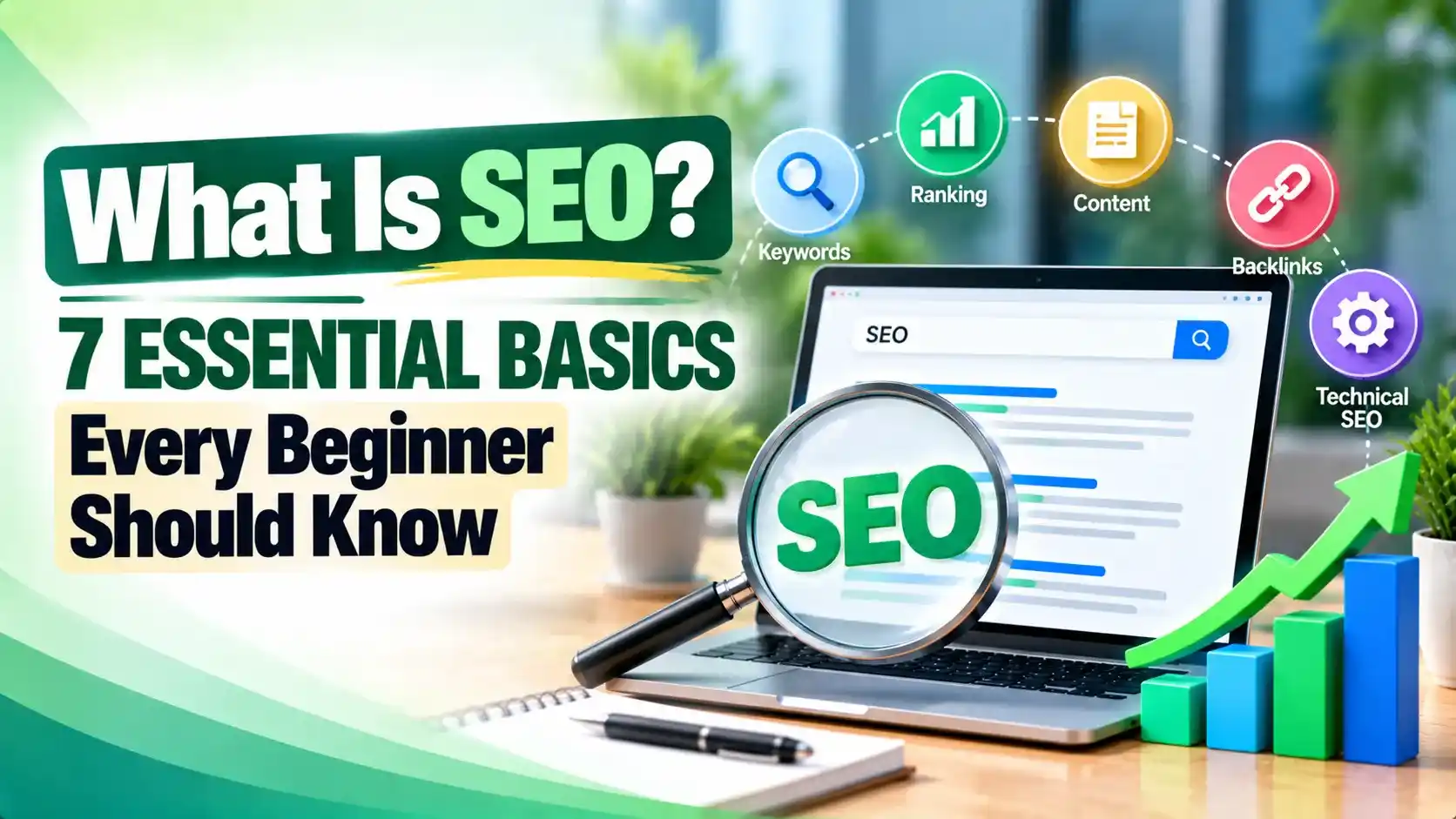
Two coffee shops on the same street, one shows up on page one of Google and the other does not, almost always comes down to one thing. This guide answers what is SEO in plain language, how it differs from paid ads, and the basics every beginner needs before going further.
Table of Contents
ToggleHey! If you keep hearing the word SEO thrown around in meetings, blog posts, and job listings and you have never actually gotten a straight answer about what it means, this guide is for you. We are starting from zero and building up, no jargon left unexplained.
Picture two coffee shops a few streets apart. One shows up on the first page of Google whenever someone nearby searches for coffee. The other is invisible unless you already know its name. The difference almost always comes down to one thing: whether the owner understands what is SEO and has actually used it.
What Is SEO? A Plain English Definition
SEO stands for search engine optimization. In the simplest terms, it is the ongoing practice of shaping a website so that search engines like Google can find it, understand it, and show it to people typing in relevant queries. If you have ever asked what is SEO in a single sentence, that is the honest version: it is the work of making your site easy for both machines and humans to discover.
Google's own Search Central SEO starter guide frames it as helping search engines understand your content and helping users decide whether your site is worth visiting from the search results. Notice what that definition does not promise. Google is explicit that there are no secret tricks that automatically land a page in position one. SEO is a set of practical habits, not a magic switch.
So when someone asks what is SEO used for, the honest answer is visibility. Every day, millions of people type questions into Google instead of asking a friend or opening an app. SEO is how a business earns a place in front of those people without paying for every single click.
Tip
Before you touch a single page on your site, read through Google's own guidance once. It will save you from chasing outdated tricks that stopped working years ago.
Why SEO Actually Matters
Most buying journeys now start with a search, not a direct visit to a known brand. A product, a service, a local shop, a recipe, a software tool, people search for the need first and the brand second. If your page is not there to answer that search, a competitor's page will be.
The traffic numbers back this up. A widely cited analysis by BrightEdge, reported by Search Engine Land, found that organic search delivers roughly 53 percent of all website traffic, well ahead of paid search and social media combined. In other words, more than half of the people who ever land on a typical website got there through an unpaid search result.
Organic search drives about 53 percent of all site visits according to BrightEdge research covered by Search Engine Land, more than paid search and social referrals combined.
That scale is exactly why beginners searching what is SEO so often get pointed toward it first when they ask how to grow traffic without an advertising budget. It compounds too. A page that ranks well keeps earning visits month after month, long after the work of writing and optimizing it is finished.
The Three Pillars Behind What Is SEO in Practice
Nearly every guide that answers what is SEO, including Semrush's own explainer, breaks the discipline into three broad pillars: technical, on page, and off page. Each one covers a different piece of the puzzle, and a healthy site needs all three working together.
Technical SEO is the plumbing. It covers how fast your pages load, whether search engines can actually crawl your site, and whether structured data such as schema markup helps Google understand what a page is about. Our guide to schema markup walks through this in more detail if you want to go deeper.
On page SEO is the content itself: the words on the page, the headings, the images, and whether the page genuinely answers the question the searcher typed. Matching real search intent matters more here than stuffing in keywords ever did.
Off page SEO is everything that happens away from your own site that still builds trust, mainly other websites linking to yours, mentions of your brand, and reviews. Our full breakdown of off page SEO covers how that trust gets built over time.
Tip
Do not try to master all three pillars at once. Most beginners get the biggest early wins from on page fixes, like aligning content with what people are actually searching for.
How Search Engines Find and Rank Your Pages
Before any ranking happens, a page has to be found. Search engines use automated programs called crawlers that follow links from page to page across the web, downloading what they find along the way.
Once a page is crawled, it gets added to an enormous database called the index. A page that is not indexed simply cannot appear in search results, no matter how good the content is. This is the part of SEO that beginners researching what is SEO tend to skip, yet it is foundational.
From the index, Google's ranking systems compare hundreds of signals, relevance to the query, page quality, loading speed, mobile usability, and the trust signals built through off page work, then decide the order results appear in. None of this happens instantly, which is why SEO is a medium to long term effort rather than a quick fix.
Understanding this pipeline, crawl, index, rank, is really the whole answer to what is SEO at a technical level. Every tactic in this guide exists to influence one of those three stages.
SEO vs Paid Search: What Is the Real Difference
A lot of confusion around what is SEO comes from mixing it up with paid advertising. They are not the same thing, even though both show up on a Google results page.
Ahrefs explains it cleanly: SEO focuses entirely on earning organic, unpaid rankings, while pay per click advertising means paying for every click a visitor makes on your ad. Search engine marketing, often shortened to SEM, is the umbrella term that covers both of those approaches together.
Search Engine Journal draws the same line: SEO is organic effort, while SEM and pay per click are paid initiatives running alongside it. Backlinko puts it even more simply, SEO means focusing one hundred percent on ranking in the organic results, full stop.
The practical takeaway is that paid ads stop the moment you stop paying, while SEO keeps working in the background. Most mature marketing plans use both, paid for fast, predictable traffic, and SEO for traffic that keeps arriving months and years later.
Common Mistakes Beginners Make With SEO
When people first learn what is SEO, a handful of mistakes show up again and again. Catching them early saves months of wasted effort.
Avoiding these five issues alone puts a new site ahead of a large share of the competition, since so many pages online still make at least one of them.
How AI Search Is Reshaping SEO in 2026
Any current answer to what is SEO has to mention artificial intelligence, since it is quietly changing how people search in the first place. Google now shows AI generated summaries at the top of many results pages, and tools like ChatGPT and Perplexity answer questions directly instead of sending users to a list of links.
Clicks to websites from search results have fallen by roughly 58 percent in categories where AI Overviews appear heavily, according to data compiled by Search Logistics, and HubSpot reports that around 60 percent of Google searches now end without any click at all.
None of this means SEO is disappearing, it means the fundamentals matter more, not less. AI tools still pull their answers from well structured, trustworthy pages that already rank. Clear writing, genuine expertise, and solid technical foundations are exactly what gets quoted or summarized by an AI system in the first place.
For a beginner, the practical lesson is to keep learning the fundamentals in this guide rather than chasing every new AI trend. The sites earning visibility inside AI summaries today are, almost without exception, the same ones that already had strong fundamental SEO.
Tip
Keep an eye on frameworks like AEO and GEO alongside traditional SEO. They describe how to optimize for AI answers, but they build directly on the same basics covered here.
SEO is the practice of improving a website so that search engines can find it, understand it, and show it to people searching for related topics, without paying for the placement.
No. SEO is one channel within digital marketing, alongside paid ads, email, and social media. It specifically targets unpaid search results.
Most sites start seeing meaningful movement after three to six months of consistent work, though competitive niches can take longer. SEO rewards patience over quick fixes.
No. Many effective SEO improvements involve writing, content structure, and basic settings in tools like WordPress. Technical SEO goes deeper, but it is not a requirement to get started.
Unlikely in the near term. AI tools still rely on well optimized, trustworthy content to generate their answers, so the core skills behind SEO remain just as relevant.
Learn Today
Crawling
The process search engines use to discover pages by following links across the web.
Indexing
Storing a crawled page in a search engine's database so it becomes eligible to appear in results.
Organic Search
Unpaid search results ranked by relevance, as opposed to paid advertising placements.
Technical SEO
The backend work, like speed and crawlability, that helps search engines access a site properly.
Backlink
A link from another website pointing to yours, often treated as a signal of trust by search engines.
Search Intent
The real reason behind a search query, such as wanting information, a product, or a specific website.
Related Articles
Ready to Put SEO Into Practice?
Explore more Brandella Journal guides on SEO and digital marketing.
Related Posts
Previous Post
Next Post
Previous Post
Next Post



- Artificial Intelligence
- Content
- Core Web Vitals
- Development
- Digital Marketing
- Display Advertising
- Google Ads
- Google Search Console
- GTM
- HTML
- HTML CSS
- JavaScript
- Keyword Research
- Link Building
- LinkedIn Ads
- Local SEO
- Meta Ads
- Mobile SEO
- Off-Page SEO
- On-Page SEO
- Paid Media
- Paid Media Analytics
- PHP
- PPC Strategy
- Python
- SEO
- SEO Basics
- SEO Tools
- Social
- Technical SEO