
- Home
- SEODiscover the latest updates from across the United States, including politics, culture, economy, and trending stories. Stay informed on the key events shaping the nation and the topics everyone’s talking about.
- Technical SEOLearn technical SEO concepts including crawling, indexing, XML sitemaps, robots.txt, canonical tags, site architecture, and website performance.
- Local SEOOptimize your business for local seo with Google Business Profile, local citations, reviews, maps, and location-based SEO.
- Mobile SEOImprove your website’s mobile seo performance with responsive design, mobile-first indexing, usability, and page speed optimization.
- On-Page SEOExplore on-page seo optimization techniques such as title tags, meta descriptions, headings, URLs, internal linking, and content optimization.
- Off-Page SEODiscover off-page SEO strategies such as backlinks, digital PR, brand mentions, outreach, and authority building.
- SEO ToolsExplore the best SEO tools for keyword research, technical audits, backlink analysis, rank tracking, and website optimization.
- Core Web VitalsLearn how to improve Core Web Vitals including LCP, INP, CLS, page speed, and overall user experience for better rankings.
- Keyword ResearchLearn how to find profitable keywords, analyze search intent, evaluate competition, and build effective keyword strategies.
- Link BuildingMaster ethical link building techniques, backlink analysis, outreach methods, guest posting, and authority growth strategies.
- Google Search ConsoleLearn how to use Google Search Console to monitor indexing, fix errors, analyze search performance, and improve SEO.
- SEO BasicsLearn the fundamentals of search engine optimization (SEO Basics), including how search engines work, SEO terminology, and beginner-friendly best practices.
- Paid Media
- Display AdvertisingLearn display advertising strategies, banner ads, audience targeting, remarketing, Google Display campaigns, and optimization techniques.
- Google AdsLearn Google Ads strategies, campaign setup, bidding, keywords, Performance Max, Search Ads, and optimization techniques.
- LinkedIn AdsLearn LinkedIn Ads strategies for B2B marketing, lead generation, audience targeting, campaign optimization, and paid social advertising.
- Meta AdsLearn Meta Ads strategies for Facebook and Instagram, including campaign setup, targeting, retargeting, and performance optimization.
- Paid Media AnalyticsLearn paid media analytics, including CPC, CTR, CPA, ROAS, conversion tracking, attribution, reporting, and campaign performance analysis.
- PPC StrategyLearn effective PPC strategies, campaign planning, bidding, keyword targeting, landing pages, conversion optimization, and more.
- ContentTransform your living spaces with inspiration, tips, and trends in interior design. From minimalist decor to bold statements, find ideas for every style and budget.
- Social
- Digital MarketingExplore stories and advice on living your best life. From personal growth to entertainment, dive into the latest in lifestyle trends and inspiration.
- Artificial IntelligenceStay informed about health and wellness with expert advice, fitness tips, and the latest medical breakthroughs. Your guide to a healthier and happier life.
- DevelopmentYou will find development related educational articles
- GTMLearn Google Tag Manager (GTM) with practical guides for tags, triggers, variables, tracking, conversions, and website analytics implementation.
- HTMLLearn HTML with simple tutorials, examples, tags, elements, attributes, and best practices for building modern web pages.
- HTML CSSLearn HTML CSS together with practical tutorials, examples, layouts, styling techniques, responsive design, and modern web development practices.
- HTML JSLearn HTML JS – JavaScript with practical tutorials and examples for adding interactivity, dynamic content, events, and functionality to web pages.
- JavaScriptExplore JavaScript tutorials, examples, concepts, and practical techniques for creating interactive and dynamic websites and web applications.
- PHPLearn PHP programming with practical tutorials, examples, functions, syntax, and web development techniques for beginners and developers.
- PythonLearn Python programming with practical tutorials, examples, syntax, functions, automation techniques, and useful programming concepts.
- Home
- SEODiscover the latest updates from across the United States, including politics, culture, economy, and trending stories. Stay informed on the key events shaping the nation and the topics everyone’s talking about.
- Technical SEOLearn technical SEO concepts including crawling, indexing, XML sitemaps, robots.txt, canonical tags, site architecture, and website performance.
- Local SEOOptimize your business for local seo with Google Business Profile, local citations, reviews, maps, and location-based SEO.
- Mobile SEOImprove your website’s mobile seo performance with responsive design, mobile-first indexing, usability, and page speed optimization.
- On-Page SEOExplore on-page seo optimization techniques such as title tags, meta descriptions, headings, URLs, internal linking, and content optimization.
- Off-Page SEODiscover off-page SEO strategies such as backlinks, digital PR, brand mentions, outreach, and authority building.
- SEO ToolsExplore the best SEO tools for keyword research, technical audits, backlink analysis, rank tracking, and website optimization.
- Core Web VitalsLearn how to improve Core Web Vitals including LCP, INP, CLS, page speed, and overall user experience for better rankings.
- Keyword ResearchLearn how to find profitable keywords, analyze search intent, evaluate competition, and build effective keyword strategies.
- Link BuildingMaster ethical link building techniques, backlink analysis, outreach methods, guest posting, and authority growth strategies.
- Google Search ConsoleLearn how to use Google Search Console to monitor indexing, fix errors, analyze search performance, and improve SEO.
- SEO BasicsLearn the fundamentals of search engine optimization (SEO Basics), including how search engines work, SEO terminology, and beginner-friendly best practices.
- Paid Media
- Display AdvertisingLearn display advertising strategies, banner ads, audience targeting, remarketing, Google Display campaigns, and optimization techniques.
- Google AdsLearn Google Ads strategies, campaign setup, bidding, keywords, Performance Max, Search Ads, and optimization techniques.
- LinkedIn AdsLearn LinkedIn Ads strategies for B2B marketing, lead generation, audience targeting, campaign optimization, and paid social advertising.
- Meta AdsLearn Meta Ads strategies for Facebook and Instagram, including campaign setup, targeting, retargeting, and performance optimization.
- Paid Media AnalyticsLearn paid media analytics, including CPC, CTR, CPA, ROAS, conversion tracking, attribution, reporting, and campaign performance analysis.
- PPC StrategyLearn effective PPC strategies, campaign planning, bidding, keyword targeting, landing pages, conversion optimization, and more.
- ContentTransform your living spaces with inspiration, tips, and trends in interior design. From minimalist decor to bold statements, find ideas for every style and budget.
- Social
- Digital MarketingExplore stories and advice on living your best life. From personal growth to entertainment, dive into the latest in lifestyle trends and inspiration.
- Artificial IntelligenceStay informed about health and wellness with expert advice, fitness tips, and the latest medical breakthroughs. Your guide to a healthier and happier life.
- DevelopmentYou will find development related educational articles
- GTMLearn Google Tag Manager (GTM) with practical guides for tags, triggers, variables, tracking, conversions, and website analytics implementation.
- HTMLLearn HTML with simple tutorials, examples, tags, elements, attributes, and best practices for building modern web pages.
- HTML CSSLearn HTML CSS together with practical tutorials, examples, layouts, styling techniques, responsive design, and modern web development practices.
- HTML JSLearn HTML JS – JavaScript with practical tutorials and examples for adding interactivity, dynamic content, events, and functionality to web pages.
- JavaScriptExplore JavaScript tutorials, examples, concepts, and practical techniques for creating interactive and dynamic websites and web applications.
- PHPLearn PHP programming with practical tutorials, examples, functions, syntax, and web development techniques for beginners and developers.
- PythonLearn Python programming with practical tutorials, examples, syntax, functions, automation techniques, and useful programming concepts.
Now Reading: Brand Authority vs Domain Authority: What’s More Important in 2026?
-
01
Brand Authority vs Domain Authority: What’s More Important in 2026?
- Home//
- SEO//Discover the latest updates from across the United States, including politics, culture, economy, and trending stories. Stay informed on the key events shaping the nation and the topics everyone’s talking about.
- Technical SEO//Learn technical SEO concepts including crawling, indexing, XML sitemaps, robots.txt, canonical tags, site architecture, and website performance.
- Local SEO//Optimize your business for local seo with Google Business Profile, local citations, reviews, maps, and location-based SEO.
- Mobile SEO//Improve your website’s mobile seo performance with responsive design, mobile-first indexing, usability, and page speed optimization.
- On-Page SEO//Explore on-page seo optimization techniques such as title tags, meta descriptions, headings, URLs, internal linking, and content optimization.
- Off-Page SEO//Discover off-page SEO strategies such as backlinks, digital PR, brand mentions, outreach, and authority building.
- SEO Tools//Explore the best SEO tools for keyword research, technical audits, backlink analysis, rank tracking, and website optimization.
- Core Web Vitals//Learn how to improve Core Web Vitals including LCP, INP, CLS, page speed, and overall user experience for better rankings.
- Keyword Research//Learn how to find profitable keywords, analyze search intent, evaluate competition, and build effective keyword strategies.
- Link Building//Master ethical link building techniques, backlink analysis, outreach methods, guest posting, and authority growth strategies.
- Google Search Console//Learn how to use Google Search Console to monitor indexing, fix errors, analyze search performance, and improve SEO.
- SEO Basics//Learn the fundamentals of search engine optimization (SEO Basics), including how search engines work, SEO terminology, and beginner-friendly best practices.
- Paid Media//
- Display Advertising//Learn display advertising strategies, banner ads, audience targeting, remarketing, Google Display campaigns, and optimization techniques.
- Google Ads//Learn Google Ads strategies, campaign setup, bidding, keywords, Performance Max, Search Ads, and optimization techniques.
- LinkedIn Ads//Learn LinkedIn Ads strategies for B2B marketing, lead generation, audience targeting, campaign optimization, and paid social advertising.
- Meta Ads//Learn Meta Ads strategies for Facebook and Instagram, including campaign setup, targeting, retargeting, and performance optimization.
- Paid Media Analytics//Learn paid media analytics, including CPC, CTR, CPA, ROAS, conversion tracking, attribution, reporting, and campaign performance analysis.
- PPC Strategy//Learn effective PPC strategies, campaign planning, bidding, keyword targeting, landing pages, conversion optimization, and more.
- Content//Transform your living spaces with inspiration, tips, and trends in interior design. From minimalist decor to bold statements, find ideas for every style and budget.
- Social//
- Digital Marketing//Explore stories and advice on living your best life. From personal growth to entertainment, dive into the latest in lifestyle trends and inspiration.
- Artificial Intelligence//Stay informed about health and wellness with expert advice, fitness tips, and the latest medical breakthroughs. Your guide to a healthier and happier life.
- Development//You will find development related educational articles
- GTM//Learn Google Tag Manager (GTM) with practical guides for tags, triggers, variables, tracking, conversions, and website analytics implementation.
- HTML//Learn HTML with simple tutorials, examples, tags, elements, attributes, and best practices for building modern web pages.
- HTML CSS//Learn HTML CSS together with practical tutorials, examples, layouts, styling techniques, responsive design, and modern web development practices.
- HTML JS//Learn HTML JS – JavaScript with practical tutorials and examples for adding interactivity, dynamic content, events, and functionality to web pages.
- JavaScript//Explore JavaScript tutorials, examples, concepts, and practical techniques for creating interactive and dynamic websites and web applications.
- PHP//Learn PHP programming with practical tutorials, examples, functions, syntax, and web development techniques for beginners and developers.
- Python//Learn Python programming with practical tutorials, examples, syntax, functions, automation techniques, and useful programming concepts.
Brand Authority vs Domain Authority: What’s More Important in 2026?

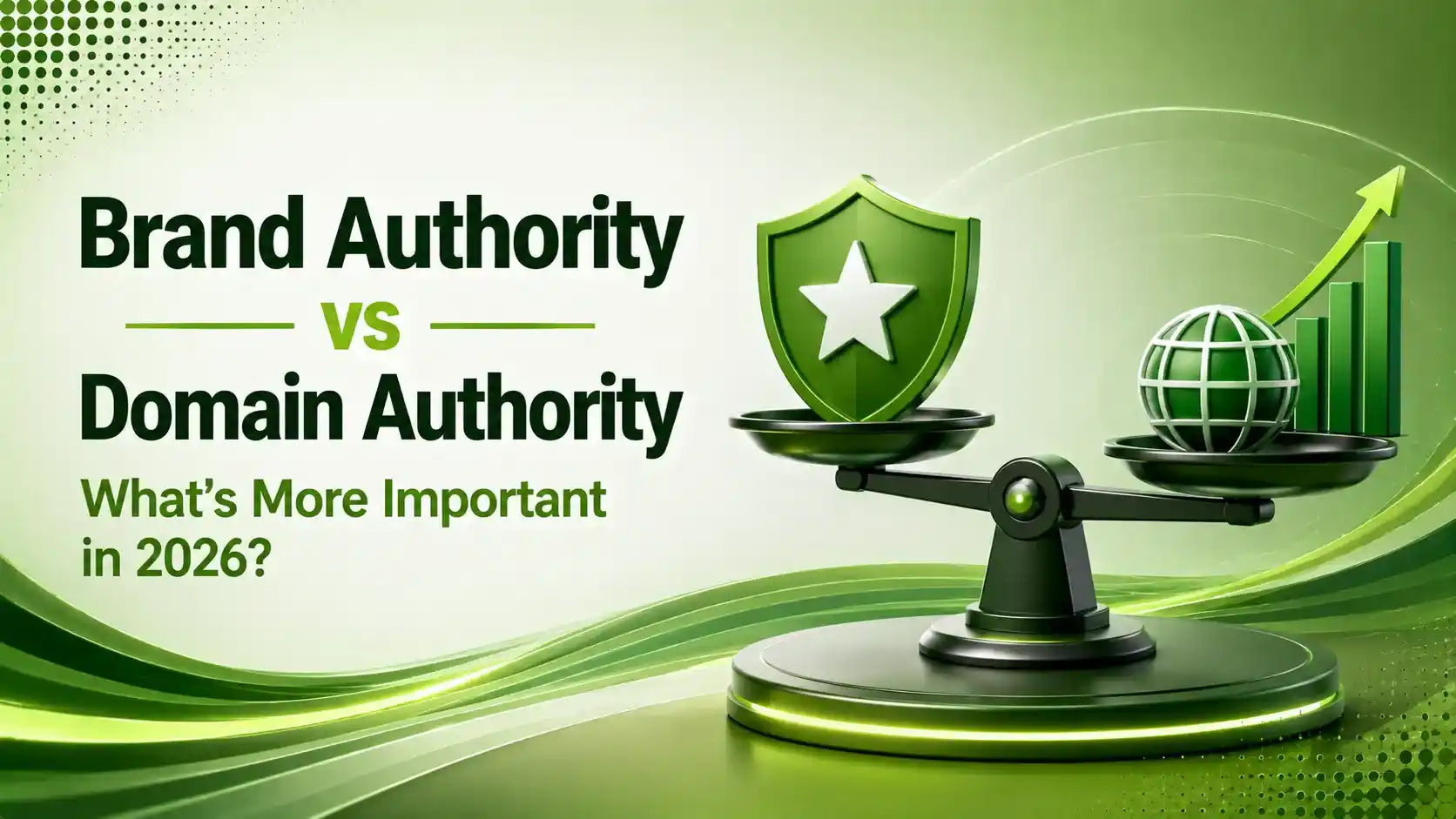
Google has said it repeatedly: Domain Authority isn't used in ranking. Here's what actually matters instead, and why brand authority is winning this debate.
Table of Contents
ToggleBrand authority vs domain authority sounds like a close contest, but Google has settled one side of it repeatedly and on the record: it doesn't use Domain Authority at all. The metric was created by Moz in 2004, and Google's John Mueller has said flatly, more than once, that it plays no role in crawling, indexing, or ranking.
That doesn't mean domain-level signals are meaningless. Google's own May 2024 Content Warehouse API leak confirmed the company does use an internal metric called "siteAuthority," feeding into its quality ranking system. That's not Moz's Domain Authority, but it does prove some domain-level trust concept genuinely exists inside Google's algorithm.
Brand authority is a different kind of signal entirely, shaped by audience recognition, trust, and how often people search for you by name rather than how many links point at your domain. A SparkToro study found branded search queries now influence over 44% of Google traffic across competitive keywords.
This guide breaks down what each concept actually measures, what Google's leaked documentation revealed, and where brand authority vs domain authority should each sit in your priorities for 2026.
01What Domain Authority Actually Is
MediaQuestWeb's 2026 comparison lays out the mechanics plainly: Domain Authority is a score created by Moz in 2004 that predicts how likely a website is to rank in search results, calculated by a machine-learning model looking at the number and quality of linking domains, on a scale from 1 to 100.
The scale is logarithmic, the same guide notes, so moving from a DA of 20 to 30 is far easier than moving from 70 to 80. That mathematical quirk is part of why DA became such a popular shorthand metric for agencies, it gave a simple number to show clients even though it was never built by or for Google.
02Why Google Doesn't Use Domain Authority
This isn't speculation. SEroundtable's coverage documents John Mueller's own words on the record: "you do not need DA for Google Search. Google doesn't use it at all." Mueller has repeated versions of this statement across Twitter, Reddit, and public talks going back to at least 2016.
MediaQuestWeb's guide, referenced above, states the practical distinction cleanly: DA is a signal to SEO tools. It was never a signal to Google, and treating it as one has misled agencies and clients for years.
Moz itself states plainly: "Domain Authority is not a metric used by Google in determining search rankings and has no effect on the SERPs." The company built DA as a comparative tool for SEO practitioners, not as a Google ranking input.
03The Google Leak: What "siteAuthority" Really Means
MediaQuestWeb's guide, referenced above, covers the twist that changed this conversation: in May 2024, internal documentation from Google's Content Warehouse API became public, containing 2,596 modules and 14,014 attributes describing how Google's search system actually works.
The leak confirmed something Google had denied for years, that the company uses a site-wide authority metric internally, referred to in the documentation as "siteAuthority." That's not Moz's Domain Authority, and it isn't calculated the same way, but it does prove a genuine domain-level trust concept exists inside Google's ranking system.
04What Brand Authority Actually Measures
LatestTechnicalReviews' 2026 guide defines brand authority as a brand's credibility, recognizability, and trustworthiness within its industry, shaped by audience perception rather than technical link metrics. Search engines increasingly rely on brand-related signals to evaluate authority, especially in competitive niches.
ClickRank's brand authority guide adds a concrete mechanism worth understanding: when your brand is repeatedly mentioned alongside terms like "best organic coffee," Google learns to associate you with that niche. Consistent mentions across diverse, high-quality platforms prove active participation in an industry's actual conversation, not just its link graph.
05How Each One Affects AI Search Visibility
This is where brand authority vs domain authority stops being close. Search Atlas' 2026 guide points to Google's Gary Illyes stating in April 2024 that links are no longer among Google's top three ranking factors, a clear shift toward content quality and topical depth as primary drivers.
ClickRank's guide, referenced above, confirms AI search systems like Google AI Overviews and ChatGPT weigh brand authority signals directly, entity recognition and repeated trusted mentions, when deciding what to cite. A high DA score doesn't guarantee a top spot in an AI-generated answer. Recognizable brand entities increasingly do.
Domain Authority is a third-party estimate Google doesn't use directly. Brand authority reflects real recognition signals increasingly cited by AI search.
06Where Domain Authority Still Has Practical Value
None of this makes DA worthless as a tool, just not as a Google ranking factor. Docommunication's comparison notes DA remains genuinely useful for competitive benchmarking, link prospecting, and giving clients or stakeholders a simple, trackable number over time.
Business Image's analysis adds an important nuance for smaller sites: domain authority matters differently depending on business type. A local roofing company with a DA of 15 can still outrank larger competitors for local searches if the site is more locally relevant and useful, since local SEO leans heavily on relevance and reviews rather than raw link authority.
07Brand Authority vs Domain Authority at a Glance
WPSEOAI's comparison of authority concepts and MediaQuestWeb's breakdown both converge on a similar practical distinction worth internalizing.
| Factor | Domain Authority | Brand Authority |
|---|---|---|
| Created by | Moz (2004) | No single owner; emergent from audience behavior |
| Google uses it directly? | No, confirmed repeatedly | Related concepts feed AI and quality systems |
| Primary input | Backlink quantity and quality | Recognition, trust, branded search volume |
| AI citation eligibility | Weak correlation | Strong correlation |
| Best practical use | Competitive benchmarking, link prospecting | Long-term visibility and conversion trust |
08Schema Markup That Reinforces Brand Entity Signals
Building genuine brand authority includes helping search engines confirm your brand is a single, consistent entity across the web. This sameAs schema block connects your site to verified brand profiles.
<script type="application/ld+json">
{
  "@context": "https://schema.org",
  "@type": "Organization",
  "name": "Your Brand Name",
  "url": "https://www.yourdomain.com",
  "logo": "https://www.yourdomain.com/logo.png",
  "sameAs": [
    "https://www.linkedin.com/company/yourbrand",
    "https://www.facebook.com/yourbrand",
    "https://twitter.com/yourbrand",
    "https://www.crunchbase.com/organization/yourbrand",
    "https://en.wikipedia.org/wiki/Your_Brand"
  ]
}
</script>
Each verified sameAs link helps search engines and AI systems confirm your brand is one consistent entity, reinforcing exactly the kind of recognition signal brand authority depends on.
09Building Both Together: A Practical Checklist
The smartest approach doesn't pick one exclusively. It builds brand authority as the priority while treating domain-level link signals as supporting infrastructure.
Stop chasing DA as a goal, treat it as a directional health check, not a target Google actually rewards.
Invest in earned media and digital PR, which builds genuine brand recognition alongside naturally earned backlinks.
Add complete Organization schema with verified sameAs links to reinforce your entity across platforms.
Track branded search volume as a leading indicator of brand authority growth over time.
Still build quality backlinks, they support both concepts even though DA itself isn't what Google measures.
10Priority Workflow Stepper
Five decisions shape where to focus limited SEO resources. Tap each one for the specific consideration.
Check Your AI Visibility
Search your brand and topic in ChatGPT or AI Overviews. If you're absent, brand authority signals likely need attention first.
11Which to Prioritize Score
Score your current situation to see whether brand authority or domain-level link building deserves more focus right now.
Which to Prioritize: Brand or Domain Authority
Select the option that best matches your current situation
12FAQs on Brand Authority vs Domain Authority
No. John Mueller has confirmed repeatedly, on the record, that Google doesn't use Domain Authority at all in crawling, indexing, or ranking. It's a Moz-created third-party metric.
An internal Google metric revealed in the 2024 Content Warehouse API leak, confirming some domain-level trust concept exists in Google's system. It is not Moz's Domain Authority.
Not necessarily. It remains useful for competitive benchmarking and link prospecting, just not as a target Google actually rewards directly.
AI search systems weigh entity recognition and repeated trusted mentions when choosing what to cite, making brand authority a stronger predictor of AI visibility than DA.
Yes, especially for local and niche queries where relevance, reviews, and topical depth matter more than raw backlink volume.
Related Articles
What We Learn Today
Google has confirmed repeatedly it doesn't use Domain Authority
The 2024 Google leak revealed an internal "siteAuthority" metric
Brand authority correlates more strongly with AI citation eligibility
Branded search now influences 44%+ of competitive keyword traffic
DA still has value for benchmarking, just not as a ranking target
Entity schema markup reinforces genuine brand recognition signals
Build a Complete Off-Page SEO Foundation
Brand authority and domain-level link building work best together. Explore our domain authority and digital PR guides next.
Related Posts
Previous Post
Next Post
Previous Post
Next Post

- Artificial Intelligence
- Content
- Core Web Vitals
- Development
- Digital Marketing
- Display Advertising
- Google Ads
- Google Search Console
- GTM
- HTML
- HTML CSS
- JavaScript
- Keyword Research
- Link Building
- LinkedIn Ads
- Local SEO
- Meta Ads
- Mobile SEO
- Off-Page SEO
- On-Page SEO
- Paid Media
- Paid Media Analytics
- PHP
- PPC Strategy
- Python
- SEO
- SEO Basics
- SEO Tools
- Social
- Technical SEO