
- Home
- SEODiscover the latest updates from across the United States, including politics, culture, economy, and trending stories. Stay informed on the key events shaping the nation and the topics everyone’s talking about.
- Technical SEOLearn technical SEO concepts including crawling, indexing, XML sitemaps, robots.txt, canonical tags, site architecture, and website performance.
- Local SEOOptimize your business for local seo with Google Business Profile, local citations, reviews, maps, and location-based SEO.
- Mobile SEOImprove your website’s mobile seo performance with responsive design, mobile-first indexing, usability, and page speed optimization.
- On-Page SEOExplore on-page seo optimization techniques such as title tags, meta descriptions, headings, URLs, internal linking, and content optimization.
- Off-Page SEODiscover off-page SEO strategies such as backlinks, digital PR, brand mentions, outreach, and authority building.
- SEO ToolsExplore the best SEO tools for keyword research, technical audits, backlink analysis, rank tracking, and website optimization.
- Core Web VitalsLearn how to improve Core Web Vitals including LCP, INP, CLS, page speed, and overall user experience for better rankings.
- Keyword ResearchLearn how to find profitable keywords, analyze search intent, evaluate competition, and build effective keyword strategies.
- Link BuildingMaster ethical link building techniques, backlink analysis, outreach methods, guest posting, and authority growth strategies.
- Google Search ConsoleLearn how to use Google Search Console to monitor indexing, fix errors, analyze search performance, and improve SEO.
- SEO BasicsLearn the fundamentals of search engine optimization (SEO Basics), including how search engines work, SEO terminology, and beginner-friendly best practices.
- Paid Media
- Display AdvertisingLearn display advertising strategies, banner ads, audience targeting, remarketing, Google Display campaigns, and optimization techniques.
- Google AdsLearn Google Ads strategies, campaign setup, bidding, keywords, Performance Max, Search Ads, and optimization techniques.
- LinkedIn AdsLearn LinkedIn Ads strategies for B2B marketing, lead generation, audience targeting, campaign optimization, and paid social advertising.
- Meta AdsLearn Meta Ads strategies for Facebook and Instagram, including campaign setup, targeting, retargeting, and performance optimization.
- Paid Media AnalyticsLearn paid media analytics, including CPC, CTR, CPA, ROAS, conversion tracking, attribution, reporting, and campaign performance analysis.
- PPC StrategyLearn effective PPC strategies, campaign planning, bidding, keyword targeting, landing pages, conversion optimization, and more.
- ContentTransform your living spaces with inspiration, tips, and trends in interior design. From minimalist decor to bold statements, find ideas for every style and budget.
- Social
- Digital MarketingExplore stories and advice on living your best life. From personal growth to entertainment, dive into the latest in lifestyle trends and inspiration.
- Artificial IntelligenceStay informed about health and wellness with expert advice, fitness tips, and the latest medical breakthroughs. Your guide to a healthier and happier life.
- DevelopmentYou will find development related educational articles
- GTMLearn Google Tag Manager (GTM) with practical guides for tags, triggers, variables, tracking, conversions, and website analytics implementation.
- HTMLLearn HTML with simple tutorials, examples, tags, elements, attributes, and best practices for building modern web pages.
- HTML CSSLearn HTML CSS together with practical tutorials, examples, layouts, styling techniques, responsive design, and modern web development practices.
- HTML JSLearn HTML JS – JavaScript with practical tutorials and examples for adding interactivity, dynamic content, events, and functionality to web pages.
- JavaScriptExplore JavaScript tutorials, examples, concepts, and practical techniques for creating interactive and dynamic websites and web applications.
- PHPLearn PHP programming with practical tutorials, examples, functions, syntax, and web development techniques for beginners and developers.
- PythonLearn Python programming with practical tutorials, examples, syntax, functions, automation techniques, and useful programming concepts.
- Home
- SEODiscover the latest updates from across the United States, including politics, culture, economy, and trending stories. Stay informed on the key events shaping the nation and the topics everyone’s talking about.
- Technical SEOLearn technical SEO concepts including crawling, indexing, XML sitemaps, robots.txt, canonical tags, site architecture, and website performance.
- Local SEOOptimize your business for local seo with Google Business Profile, local citations, reviews, maps, and location-based SEO.
- Mobile SEOImprove your website’s mobile seo performance with responsive design, mobile-first indexing, usability, and page speed optimization.
- On-Page SEOExplore on-page seo optimization techniques such as title tags, meta descriptions, headings, URLs, internal linking, and content optimization.
- Off-Page SEODiscover off-page SEO strategies such as backlinks, digital PR, brand mentions, outreach, and authority building.
- SEO ToolsExplore the best SEO tools for keyword research, technical audits, backlink analysis, rank tracking, and website optimization.
- Core Web VitalsLearn how to improve Core Web Vitals including LCP, INP, CLS, page speed, and overall user experience for better rankings.
- Keyword ResearchLearn how to find profitable keywords, analyze search intent, evaluate competition, and build effective keyword strategies.
- Link BuildingMaster ethical link building techniques, backlink analysis, outreach methods, guest posting, and authority growth strategies.
- Google Search ConsoleLearn how to use Google Search Console to monitor indexing, fix errors, analyze search performance, and improve SEO.
- SEO BasicsLearn the fundamentals of search engine optimization (SEO Basics), including how search engines work, SEO terminology, and beginner-friendly best practices.
- Paid Media
- Display AdvertisingLearn display advertising strategies, banner ads, audience targeting, remarketing, Google Display campaigns, and optimization techniques.
- Google AdsLearn Google Ads strategies, campaign setup, bidding, keywords, Performance Max, Search Ads, and optimization techniques.
- LinkedIn AdsLearn LinkedIn Ads strategies for B2B marketing, lead generation, audience targeting, campaign optimization, and paid social advertising.
- Meta AdsLearn Meta Ads strategies for Facebook and Instagram, including campaign setup, targeting, retargeting, and performance optimization.
- Paid Media AnalyticsLearn paid media analytics, including CPC, CTR, CPA, ROAS, conversion tracking, attribution, reporting, and campaign performance analysis.
- PPC StrategyLearn effective PPC strategies, campaign planning, bidding, keyword targeting, landing pages, conversion optimization, and more.
- ContentTransform your living spaces with inspiration, tips, and trends in interior design. From minimalist decor to bold statements, find ideas for every style and budget.
- Social
- Digital MarketingExplore stories and advice on living your best life. From personal growth to entertainment, dive into the latest in lifestyle trends and inspiration.
- Artificial IntelligenceStay informed about health and wellness with expert advice, fitness tips, and the latest medical breakthroughs. Your guide to a healthier and happier life.
- DevelopmentYou will find development related educational articles
- GTMLearn Google Tag Manager (GTM) with practical guides for tags, triggers, variables, tracking, conversions, and website analytics implementation.
- HTMLLearn HTML with simple tutorials, examples, tags, elements, attributes, and best practices for building modern web pages.
- HTML CSSLearn HTML CSS together with practical tutorials, examples, layouts, styling techniques, responsive design, and modern web development practices.
- HTML JSLearn HTML JS – JavaScript with practical tutorials and examples for adding interactivity, dynamic content, events, and functionality to web pages.
- JavaScriptExplore JavaScript tutorials, examples, concepts, and practical techniques for creating interactive and dynamic websites and web applications.
- PHPLearn PHP programming with practical tutorials, examples, functions, syntax, and web development techniques for beginners and developers.
- PythonLearn Python programming with practical tutorials, examples, syntax, functions, automation techniques, and useful programming concepts.
Now Reading: Nofollow vs Dofollow Links: 5 Essential Rules to Know
-
01
Nofollow vs Dofollow Links: 5 Essential Rules to Know
- Home//
- SEO//Discover the latest updates from across the United States, including politics, culture, economy, and trending stories. Stay informed on the key events shaping the nation and the topics everyone’s talking about.
- Technical SEO//Learn technical SEO concepts including crawling, indexing, XML sitemaps, robots.txt, canonical tags, site architecture, and website performance.
- Local SEO//Optimize your business for local seo with Google Business Profile, local citations, reviews, maps, and location-based SEO.
- Mobile SEO//Improve your website’s mobile seo performance with responsive design, mobile-first indexing, usability, and page speed optimization.
- On-Page SEO//Explore on-page seo optimization techniques such as title tags, meta descriptions, headings, URLs, internal linking, and content optimization.
- Off-Page SEO//Discover off-page SEO strategies such as backlinks, digital PR, brand mentions, outreach, and authority building.
- SEO Tools//Explore the best SEO tools for keyword research, technical audits, backlink analysis, rank tracking, and website optimization.
- Core Web Vitals//Learn how to improve Core Web Vitals including LCP, INP, CLS, page speed, and overall user experience for better rankings.
- Keyword Research//Learn how to find profitable keywords, analyze search intent, evaluate competition, and build effective keyword strategies.
- Link Building//Master ethical link building techniques, backlink analysis, outreach methods, guest posting, and authority growth strategies.
- Google Search Console//Learn how to use Google Search Console to monitor indexing, fix errors, analyze search performance, and improve SEO.
- SEO Basics//Learn the fundamentals of search engine optimization (SEO Basics), including how search engines work, SEO terminology, and beginner-friendly best practices.
- Paid Media//
- Display Advertising//Learn display advertising strategies, banner ads, audience targeting, remarketing, Google Display campaigns, and optimization techniques.
- Google Ads//Learn Google Ads strategies, campaign setup, bidding, keywords, Performance Max, Search Ads, and optimization techniques.
- LinkedIn Ads//Learn LinkedIn Ads strategies for B2B marketing, lead generation, audience targeting, campaign optimization, and paid social advertising.
- Meta Ads//Learn Meta Ads strategies for Facebook and Instagram, including campaign setup, targeting, retargeting, and performance optimization.
- Paid Media Analytics//Learn paid media analytics, including CPC, CTR, CPA, ROAS, conversion tracking, attribution, reporting, and campaign performance analysis.
- PPC Strategy//Learn effective PPC strategies, campaign planning, bidding, keyword targeting, landing pages, conversion optimization, and more.
- Content//Transform your living spaces with inspiration, tips, and trends in interior design. From minimalist decor to bold statements, find ideas for every style and budget.
- Social//
- Digital Marketing//Explore stories and advice on living your best life. From personal growth to entertainment, dive into the latest in lifestyle trends and inspiration.
- Artificial Intelligence//Stay informed about health and wellness with expert advice, fitness tips, and the latest medical breakthroughs. Your guide to a healthier and happier life.
- Development//You will find development related educational articles
- GTM//Learn Google Tag Manager (GTM) with practical guides for tags, triggers, variables, tracking, conversions, and website analytics implementation.
- HTML//Learn HTML with simple tutorials, examples, tags, elements, attributes, and best practices for building modern web pages.
- HTML CSS//Learn HTML CSS together with practical tutorials, examples, layouts, styling techniques, responsive design, and modern web development practices.
- HTML JS//Learn HTML JS – JavaScript with practical tutorials and examples for adding interactivity, dynamic content, events, and functionality to web pages.
- JavaScript//Explore JavaScript tutorials, examples, concepts, and practical techniques for creating interactive and dynamic websites and web applications.
- PHP//Learn PHP programming with practical tutorials, examples, functions, syntax, and web development techniques for beginners and developers.
- Python//Learn Python programming with practical tutorials, examples, syntax, functions, automation techniques, and useful programming concepts.
- Home
- SEO
- Off-Page SEO
- Nofollow vs Dofollow Links: 5 Essential Rules to Know
Nofollow vs Dofollow Links: 5 Essential Rules to Know

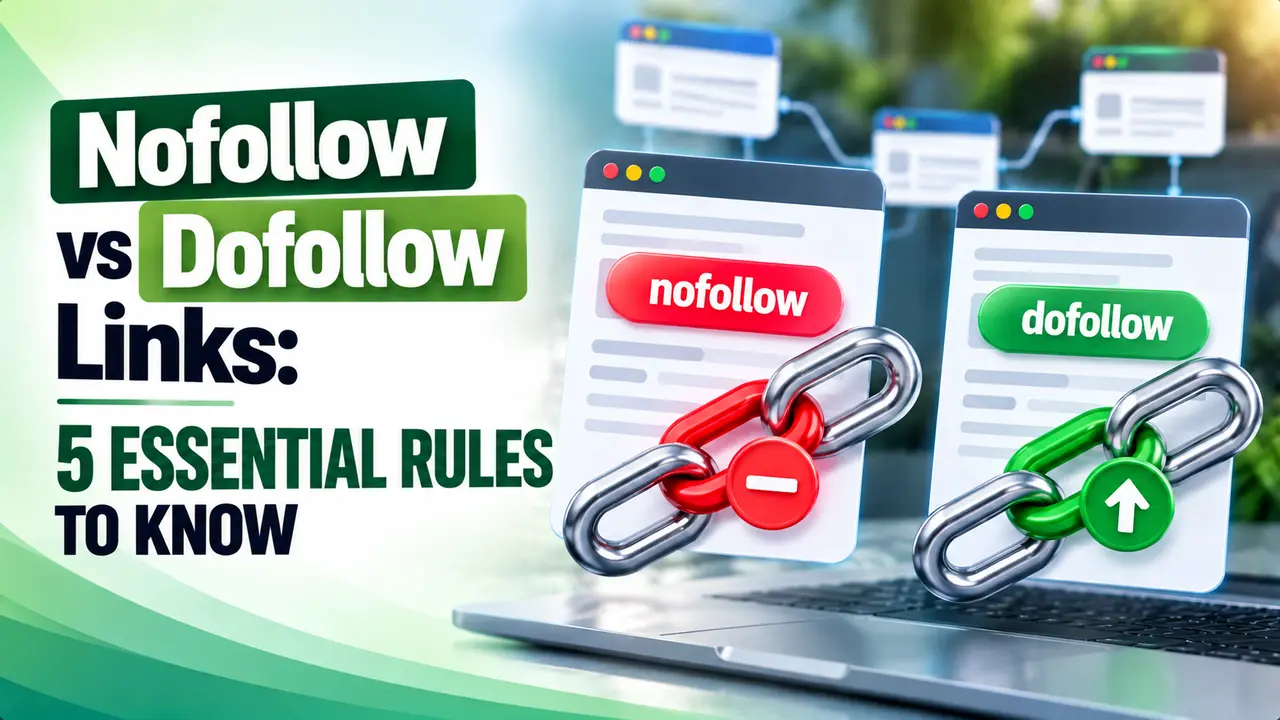
A single rel attribute decides whether a big mention lifts your rankings or just sends a trickle of visitors. This guide clears up the real nofollow vs dofollow links debate, when sponsored and UGC tags apply, and what a healthy backlink profile ratio actually looks like.
Table of Contents
ToggleHey! If you have ever stared at a backlink report and wondered why some links seem to matter more than others, this guide is for you. We are going to clear up exactly what that tiny rel attribute in your code is doing to your rankings.
Picture this: a major publication mentions your brand, but buried in the link code is a single word that decides whether that mention quietly lifts your rankings or just sends a trickle of referral visitors. That word is the entire nofollow vs dofollow links debate, and most marketers still get it wrong because they are working from rules Google rewrote back in 2019.
Nofollow vs Dofollow Links: What Each One Actually Means
A dofollow link is just an ordinary hyperlink. There is no special markup, no rel value, nothing extra. By default, every link on the web is dofollow unless a site owner deliberately adds an attribute to change that behavior.
A nofollow link carries rel="nofollow" in its anchor tag. It was originally designed as a flat instruction telling search engines not to pass any ranking credit, often called link equity, through that particular connection.
Here is a detail that trips people up: dofollow was never an official term Google invented. SEOs coined it as the natural opposite of nofollow, and it stuck, even though you will never find it in Google's own documentation.
Getting this terminology straight matters beyond trivia. When you brief a writer, a client or an outreach partner, the nofollow vs dofollow links distinction is usually the very first thing you need to agree on, since it decides how a placement gets valued, priced and reported later.
Tip
If you want a deeper refresher on how ranking value actually moves between pages before you dig into nofollow versus dofollow links, read our link equity explained guide first.
A Short History: Why Nofollow Was Invented in 2005
The nofollow attribute was not part of Google's original plan for the web. It was introduced in 2005 as a joint effort among Google, Yahoo and the blogging platforms of the time, created specifically to fight a flood of comment spam.
Before nofollow existed, spammers would drop links in blog comments purely to harvest ranking credit, with zero intention of adding anything useful to the conversation. Attaching nofollow to comment links removed the financial incentive almost overnight.
Screaming Frog notes that this original 2005 use case, blocking spammy comment links, is still the closest thing to the attribute's original intent, even though its role has expanded dramatically since then.
The nofollow attribute has been part of the web's toolkit for roughly two decades, first appearing in 2005 purely as a spam prevention measure, according to Screaming Frog.
Google's 2019 Announcement Changed the Rules Completely
On September 10, 2019, Google published a post called Evolving nofollow, and it reshaped how every SEO thinks about link attributes. Two brand new values arrived alongside nofollow: rel="sponsored" and rel="ugc".
The bigger shift was philosophical. Google announced that starting March 1, 2020, nofollow, sponsored and ugc would all be treated as hints for crawling, indexing and ranking, not as absolute commands Google was forced to obey.
Google's own Danny Sullivan was blunt about it at the time, telling publishers through Search Engine Roundtable, "you literally don't have to change anything if you don't want." Nothing was mandatory, but the meaning of the attribute itself had quietly changed forever.
Gary Illyes later confirmed through Search Engine Journal that even the meta robots nofollow tag was folded into this same hint based treatment, aligning every nofollow style signal under one consistent philosophy.
This hint based model is the single most misunderstood part of the nofollow vs dofollow links conversation. The old assumption was that nofollow completely blocked a page from being crawled or indexed, full stop. Google now reserves the right to crawl, index and even weigh that link if its systems decide the context is strong enough to justify it.
Nofollow vs Sponsored vs UGC: When to Use Each Attribute
Now that three attributes exist, picking the right one matters for staying inside Google's link guidelines. Yoast frames the decision simply: match the attribute to why the link exists, not just whether you trust the destination.
Use rel="sponsored" for anything compensated: paid placements, affiliate links, advertorials. Use rel="ugc" for links your visitors create themselves, such as comments, forum posts and reviews. Reach for plain rel="nofollow" for everything else you simply do not want to vouch for.
| Attribute | Typical use case | Passes link equity? |
|---|---|---|
| No attribute (dofollow) | A genuine editorial endorsement | Yes, by default |
rel="nofollow" | Untrusted or unverified destinations | Treated only as a hint |
rel="sponsored" | Paid, affiliate or advertising links | Treated only as a hint |
rel="ugc" | Comments, forums and reviews | Treated only as a hint |
Mislabeling matters more than it looks. Google's own guidance still expects paid links to carry at least one blocking signal, and sites that leave sponsored placements as plain, unmarked dofollow links risk a manual action for unnatural linking rather than a quiet algorithmic shrug.
Tip
You can combine values, such as rel="nofollow sponsored", since not every search engine supports the newer attributes yet. When in doubt, pair sponsored or ugc with nofollow for broader compatibility.
Do Dofollow Links Still Beat Nofollow Links in 2026?
Mostly yes, but the gap is smaller and blurrier than most people assume. Search Engine Land confirmed that Google still does not pass PageRank through nofollow links, even though they appear in your Search Console link report for transparency.
John Mueller explained that Google shows nofollow links in that report simply because "it's still a link on the web, and users may be using those to reach your website," which is a traffic signal, not a ranking signal.
Ahrefs research found that about 10.6 percent of backlinks pointing to large sites already carry a nofollow attribute, and Ahrefs analyst Patrick Stox noted that even giants like Wikipedia, Forbes and CNN routinely nofollow their outbound links.
That means a nofollow link from a site with real traffic and trust can still send visitors, build brand recognition and occasionally get picked up elsewhere as a genuine dofollow citation, even without passing direct ranking credit itself.
In practical terms, this is why experienced link builders stopped treating the nofollow vs dofollow links question as a simple yes or no filter. A nofollow mention on a page your audience actually reads will usually outperform a dofollow link buried in a low quality directory nobody visits.
Many digital PR and guest posting negotiations still hinge entirely on whether a mention will be follow or no follow, but fixating on that single checkbox misses the bigger picture. A relevant mention on a site with an engaged, active audience often delivers more qualified traffic than a technically followed link sitting on a page with almost no real readership, regardless of which rel attribute ends up in the final markup.
According to Ahrefs, roughly 10.6 percent of all backlinks to large websites are nofollow, while the newer sponsored and ugc attributes combined still appear on well under one percent of links.
Common Mistakes With Nofollow vs Dofollow Links
Most of the confusion around nofollow vs dofollow links comes down to a handful of repeated mistakes, and nearly all of them are easy to fix once you can spot them.
G2's own breakdown of Google's link guidelines points out that many site owners still assume nofollow equals worthless, when in reality a nofollow mention from an authoritative publisher can still drive meaningful referral traffic and brand lift.
Building a Balanced Nofollow vs Dofollow Link Profile
A natural backlink profile rarely sits at one hundred percent dofollow. Real websites earn a messy mix of editorial mentions, forum chatter, sponsored placements and the occasional spammy comment link, and that mix is exactly what Google expects to see.
Start by auditing what you already have. Our guide on analyzing your backlink profile walks through pulling a full link export and sorting it by attribute, source quality and anchor text distribution.
From there, focus future outreach on relevance and traffic rather than chasing dofollow status alone. A well placed nofollow mention on a site your actual customers read is worth more than a dofollow link buried on a page nobody visits.
Revisit our earlier point on how links are built in the first place by checking what link building actually involves if any of these terms still feel unfamiliar, since nofollow vs dofollow links only make sense once the basics of link building click.
The biggest takeaway from this whole nofollow vs dofollow links discussion is simple: stop optimizing for the attribute itself and start optimizing for relevance, trust and traffic, since those are the qualities Google's own hint based systems are quietly rewarding anyway.
Set a recurring reminder to pull a fresh link export every quarter rather than once a year. Attributes drift as platforms update their templates, partners swap plugins and old sponsored deals quietly lose their disclosure tags, so treat this audit as ongoing maintenance, not a one time project you finish and forget.
A dofollow link is a plain hyperlink with no rel attribute, so it was built to pass full ranking credit. A nofollow link carries rel="nofollow", which Google now treats as a hint rather than a hard block when deciding how much weight, if any, to give it.
They rarely pass direct ranking credit, since Google confirmed through Search Engine Land that PageRank still is not transferred through nofollow links. They can still help indirectly through referral traffic, brand exposure and occasionally inspiring a genuine dofollow citation elsewhere.
Google's own guidance asks site owners to use rel="sponsored" for affiliate and paid links specifically, since that attribute identifies the commercial relationship directly. Pairing it with nofollow is fine for extra compatibility across older systems.
View the page source or inspect the anchor tag for a rel attribute, or run a proper crawl with a tool like Screaming Frog, which flags every nofollow, sponsored and ugc link across an entire site in one pass.
There is no single magic number, but Ahrefs data shows large, trusted sites naturally sit around ten percent nofollow. A profile that is either entirely dofollow or almost entirely nofollow tends to look unnatural to Google rather than ideal.
Learn Today
Nofollow Attribute
An HTML rel value telling search engines to treat a link as a hint rather than a guaranteed endorsement.
Dofollow Link
The informal name for an ordinary link with no blocking attribute, so it can pass full link equity.
Rel Sponsored
The attribute Google asks site owners to apply to paid, affiliate or advertising links.
Rel UGC
Short for user generated content, applied to links left in comments, forums and reviews.
Link Equity
The ranking value one page passes to another through a hyperlink between them.
Anchor Text
The clickable, visible words wrapped inside a hyperlink.
Related Articles
Ready to Audit Your Own Link Profile?
Explore more Brandella Journal guides on SEO and digital marketing.
Related Posts
Previous Post
Next Post
Previous Post
Next Post


- Artificial Intelligence
- Content
- Core Web Vitals
- Development
- Digital Marketing
- Display Advertising
- Google Ads
- Google Search Console
- GTM
- HTML
- HTML CSS
- JavaScript
- Keyword Research
- Link Building
- LinkedIn Ads
- Local SEO
- Meta Ads
- Mobile SEO
- Off-Page SEO
- On-Page SEO
- Paid Media
- Paid Media Analytics
- PHP
- PPC Strategy
- Python
- SEO
- SEO Basics
- SEO Tools
- Social
- Technical SEO