
- Home
- SEODiscover the latest updates from across the United States, including politics, culture, economy, and trending stories. Stay informed on the key events shaping the nation and the topics everyone’s talking about.
- Technical SEOLearn technical SEO concepts including crawling, indexing, XML sitemaps, robots.txt, canonical tags, site architecture, and website performance.
- Local SEOOptimize your business for local seo with Google Business Profile, local citations, reviews, maps, and location-based SEO.
- Mobile SEOImprove your website’s mobile seo performance with responsive design, mobile-first indexing, usability, and page speed optimization.
- On-Page SEOExplore on-page seo optimization techniques such as title tags, meta descriptions, headings, URLs, internal linking, and content optimization.
- Off-Page SEODiscover off-page SEO strategies such as backlinks, digital PR, brand mentions, outreach, and authority building.
- SEO ToolsExplore the best SEO tools for keyword research, technical audits, backlink analysis, rank tracking, and website optimization.
- Core Web VitalsLearn how to improve Core Web Vitals including LCP, INP, CLS, page speed, and overall user experience for better rankings.
- Keyword ResearchLearn how to find profitable keywords, analyze search intent, evaluate competition, and build effective keyword strategies.
- Link BuildingMaster ethical link building techniques, backlink analysis, outreach methods, guest posting, and authority growth strategies.
- Google Search ConsoleLearn how to use Google Search Console to monitor indexing, fix errors, analyze search performance, and improve SEO.
- SEO BasicsLearn the fundamentals of search engine optimization (SEO Basics), including how search engines work, SEO terminology, and beginner-friendly best practices.
- Paid Media
- Display AdvertisingLearn display advertising strategies, banner ads, audience targeting, remarketing, Google Display campaigns, and optimization techniques.
- Google AdsLearn Google Ads strategies, campaign setup, bidding, keywords, Performance Max, Search Ads, and optimization techniques.
- LinkedIn AdsLearn LinkedIn Ads strategies for B2B marketing, lead generation, audience targeting, campaign optimization, and paid social advertising.
- Meta AdsLearn Meta Ads strategies for Facebook and Instagram, including campaign setup, targeting, retargeting, and performance optimization.
- Paid Media AnalyticsLearn paid media analytics, including CPC, CTR, CPA, ROAS, conversion tracking, attribution, reporting, and campaign performance analysis.
- PPC StrategyLearn effective PPC strategies, campaign planning, bidding, keyword targeting, landing pages, conversion optimization, and more.
- ContentTransform your living spaces with inspiration, tips, and trends in interior design. From minimalist decor to bold statements, find ideas for every style and budget.
- Social
- Digital MarketingExplore stories and advice on living your best life. From personal growth to entertainment, dive into the latest in lifestyle trends and inspiration.
- Artificial IntelligenceStay informed about health and wellness with expert advice, fitness tips, and the latest medical breakthroughs. Your guide to a healthier and happier life.
- DevelopmentYou will find development related educational articles
- GTMLearn Google Tag Manager (GTM) with practical guides for tags, triggers, variables, tracking, conversions, and website analytics implementation.
- HTMLLearn HTML with simple tutorials, examples, tags, elements, attributes, and best practices for building modern web pages.
- HTML CSSLearn HTML CSS together with practical tutorials, examples, layouts, styling techniques, responsive design, and modern web development practices.
- HTML JSLearn HTML JS – JavaScript with practical tutorials and examples for adding interactivity, dynamic content, events, and functionality to web pages.
- JavaScriptExplore JavaScript tutorials, examples, concepts, and practical techniques for creating interactive and dynamic websites and web applications.
- PHPLearn PHP programming with practical tutorials, examples, functions, syntax, and web development techniques for beginners and developers.
- PythonLearn Python programming with practical tutorials, examples, syntax, functions, automation techniques, and useful programming concepts.
- Home
- SEODiscover the latest updates from across the United States, including politics, culture, economy, and trending stories. Stay informed on the key events shaping the nation and the topics everyone’s talking about.
- Technical SEOLearn technical SEO concepts including crawling, indexing, XML sitemaps, robots.txt, canonical tags, site architecture, and website performance.
- Local SEOOptimize your business for local seo with Google Business Profile, local citations, reviews, maps, and location-based SEO.
- Mobile SEOImprove your website’s mobile seo performance with responsive design, mobile-first indexing, usability, and page speed optimization.
- On-Page SEOExplore on-page seo optimization techniques such as title tags, meta descriptions, headings, URLs, internal linking, and content optimization.
- Off-Page SEODiscover off-page SEO strategies such as backlinks, digital PR, brand mentions, outreach, and authority building.
- SEO ToolsExplore the best SEO tools for keyword research, technical audits, backlink analysis, rank tracking, and website optimization.
- Core Web VitalsLearn how to improve Core Web Vitals including LCP, INP, CLS, page speed, and overall user experience for better rankings.
- Keyword ResearchLearn how to find profitable keywords, analyze search intent, evaluate competition, and build effective keyword strategies.
- Link BuildingMaster ethical link building techniques, backlink analysis, outreach methods, guest posting, and authority growth strategies.
- Google Search ConsoleLearn how to use Google Search Console to monitor indexing, fix errors, analyze search performance, and improve SEO.
- SEO BasicsLearn the fundamentals of search engine optimization (SEO Basics), including how search engines work, SEO terminology, and beginner-friendly best practices.
- Paid Media
- Display AdvertisingLearn display advertising strategies, banner ads, audience targeting, remarketing, Google Display campaigns, and optimization techniques.
- Google AdsLearn Google Ads strategies, campaign setup, bidding, keywords, Performance Max, Search Ads, and optimization techniques.
- LinkedIn AdsLearn LinkedIn Ads strategies for B2B marketing, lead generation, audience targeting, campaign optimization, and paid social advertising.
- Meta AdsLearn Meta Ads strategies for Facebook and Instagram, including campaign setup, targeting, retargeting, and performance optimization.
- Paid Media AnalyticsLearn paid media analytics, including CPC, CTR, CPA, ROAS, conversion tracking, attribution, reporting, and campaign performance analysis.
- PPC StrategyLearn effective PPC strategies, campaign planning, bidding, keyword targeting, landing pages, conversion optimization, and more.
- ContentTransform your living spaces with inspiration, tips, and trends in interior design. From minimalist decor to bold statements, find ideas for every style and budget.
- Social
- Digital MarketingExplore stories and advice on living your best life. From personal growth to entertainment, dive into the latest in lifestyle trends and inspiration.
- Artificial IntelligenceStay informed about health and wellness with expert advice, fitness tips, and the latest medical breakthroughs. Your guide to a healthier and happier life.
- DevelopmentYou will find development related educational articles
- GTMLearn Google Tag Manager (GTM) with practical guides for tags, triggers, variables, tracking, conversions, and website analytics implementation.
- HTMLLearn HTML with simple tutorials, examples, tags, elements, attributes, and best practices for building modern web pages.
- HTML CSSLearn HTML CSS together with practical tutorials, examples, layouts, styling techniques, responsive design, and modern web development practices.
- HTML JSLearn HTML JS – JavaScript with practical tutorials and examples for adding interactivity, dynamic content, events, and functionality to web pages.
- JavaScriptExplore JavaScript tutorials, examples, concepts, and practical techniques for creating interactive and dynamic websites and web applications.
- PHPLearn PHP programming with practical tutorials, examples, functions, syntax, and web development techniques for beginners and developers.
- PythonLearn Python programming with practical tutorials, examples, syntax, functions, automation techniques, and useful programming concepts.
Now Reading: Search Volume vs Keyword Difficulty: 8 Proven Tips
-
01
Search Volume vs Keyword Difficulty: 8 Proven Tips
- Home//
- SEO//Discover the latest updates from across the United States, including politics, culture, economy, and trending stories. Stay informed on the key events shaping the nation and the topics everyone’s talking about.
- Technical SEO//Learn technical SEO concepts including crawling, indexing, XML sitemaps, robots.txt, canonical tags, site architecture, and website performance.
- Local SEO//Optimize your business for local seo with Google Business Profile, local citations, reviews, maps, and location-based SEO.
- Mobile SEO//Improve your website’s mobile seo performance with responsive design, mobile-first indexing, usability, and page speed optimization.
- On-Page SEO//Explore on-page seo optimization techniques such as title tags, meta descriptions, headings, URLs, internal linking, and content optimization.
- Off-Page SEO//Discover off-page SEO strategies such as backlinks, digital PR, brand mentions, outreach, and authority building.
- SEO Tools//Explore the best SEO tools for keyword research, technical audits, backlink analysis, rank tracking, and website optimization.
- Core Web Vitals//Learn how to improve Core Web Vitals including LCP, INP, CLS, page speed, and overall user experience for better rankings.
- Keyword Research//Learn how to find profitable keywords, analyze search intent, evaluate competition, and build effective keyword strategies.
- Link Building//Master ethical link building techniques, backlink analysis, outreach methods, guest posting, and authority growth strategies.
- Google Search Console//Learn how to use Google Search Console to monitor indexing, fix errors, analyze search performance, and improve SEO.
- SEO Basics//Learn the fundamentals of search engine optimization (SEO Basics), including how search engines work, SEO terminology, and beginner-friendly best practices.
- Paid Media//
- Display Advertising//Learn display advertising strategies, banner ads, audience targeting, remarketing, Google Display campaigns, and optimization techniques.
- Google Ads//Learn Google Ads strategies, campaign setup, bidding, keywords, Performance Max, Search Ads, and optimization techniques.
- LinkedIn Ads//Learn LinkedIn Ads strategies for B2B marketing, lead generation, audience targeting, campaign optimization, and paid social advertising.
- Meta Ads//Learn Meta Ads strategies for Facebook and Instagram, including campaign setup, targeting, retargeting, and performance optimization.
- Paid Media Analytics//Learn paid media analytics, including CPC, CTR, CPA, ROAS, conversion tracking, attribution, reporting, and campaign performance analysis.
- PPC Strategy//Learn effective PPC strategies, campaign planning, bidding, keyword targeting, landing pages, conversion optimization, and more.
- Content//Transform your living spaces with inspiration, tips, and trends in interior design. From minimalist decor to bold statements, find ideas for every style and budget.
- Social//
- Digital Marketing//Explore stories and advice on living your best life. From personal growth to entertainment, dive into the latest in lifestyle trends and inspiration.
- Artificial Intelligence//Stay informed about health and wellness with expert advice, fitness tips, and the latest medical breakthroughs. Your guide to a healthier and happier life.
- Development//You will find development related educational articles
- GTM//Learn Google Tag Manager (GTM) with practical guides for tags, triggers, variables, tracking, conversions, and website analytics implementation.
- HTML//Learn HTML with simple tutorials, examples, tags, elements, attributes, and best practices for building modern web pages.
- HTML CSS//Learn HTML CSS together with practical tutorials, examples, layouts, styling techniques, responsive design, and modern web development practices.
- HTML JS//Learn HTML JS – JavaScript with practical tutorials and examples for adding interactivity, dynamic content, events, and functionality to web pages.
- JavaScript//Explore JavaScript tutorials, examples, concepts, and practical techniques for creating interactive and dynamic websites and web applications.
- PHP//Learn PHP programming with practical tutorials, examples, functions, syntax, and web development techniques for beginners and developers.
- Python//Learn Python programming with practical tutorials, examples, syntax, functions, automation techniques, and useful programming concepts.
- Home
- SEO
- Keyword Research
- Search Volume vs Keyword Difficulty: 8 Proven Tips
Search Volume vs Keyword Difficulty: 8 Proven Tips

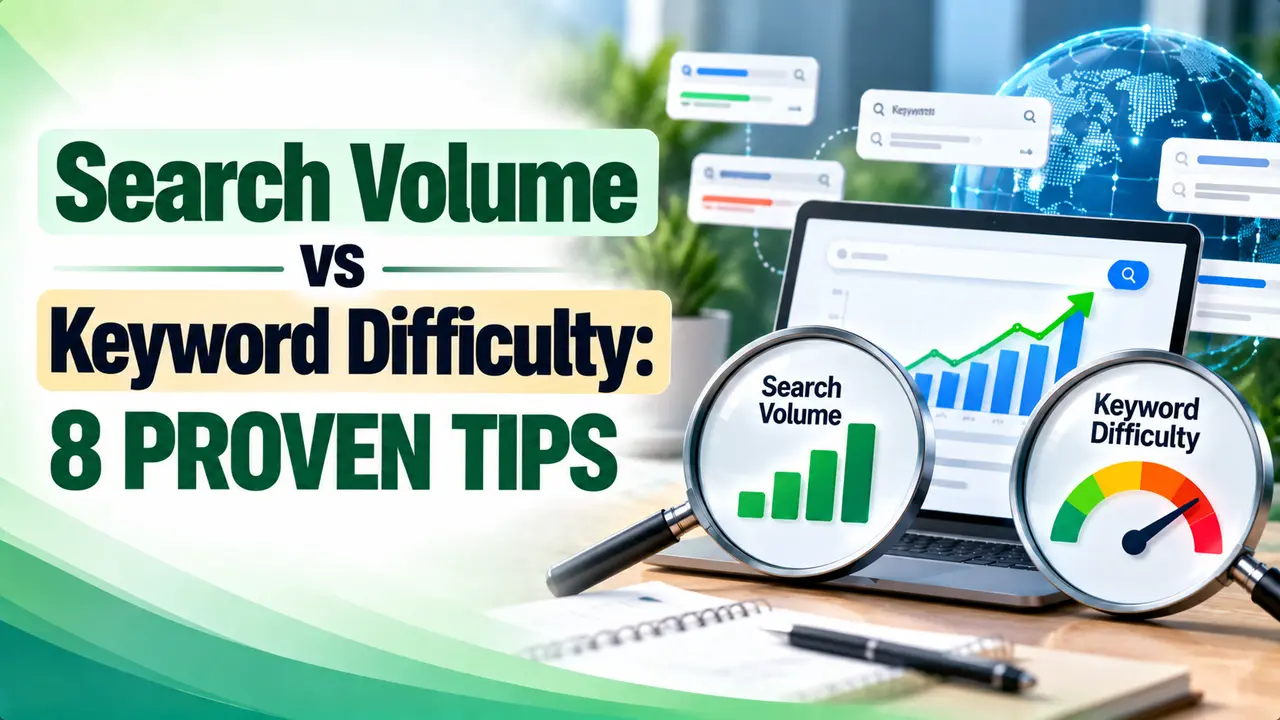
A keyword tool handing back a scary high volume number next to a tempting low difficulty score is where most content strategies go wrong. This guide explains the real search volume vs keyword difficulty tradeoff, where each metric actually comes from, and what a low authority site should prioritize.
Table of Contents
ToggleQuick one before we get into it. You have probably stared at a keyword tool screen with two numbers side by side and felt stuck on which one should actually decide what you write next.
Picture this: you type a topic into your keyword tool and get back a volume column and a difficulty column, and they point in opposite directions. The high volume term looks scary to rank for, the easy term barely gets searched. Understanding search volume vs keyword difficulty, and how each number is actually produced behind the scenes, is what turns that confusing screen into a real shortlist.
Search Volume vs Keyword Difficulty: What Each Number Actually Measures
Search volume is an estimate of monthly demand, how many times people type a given phrase into a search engine. Keyword difficulty is an estimate of competition, how hard it looks to break into the top results for that phrase. They answer two completely different questions.
A keyword can have huge demand and be nearly impossible to rank for, or tiny demand and be wide open. Neither number tells you the full story on its own, and that is exactly why so many people get keyword prioritization wrong. Weighing search volume vs keyword difficulty together, rather than picking one and ignoring the other, is the actual skill worth learning here.
The tricky part is that both numbers are estimates built by different companies using different data and different math, which is where most of the confusion starts.
How Search Volume Is Actually Estimated
Most keyword tools, including the big third party platforms, ultimately trace their search volume figures back to Google Ads data, the same backend that powers Google Keyword Planner. That makes Keyword Planner the closest thing the industry has to a real data source, even for people who never run an ad.
Google itself is upfront that these are estimates, not a live traffic counter. Its own help documentation for Keyword Planner states plainly that search volume statistics are rounded and that actual search numbers are constantly fluctuating due to seasonality, current events, and other factors, so a monthly figure is a snapshot, not a guarantee.
Third party tools then layer their own clickstream and panel data on top of that Google Ads baseline to smooth out gaps, which is part of why two tools rarely show the exact same number for the same term even when both are reasonably accurate.
Why You Usually See a Range, Not an Exact Number
Open Keyword Planner without an active ad campaign and you get wide buckets like 0 to 10, 10 to 100, 100 to 1K, all the way up to 1M plus. That is genuinely useful for spotting a trend, but useless for comparing two mid sized keywords against each other.
Run an active campaign and Google unlocks roughly 60 narrower buckets instead of 7, according to independent analysis of real Google search volume bucket data. The same analysis found bucket width scales with size, typically needing an 18 to 23 percent real change before a keyword jumps to the next bucket, so a term sitting at 1.83 million searches needs roughly a 50 percent swing before Keyword Planner shows any movement at all.
Several SEO writers have flagged the same practical headache from the other side. One popular Keyword Planner walkthrough bluntly describes the monthly figure as a range, calling it not a super accurate indicator of search volume on its own, which is exactly why serious keyword prioritization never leans on one tool alone.
Tip
Cross check Keyword Planner ranges against a dedicated research tool before you commit. Our keyword research tools comparison breaks down which platforms give the tightest volume estimates for small and mid sized sites.
How Keyword Difficulty Scores Are Actually Calculated
Keyword difficulty tries to answer a harder question than volume does, and tools disagree on the math far more because of it. Ahrefs keeps its approach simple on purpose. It looks at the top 10 ranking pages for a keyword and counts the referring domains pointing at each one, then plots that on a 0 to 100 scale where the steps get steeper as you climb, per Ahrefs own explanation of its Keyword Difficulty metric. Reaching a score near 40 usually takes somewhere around 56 referring domains, while a score near 90 can require roughly 756.
Semrush takes a heavier approach. Its updated Keyword Difficulty formula pulls the median referring domains and median Authority Score from the top 10 results, then blends in search volume, SERP features like featured snippets, whether the term is branded, and page word count, each carrying its own weight, as Semrush documents in its own methodology breakdown. Referring domains still dominate the formula, but the extra inputs mean Semrush and Ahrefs are rarely starting from the same ingredients.
| Tool | Main Input | Other Factors Used |
|---|---|---|
| Ahrefs | Referring domains to top 10 pages | None, link count only |
| Semrush | Median referring domains plus Authority Score | Search volume, SERP features, branding, word count |
Why the Same Keyword Shows Different Scores on Different Tools
Ahrefs puts it plainly on its own blog. These tools all use the same 0 to 100 scale, but each one calculates it differently, which is really the whole story in a single sentence from Ahrefs own keyword difficulty guide. A score of 35 in one tool and 52 in another for the identical phrase does not mean either number is wrong, it means they measured different things with different link indexes.
Part of the gap comes from the metrics feeding the formulas in the first place. Domain Authority, Authority Score, and similar labels are not figures Google publishes. They are proprietary estimates each SEO software company builds from its own crawl of the web, and one widely read keyword guide points out that this is exactly why scores vary from product to product even when they are all trying to describe the same ranking page.
The practical takeaway is simple. Never compare a raw difficulty number across two different tools. Track it consistently inside one platform instead, and treat the number as a rough guide rather than a guarantee.
On the Ahrefs scale, a keyword difficulty score of roughly 40 corresponds to about 56 referring domains needed to break the top 10, while a score near 90 can require around 756, a jump that shows just how uneven the 0 to 100 scale really is. Ahrefs publishes the underlying referring domain estimates behind every score band.
A Practical Framework: Search Volume vs Keyword Difficulty, Plus Intent
The strongest keyword research advice is not to chase the biggest volume column you can find. It is to look for the overlap of three signals at once, decent demand, a difficulty score you can realistically beat, and a phrase that matches what the searcher actually wants next.
Search Engine Land makes this concrete with a donor advised fund example. A bank chasing the broad, high volume phrase pulls in curious browsers, while a lower volume, intent rich phrase like opening an account pulls in people ready to act, and the intent match ends up mattering more than the raw search count in almost every case worth studying.
One SEO columnist goes further and argues that competition scores themselves are simply numbers invented by software vendors, not something search engines use when ranking a page, and recommends building topic clusters around real user questions instead of chasing a single metric, a view worth sitting with the next time a tool's intent and relevance signals disagree with its volume column.
Put plainly, when you weigh search volume vs keyword difficulty side by side with real intent, you end up with a shortlist worth actually writing for, not just a spreadsheet full of impressive looking numbers.
Tip
Build a simple score, volume divided by difficulty, then manually downgrade anything whose top results clearly do not match your intent. If you are researching dozens of terms at once, our keyword research automation guide shows how to run that scoring at scale instead of row by row in a spreadsheet.
Common Mistakes When Prioritizing Keywords
Most prioritization mistakes come from treating one of these two numbers as the whole answer. A few show up again and again across new sites.
Newer sites especially tend to aim for head terms that look impressive in a spreadsheet, then stall for months because the difficulty score was never realistic for their current authority. Pairing a keyword tool with a general toolkit, like the options in our free SEO tools roundup, helps catch that mismatch earlier.
Search volume estimates monthly demand for a phrase, while keyword difficulty estimates how hard it is to rank for it. Neither one should guide your choice alone. Weighing search volume vs keyword difficulty together, alongside real search intent, is what actually produces a workable content list.
The figures come from aggregated Google Ads query data. Google rounds the numbers and notes they shift with seasonality and current events, which is why the same keyword can read differently depending on the month you check it.
Without an active ad campaign, Google groups results into roughly seven wide buckets. Running a live campaign unlocks closer to 60 narrower buckets, which is why agencies and advertisers often see tighter ranges than a casual visitor browsing the free tool.
Ahrefs scores difficulty almost entirely on referring domains to the top 10 pages. Semrush blends referring domains with Authority Score, search volume, SERP features, and more. Different ingredients produce different numbers even on the identical 0 to 100 scale.
Favor lower difficulty, specific phrases with clear buyer or informational intent over broad head terms. Smaller wins build the authority and internal links that eventually make the harder, higher volume phrases reachable.
Learn Today
Search Volume
An estimate of how many times a phrase is searched in a given month.
Keyword Difficulty
A score estimating how hard it is to rank in the top organic results for a term.
Referring Domains
The unique websites linking to a page, a core input behind most difficulty scores.
Volume Buckets
Wide search volume ranges Keyword Planner shows without an active ad campaign.
Search Intent
The real goal behind a query, whether to learn, compare, or buy.
Authority Score
A proprietary link strength metric that varies by SEO tool and is not published by Google.
Related Articles
Stop Guessing on Search Volume vs Keyword Difficulty
Explore more Brandella Journal guides on SEO and digital marketing.
Related Posts
Previous Post
Next Post
Previous Post

Next Post





- Artificial Intelligence
- Content
- Core Web Vitals
- Development
- Digital Marketing
- Display Advertising
- Google Ads
- Google Search Console
- GTM
- HTML
- HTML CSS
- JavaScript
- Keyword Research
- Link Building
- LinkedIn Ads
- Local SEO
- Meta Ads
- Mobile SEO
- Off-Page SEO
- On-Page SEO
- Paid Media
- Paid Media Analytics
- PHP
- PPC Strategy
- Python
- SEO
- SEO Basics
- SEO Tools
- Social
- Technical SEO