
- Home
- SEODiscover the latest updates from across the United States, including politics, culture, economy, and trending stories. Stay informed on the key events shaping the nation and the topics everyone’s talking about.
- Technical SEOLearn technical SEO concepts including crawling, indexing, XML sitemaps, robots.txt, canonical tags, site architecture, and website performance.
- Local SEOOptimize your business for local seo with Google Business Profile, local citations, reviews, maps, and location-based SEO.
- Mobile SEOImprove your website’s mobile seo performance with responsive design, mobile-first indexing, usability, and page speed optimization.
- On-Page SEOExplore on-page seo optimization techniques such as title tags, meta descriptions, headings, URLs, internal linking, and content optimization.
- Off-Page SEODiscover off-page SEO strategies such as backlinks, digital PR, brand mentions, outreach, and authority building.
- SEO ToolsExplore the best SEO tools for keyword research, technical audits, backlink analysis, rank tracking, and website optimization.
- Core Web VitalsLearn how to improve Core Web Vitals including LCP, INP, CLS, page speed, and overall user experience for better rankings.
- Keyword ResearchLearn how to find profitable keywords, analyze search intent, evaluate competition, and build effective keyword strategies.
- Link BuildingMaster ethical link building techniques, backlink analysis, outreach methods, guest posting, and authority growth strategies.
- Google Search ConsoleLearn how to use Google Search Console to monitor indexing, fix errors, analyze search performance, and improve SEO.
- SEO BasicsLearn the fundamentals of search engine optimization (SEO Basics), including how search engines work, SEO terminology, and beginner-friendly best practices.
- Paid Media
- Display AdvertisingLearn display advertising strategies, banner ads, audience targeting, remarketing, Google Display campaigns, and optimization techniques.
- Google AdsLearn Google Ads strategies, campaign setup, bidding, keywords, Performance Max, Search Ads, and optimization techniques.
- LinkedIn AdsLearn LinkedIn Ads strategies for B2B marketing, lead generation, audience targeting, campaign optimization, and paid social advertising.
- Meta AdsLearn Meta Ads strategies for Facebook and Instagram, including campaign setup, targeting, retargeting, and performance optimization.
- Paid Media AnalyticsLearn paid media analytics, including CPC, CTR, CPA, ROAS, conversion tracking, attribution, reporting, and campaign performance analysis.
- PPC StrategyLearn effective PPC strategies, campaign planning, bidding, keyword targeting, landing pages, conversion optimization, and more.
- ContentTransform your living spaces with inspiration, tips, and trends in interior design. From minimalist decor to bold statements, find ideas for every style and budget.
- Social
- Digital MarketingExplore stories and advice on living your best life. From personal growth to entertainment, dive into the latest in lifestyle trends and inspiration.
- Artificial IntelligenceStay informed about health and wellness with expert advice, fitness tips, and the latest medical breakthroughs. Your guide to a healthier and happier life.
- DevelopmentYou will find development related educational articles
- GTMLearn Google Tag Manager (GTM) with practical guides for tags, triggers, variables, tracking, conversions, and website analytics implementation.
- HTMLLearn HTML with simple tutorials, examples, tags, elements, attributes, and best practices for building modern web pages.
- HTML CSSLearn HTML CSS together with practical tutorials, examples, layouts, styling techniques, responsive design, and modern web development practices.
- HTML JSLearn HTML JS – JavaScript with practical tutorials and examples for adding interactivity, dynamic content, events, and functionality to web pages.
- JavaScriptExplore JavaScript tutorials, examples, concepts, and practical techniques for creating interactive and dynamic websites and web applications.
- PHPLearn PHP programming with practical tutorials, examples, functions, syntax, and web development techniques for beginners and developers.
- PythonLearn Python programming with practical tutorials, examples, syntax, functions, automation techniques, and useful programming concepts.
- Home
- SEODiscover the latest updates from across the United States, including politics, culture, economy, and trending stories. Stay informed on the key events shaping the nation and the topics everyone’s talking about.
- Technical SEOLearn technical SEO concepts including crawling, indexing, XML sitemaps, robots.txt, canonical tags, site architecture, and website performance.
- Local SEOOptimize your business for local seo with Google Business Profile, local citations, reviews, maps, and location-based SEO.
- Mobile SEOImprove your website’s mobile seo performance with responsive design, mobile-first indexing, usability, and page speed optimization.
- On-Page SEOExplore on-page seo optimization techniques such as title tags, meta descriptions, headings, URLs, internal linking, and content optimization.
- Off-Page SEODiscover off-page SEO strategies such as backlinks, digital PR, brand mentions, outreach, and authority building.
- SEO ToolsExplore the best SEO tools for keyword research, technical audits, backlink analysis, rank tracking, and website optimization.
- Core Web VitalsLearn how to improve Core Web Vitals including LCP, INP, CLS, page speed, and overall user experience for better rankings.
- Keyword ResearchLearn how to find profitable keywords, analyze search intent, evaluate competition, and build effective keyword strategies.
- Link BuildingMaster ethical link building techniques, backlink analysis, outreach methods, guest posting, and authority growth strategies.
- Google Search ConsoleLearn how to use Google Search Console to monitor indexing, fix errors, analyze search performance, and improve SEO.
- SEO BasicsLearn the fundamentals of search engine optimization (SEO Basics), including how search engines work, SEO terminology, and beginner-friendly best practices.
- Paid Media
- Display AdvertisingLearn display advertising strategies, banner ads, audience targeting, remarketing, Google Display campaigns, and optimization techniques.
- Google AdsLearn Google Ads strategies, campaign setup, bidding, keywords, Performance Max, Search Ads, and optimization techniques.
- LinkedIn AdsLearn LinkedIn Ads strategies for B2B marketing, lead generation, audience targeting, campaign optimization, and paid social advertising.
- Meta AdsLearn Meta Ads strategies for Facebook and Instagram, including campaign setup, targeting, retargeting, and performance optimization.
- Paid Media AnalyticsLearn paid media analytics, including CPC, CTR, CPA, ROAS, conversion tracking, attribution, reporting, and campaign performance analysis.
- PPC StrategyLearn effective PPC strategies, campaign planning, bidding, keyword targeting, landing pages, conversion optimization, and more.
- ContentTransform your living spaces with inspiration, tips, and trends in interior design. From minimalist decor to bold statements, find ideas for every style and budget.
- Social
- Digital MarketingExplore stories and advice on living your best life. From personal growth to entertainment, dive into the latest in lifestyle trends and inspiration.
- Artificial IntelligenceStay informed about health and wellness with expert advice, fitness tips, and the latest medical breakthroughs. Your guide to a healthier and happier life.
- DevelopmentYou will find development related educational articles
- GTMLearn Google Tag Manager (GTM) with practical guides for tags, triggers, variables, tracking, conversions, and website analytics implementation.
- HTMLLearn HTML with simple tutorials, examples, tags, elements, attributes, and best practices for building modern web pages.
- HTML CSSLearn HTML CSS together with practical tutorials, examples, layouts, styling techniques, responsive design, and modern web development practices.
- HTML JSLearn HTML JS – JavaScript with practical tutorials and examples for adding interactivity, dynamic content, events, and functionality to web pages.
- JavaScriptExplore JavaScript tutorials, examples, concepts, and practical techniques for creating interactive and dynamic websites and web applications.
- PHPLearn PHP programming with practical tutorials, examples, functions, syntax, and web development techniques for beginners and developers.
- PythonLearn Python programming with practical tutorials, examples, syntax, functions, automation techniques, and useful programming concepts.
Now Reading: How Gemini AI Finds Information on the Web: Grounding Explained
-
01
How Gemini AI Finds Information on the Web: Grounding Explained
- Home//
- SEO//Discover the latest updates from across the United States, including politics, culture, economy, and trending stories. Stay informed on the key events shaping the nation and the topics everyone’s talking about.
- Technical SEO//Learn technical SEO concepts including crawling, indexing, XML sitemaps, robots.txt, canonical tags, site architecture, and website performance.
- Local SEO//Optimize your business for local seo with Google Business Profile, local citations, reviews, maps, and location-based SEO.
- Mobile SEO//Improve your website’s mobile seo performance with responsive design, mobile-first indexing, usability, and page speed optimization.
- On-Page SEO//Explore on-page seo optimization techniques such as title tags, meta descriptions, headings, URLs, internal linking, and content optimization.
- Off-Page SEO//Discover off-page SEO strategies such as backlinks, digital PR, brand mentions, outreach, and authority building.
- SEO Tools//Explore the best SEO tools for keyword research, technical audits, backlink analysis, rank tracking, and website optimization.
- Core Web Vitals//Learn how to improve Core Web Vitals including LCP, INP, CLS, page speed, and overall user experience for better rankings.
- Keyword Research//Learn how to find profitable keywords, analyze search intent, evaluate competition, and build effective keyword strategies.
- Link Building//Master ethical link building techniques, backlink analysis, outreach methods, guest posting, and authority growth strategies.
- Google Search Console//Learn how to use Google Search Console to monitor indexing, fix errors, analyze search performance, and improve SEO.
- SEO Basics//Learn the fundamentals of search engine optimization (SEO Basics), including how search engines work, SEO terminology, and beginner-friendly best practices.
- Paid Media//
- Display Advertising//Learn display advertising strategies, banner ads, audience targeting, remarketing, Google Display campaigns, and optimization techniques.
- Google Ads//Learn Google Ads strategies, campaign setup, bidding, keywords, Performance Max, Search Ads, and optimization techniques.
- LinkedIn Ads//Learn LinkedIn Ads strategies for B2B marketing, lead generation, audience targeting, campaign optimization, and paid social advertising.
- Meta Ads//Learn Meta Ads strategies for Facebook and Instagram, including campaign setup, targeting, retargeting, and performance optimization.
- Paid Media Analytics//Learn paid media analytics, including CPC, CTR, CPA, ROAS, conversion tracking, attribution, reporting, and campaign performance analysis.
- PPC Strategy//Learn effective PPC strategies, campaign planning, bidding, keyword targeting, landing pages, conversion optimization, and more.
- Content//Transform your living spaces with inspiration, tips, and trends in interior design. From minimalist decor to bold statements, find ideas for every style and budget.
- Social//
- Digital Marketing//Explore stories and advice on living your best life. From personal growth to entertainment, dive into the latest in lifestyle trends and inspiration.
- Artificial Intelligence//Stay informed about health and wellness with expert advice, fitness tips, and the latest medical breakthroughs. Your guide to a healthier and happier life.
- Development//You will find development related educational articles
- GTM//Learn Google Tag Manager (GTM) with practical guides for tags, triggers, variables, tracking, conversions, and website analytics implementation.
- HTML//Learn HTML with simple tutorials, examples, tags, elements, attributes, and best practices for building modern web pages.
- HTML CSS//Learn HTML CSS together with practical tutorials, examples, layouts, styling techniques, responsive design, and modern web development practices.
- HTML JS//Learn HTML JS – JavaScript with practical tutorials and examples for adding interactivity, dynamic content, events, and functionality to web pages.
- JavaScript//Explore JavaScript tutorials, examples, concepts, and practical techniques for creating interactive and dynamic websites and web applications.
- PHP//Learn PHP programming with practical tutorials, examples, functions, syntax, and web development techniques for beginners and developers.
- Python//Learn Python programming with practical tutorials, examples, syntax, functions, automation techniques, and useful programming concepts.
How Gemini AI Finds Information on the Web: Grounding Explained

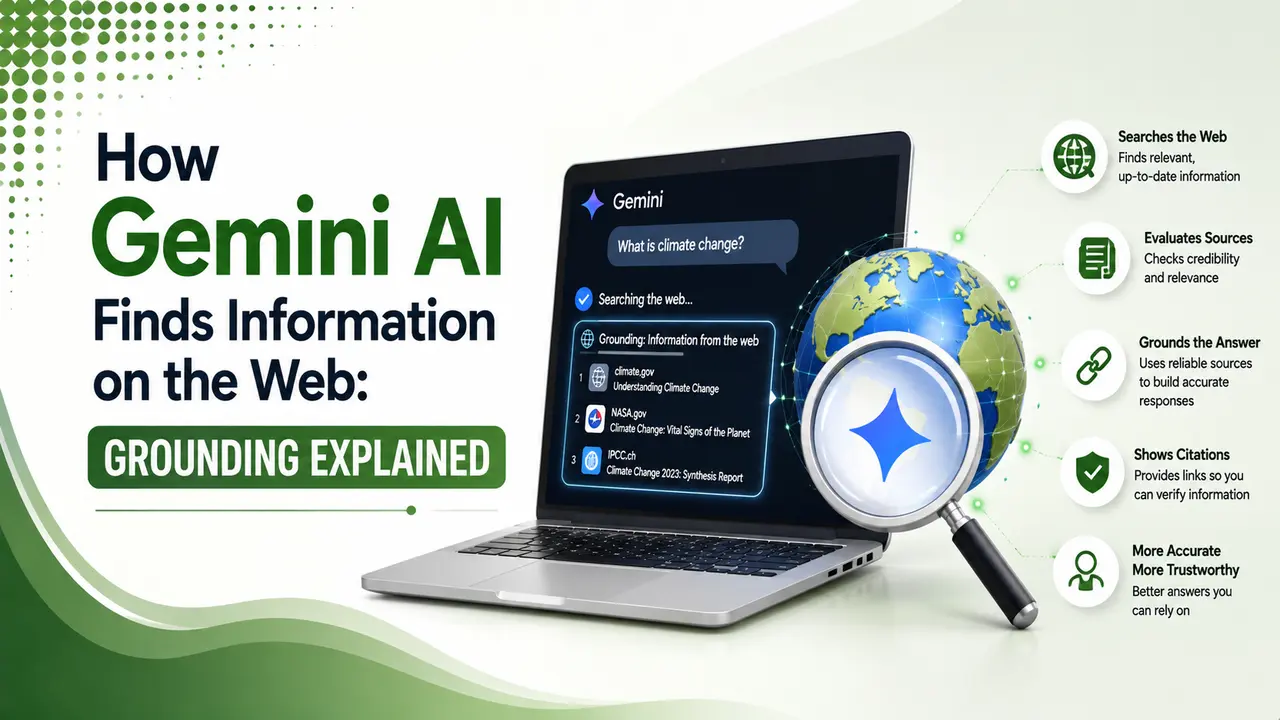
Gemini AI decides mid-answer whether to search the live web, then cites exactly where each claim came from. Here's how that grounding pipeline works.
Table of Contents
ToggleGemini AI finds information on the web through a mechanism Google calls Grounding with Google Search. Instead of answering purely from what it learned during training, Gemini can decide mid-response that a query needs fresh data, run one or more live Google searches, read the results, and attach citations showing exactly where each part of the answer came from.
This isn't a separate chatbot feature bolted on afterward. It's built directly into the model's reasoning, and as of 2026 it's expanding well beyond Google's own search index into partner data sources entirely.
Here's exactly how Gemini decides when to search, what happens after it does, and what's changed most recently.
01Gemini AI and Grounding: The Core Mechanism
Google's own developer documentation confirms the fundamental behavior: Grounding with Google Search connects the Gemini model to real-time web content across all available languages, allowing it to provide more accurate answers and cite verifiable sources beyond its training cutoff.
Marketing Scoop's guide frames why this matters practically: it's not just a chatbot saying something that sounds right, it's closer to an open-book answer, where the book is the public web and the application can show exactly which pages were used.
02How Gemini Decides When to Search
WebSearchAPI's guide explains the specific mechanism: a prediction classifier scores each incoming query from 0 to 1, deciding whether search results would actually improve the answer before any search is triggered.
Inventive HQ's guide confirms this with a concrete example: for a question like "explain what a for loop is," Gemini responds directly from training data without searching at all, since the model recognizes no fresh information is needed for that particular query.
Dejan SEO's analysis found something unusual through an accidental exposure: Gemini's internal responses sometimes included indexing marks like [6.2], where the first number corresponds to a specific search query the model executed and the second to a specific result within it. This suggests Gemini maintains an ordered, structured cache of retrieval results internally, not just raw pasted text.
03Multiple Searches Within a Single Request
Google's own API documentation gives a concrete example of this in action: for a prompt asking about a match result, Gemini might run one search for "UEFA Euro 2024 winner" and a second for "Spain vs England Euro 2024 final score" within the same API call, counted as two separate billable searches.
This matters for anyone building on the API. Since Gemini 3, billing happens per search query executed, not per prompt, a meaningful shift from how Gemini 2.5 and older models were charged.
04Beyond Google's Own Index: Partner Grounding
Google's Developers Blog announced a real structural change in 2026: Parallel Web Systems is now a natively integrated web grounding provider on the Gemini Enterprise Agent Platform, giving developers their choice of live-web data stream rather than relying solely on Google's own search results.
Google Cloud's documentation confirms a second partner integration around the same time, Exa's search API, explicitly noting it respects opt-out signals like "noindex" tags, a detail publishers should know if they don't want their content used for grounding.
05Gemini vs Perplexity: Two Different Approaches
WebSearchAPI's guide, referenced above, draws a useful distinction for developers weighing their options: Google's grounding is a managed RAG solution, you skip building vector databases, embedding models, and reranking logic entirely, but the tradeoff is zero customization over which sources get retrieved or how they're ranked.
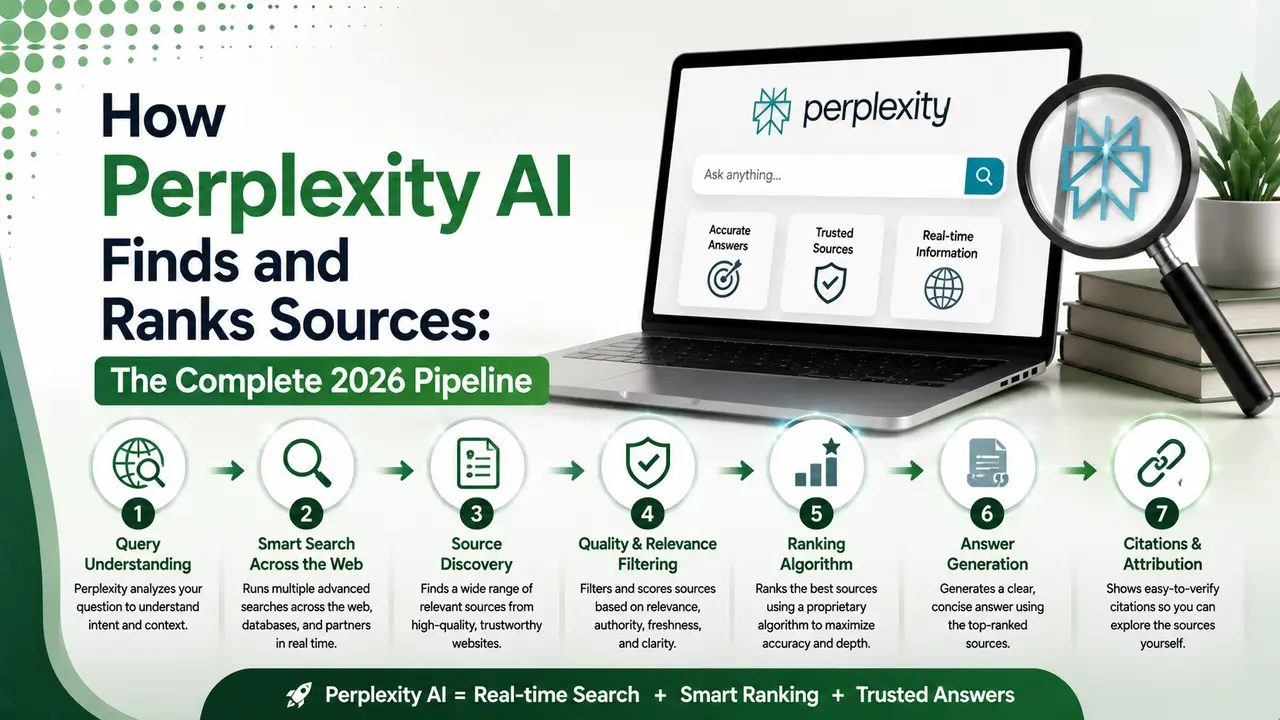
This is a meaningfully different philosophy from what our Perplexity AI sourcing guide covers, Perplexity runs its own multi-layer reranking pipeline with explicit authority and freshness scoring, while Gemini's default grounding leans on Google Search's existing ranking rather than a separate visible reranking layer.
06What Web Publishers Should Know
Google Cloud's documentation is explicit on a control mechanism publishers already have: Grounding with Google Search does not use web pages that have disallowed Google-Extended, meaning publishers can manage inclusion in Gemini grounding through the same robots.txt directive that controls other Google AI training and retrieval uses.
OneUpTime's guide draws a distinction worth understanding clearly: grounding with Google Search pulls from the public web at inference time, while retrieval-augmented generation with your own data pulls from private data stores. They're complementary, not the same thing, and can be used together for broader coverage.
07Grounding Sources Compared
A quick reference across the grounding options available on Gemini in 2026.
| Source | Data Origin | Respects noindex/Google-Extended? |
|---|---|---|
| Google Search grounding | Public Google Search index | Yes, via Google-Extended |
| Parallel Web Search | Parallel Web Systems' own index | Provider-managed opt-out |
| Exa grounding | Exa's search API | Yes, respects noindex tags |
| Custom search API | Developer-provided endpoint | Depends on the developer's source |
08Basic Grounding Setup Example
Here's a simplified example of enabling Google Search grounding through the Gemini API.
from google import genai
from google.genai import types

client = genai.Client(api_key="your_api_key_here")

response = client.models.generate_content(
    model="gemini-3-flash",
    contents="What were the key announcements at this week's tech conference?",
    tools=[types.Tool(google_search=types.GoogleSearch())]
)

print(response.text)
# response.grounding_metadata contains the search queries,
# web results, and citations used to generate the answer
09What to Check If You're Building With Grounding
A short list for developers evaluating grounding for a real project.
Confirm your model supports grounding, most current Gemini models do, but always check the specific version.
Understand the billing shift, Gemini 3 bills per search query executed, not per prompt.
Decide if managed grounding fits your needs, or if you need a custom pipeline with source-level control instead.
Check Google-Extended settings if you're a publisher, this controls your inclusion in Gemini's grounding results.
Combine with your own RAG for enterprise data alongside public web grounding when comprehensive coverage matters.
10Should You Enable Grounding for Your Use Case?
Answer a few quick questions to check if grounding fits your project.
Should You Enable Grounding?
Select the option that matches your project
11Common Questions
No. A prediction classifier scores each query and only triggers a search when it determines fresh information would meaningfully improve the answer.
Training data is fixed at the model's knowledge cutoff. Grounding pulls live web content at the moment you ask, letting Gemini answer accurately about very recent events.
Yes, as of 2026. Parallel Web Search and Exa are both available as partner grounding sources on the Gemini Enterprise Agent Platform, alongside standard Google Search grounding.
Yes. Disallowing Google-Extended in robots.txt excludes a site from Google Search grounding. Some partner sources like Exa respect standard noindex tags as their opt-out mechanism.
For Gemini 3 models, billing is per search query executed, so a prompt triggering two searches counts as two billable uses. Older models like Gemini 2.5 are billed per prompt instead.
Related Articles
What We Learn Today
Gemini decides whether to search using a prediction classifier
A single prompt can trigger multiple separate search queries
Parallel and Exa joined as partner grounding sources in 2026
Google-Extended in robots.txt controls grounding inclusion
Grounding differs from RAG, live web vs your private data
Gemini 3 bills per search query, not per prompt
Build a Complete AI Visibility Strategy
Understanding Gemini's grounding pairs well with knowing how Perplexity sources content. Explore both guides next.
Related Posts


Previous Post
Next Post
Previous Post
Next Post




- Artificial Intelligence
- Content
- Core Web Vitals
- Development
- Digital Marketing
- Display Advertising
- Google Ads
- Google Search Console
- GTM
- HTML
- HTML CSS
- JavaScript
- Keyword Research
- Link Building
- LinkedIn Ads
- Local SEO
- Meta Ads
- Mobile SEO
- Off-Page SEO
- On-Page SEO
- Paid Media
- Paid Media Analytics
- PHP
- PPC Strategy
- Python
- SEO
- SEO Basics
- SEO Tools
- Social
- Technical SEO