
- Home
- SEODiscover the latest updates from across the United States, including politics, culture, economy, and trending stories. Stay informed on the key events shaping the nation and the topics everyone’s talking about.
- Technical SEOLearn technical SEO concepts including crawling, indexing, XML sitemaps, robots.txt, canonical tags, site architecture, and website performance.
- Local SEOOptimize your business for local seo with Google Business Profile, local citations, reviews, maps, and location-based SEO.
- Mobile SEOImprove your website’s mobile seo performance with responsive design, mobile-first indexing, usability, and page speed optimization.
- On-Page SEOExplore on-page seo optimization techniques such as title tags, meta descriptions, headings, URLs, internal linking, and content optimization.
- Off-Page SEODiscover off-page SEO strategies such as backlinks, digital PR, brand mentions, outreach, and authority building.
- SEO ToolsExplore the best SEO tools for keyword research, technical audits, backlink analysis, rank tracking, and website optimization.
- Core Web VitalsLearn how to improve Core Web Vitals including LCP, INP, CLS, page speed, and overall user experience for better rankings.
- Keyword ResearchLearn how to find profitable keywords, analyze search intent, evaluate competition, and build effective keyword strategies.
- Link BuildingMaster ethical link building techniques, backlink analysis, outreach methods, guest posting, and authority growth strategies.
- Google Search ConsoleLearn how to use Google Search Console to monitor indexing, fix errors, analyze search performance, and improve SEO.
- SEO BasicsLearn the fundamentals of search engine optimization (SEO Basics), including how search engines work, SEO terminology, and beginner-friendly best practices.
- Paid Media
- Display AdvertisingLearn display advertising strategies, banner ads, audience targeting, remarketing, Google Display campaigns, and optimization techniques.
- Google AdsLearn Google Ads strategies, campaign setup, bidding, keywords, Performance Max, Search Ads, and optimization techniques.
- LinkedIn AdsLearn LinkedIn Ads strategies for B2B marketing, lead generation, audience targeting, campaign optimization, and paid social advertising.
- Meta AdsLearn Meta Ads strategies for Facebook and Instagram, including campaign setup, targeting, retargeting, and performance optimization.
- Paid Media AnalyticsLearn paid media analytics, including CPC, CTR, CPA, ROAS, conversion tracking, attribution, reporting, and campaign performance analysis.
- PPC StrategyLearn effective PPC strategies, campaign planning, bidding, keyword targeting, landing pages, conversion optimization, and more.
- ContentTransform your living spaces with inspiration, tips, and trends in interior design. From minimalist decor to bold statements, find ideas for every style and budget.
- Social
- Digital MarketingExplore stories and advice on living your best life. From personal growth to entertainment, dive into the latest in lifestyle trends and inspiration.
- Artificial IntelligenceStay informed about health and wellness with expert advice, fitness tips, and the latest medical breakthroughs. Your guide to a healthier and happier life.
- DevelopmentYou will find development related educational articles
- GTMLearn Google Tag Manager (GTM) with practical guides for tags, triggers, variables, tracking, conversions, and website analytics implementation.
- HTMLLearn HTML with simple tutorials, examples, tags, elements, attributes, and best practices for building modern web pages.
- HTML CSSLearn HTML CSS together with practical tutorials, examples, layouts, styling techniques, responsive design, and modern web development practices.
- HTML JSLearn HTML JS – JavaScript with practical tutorials and examples for adding interactivity, dynamic content, events, and functionality to web pages.
- JavaScriptExplore JavaScript tutorials, examples, concepts, and practical techniques for creating interactive and dynamic websites and web applications.
- PHPLearn PHP programming with practical tutorials, examples, functions, syntax, and web development techniques for beginners and developers.
- PythonLearn Python programming with practical tutorials, examples, syntax, functions, automation techniques, and useful programming concepts.
- Home
- SEODiscover the latest updates from across the United States, including politics, culture, economy, and trending stories. Stay informed on the key events shaping the nation and the topics everyone’s talking about.
- Technical SEOLearn technical SEO concepts including crawling, indexing, XML sitemaps, robots.txt, canonical tags, site architecture, and website performance.
- Local SEOOptimize your business for local seo with Google Business Profile, local citations, reviews, maps, and location-based SEO.
- Mobile SEOImprove your website’s mobile seo performance with responsive design, mobile-first indexing, usability, and page speed optimization.
- On-Page SEOExplore on-page seo optimization techniques such as title tags, meta descriptions, headings, URLs, internal linking, and content optimization.
- Off-Page SEODiscover off-page SEO strategies such as backlinks, digital PR, brand mentions, outreach, and authority building.
- SEO ToolsExplore the best SEO tools for keyword research, technical audits, backlink analysis, rank tracking, and website optimization.
- Core Web VitalsLearn how to improve Core Web Vitals including LCP, INP, CLS, page speed, and overall user experience for better rankings.
- Keyword ResearchLearn how to find profitable keywords, analyze search intent, evaluate competition, and build effective keyword strategies.
- Link BuildingMaster ethical link building techniques, backlink analysis, outreach methods, guest posting, and authority growth strategies.
- Google Search ConsoleLearn how to use Google Search Console to monitor indexing, fix errors, analyze search performance, and improve SEO.
- SEO BasicsLearn the fundamentals of search engine optimization (SEO Basics), including how search engines work, SEO terminology, and beginner-friendly best practices.
- Paid Media
- Display AdvertisingLearn display advertising strategies, banner ads, audience targeting, remarketing, Google Display campaigns, and optimization techniques.
- Google AdsLearn Google Ads strategies, campaign setup, bidding, keywords, Performance Max, Search Ads, and optimization techniques.
- LinkedIn AdsLearn LinkedIn Ads strategies for B2B marketing, lead generation, audience targeting, campaign optimization, and paid social advertising.
- Meta AdsLearn Meta Ads strategies for Facebook and Instagram, including campaign setup, targeting, retargeting, and performance optimization.
- Paid Media AnalyticsLearn paid media analytics, including CPC, CTR, CPA, ROAS, conversion tracking, attribution, reporting, and campaign performance analysis.
- PPC StrategyLearn effective PPC strategies, campaign planning, bidding, keyword targeting, landing pages, conversion optimization, and more.
- ContentTransform your living spaces with inspiration, tips, and trends in interior design. From minimalist decor to bold statements, find ideas for every style and budget.
- Social
- Digital MarketingExplore stories and advice on living your best life. From personal growth to entertainment, dive into the latest in lifestyle trends and inspiration.
- Artificial IntelligenceStay informed about health and wellness with expert advice, fitness tips, and the latest medical breakthroughs. Your guide to a healthier and happier life.
- DevelopmentYou will find development related educational articles
- GTMLearn Google Tag Manager (GTM) with practical guides for tags, triggers, variables, tracking, conversions, and website analytics implementation.
- HTMLLearn HTML with simple tutorials, examples, tags, elements, attributes, and best practices for building modern web pages.
- HTML CSSLearn HTML CSS together with practical tutorials, examples, layouts, styling techniques, responsive design, and modern web development practices.
- HTML JSLearn HTML JS – JavaScript with practical tutorials and examples for adding interactivity, dynamic content, events, and functionality to web pages.
- JavaScriptExplore JavaScript tutorials, examples, concepts, and practical techniques for creating interactive and dynamic websites and web applications.
- PHPLearn PHP programming with practical tutorials, examples, functions, syntax, and web development techniques for beginners and developers.
- PythonLearn Python programming with practical tutorials, examples, syntax, functions, automation techniques, and useful programming concepts.
Now Reading: How to Get More Google Reviews Without Breaking Google’s Rules
-
01
How to Get More Google Reviews Without Breaking Google’s Rules
- Home//
- SEO//Discover the latest updates from across the United States, including politics, culture, economy, and trending stories. Stay informed on the key events shaping the nation and the topics everyone’s talking about.
- Technical SEO//Learn technical SEO concepts including crawling, indexing, XML sitemaps, robots.txt, canonical tags, site architecture, and website performance.
- Local SEO//Optimize your business for local seo with Google Business Profile, local citations, reviews, maps, and location-based SEO.
- Mobile SEO//Improve your website’s mobile seo performance with responsive design, mobile-first indexing, usability, and page speed optimization.
- On-Page SEO//Explore on-page seo optimization techniques such as title tags, meta descriptions, headings, URLs, internal linking, and content optimization.
- Off-Page SEO//Discover off-page SEO strategies such as backlinks, digital PR, brand mentions, outreach, and authority building.
- SEO Tools//Explore the best SEO tools for keyword research, technical audits, backlink analysis, rank tracking, and website optimization.
- Core Web Vitals//Learn how to improve Core Web Vitals including LCP, INP, CLS, page speed, and overall user experience for better rankings.
- Keyword Research//Learn how to find profitable keywords, analyze search intent, evaluate competition, and build effective keyword strategies.
- Link Building//Master ethical link building techniques, backlink analysis, outreach methods, guest posting, and authority growth strategies.
- Google Search Console//Learn how to use Google Search Console to monitor indexing, fix errors, analyze search performance, and improve SEO.
- SEO Basics//Learn the fundamentals of search engine optimization (SEO Basics), including how search engines work, SEO terminology, and beginner-friendly best practices.
- Paid Media//
- Display Advertising//Learn display advertising strategies, banner ads, audience targeting, remarketing, Google Display campaigns, and optimization techniques.
- Google Ads//Learn Google Ads strategies, campaign setup, bidding, keywords, Performance Max, Search Ads, and optimization techniques.
- LinkedIn Ads//Learn LinkedIn Ads strategies for B2B marketing, lead generation, audience targeting, campaign optimization, and paid social advertising.
- Meta Ads//Learn Meta Ads strategies for Facebook and Instagram, including campaign setup, targeting, retargeting, and performance optimization.
- Paid Media Analytics//Learn paid media analytics, including CPC, CTR, CPA, ROAS, conversion tracking, attribution, reporting, and campaign performance analysis.
- PPC Strategy//Learn effective PPC strategies, campaign planning, bidding, keyword targeting, landing pages, conversion optimization, and more.
- Content//Transform your living spaces with inspiration, tips, and trends in interior design. From minimalist decor to bold statements, find ideas for every style and budget.
- Social//
- Digital Marketing//Explore stories and advice on living your best life. From personal growth to entertainment, dive into the latest in lifestyle trends and inspiration.
- Artificial Intelligence//Stay informed about health and wellness with expert advice, fitness tips, and the latest medical breakthroughs. Your guide to a healthier and happier life.
- Development//You will find development related educational articles
- GTM//Learn Google Tag Manager (GTM) with practical guides for tags, triggers, variables, tracking, conversions, and website analytics implementation.
- HTML//Learn HTML with simple tutorials, examples, tags, elements, attributes, and best practices for building modern web pages.
- HTML CSS//Learn HTML CSS together with practical tutorials, examples, layouts, styling techniques, responsive design, and modern web development practices.
- HTML JS//Learn HTML JS – JavaScript with practical tutorials and examples for adding interactivity, dynamic content, events, and functionality to web pages.
- JavaScript//Explore JavaScript tutorials, examples, concepts, and practical techniques for creating interactive and dynamic websites and web applications.
- PHP//Learn PHP programming with practical tutorials, examples, functions, syntax, and web development techniques for beginners and developers.
- Python//Learn Python programming with practical tutorials, examples, syntax, functions, automation techniques, and useful programming concepts.
How to Get More Google Reviews Without Breaking Google’s Rules

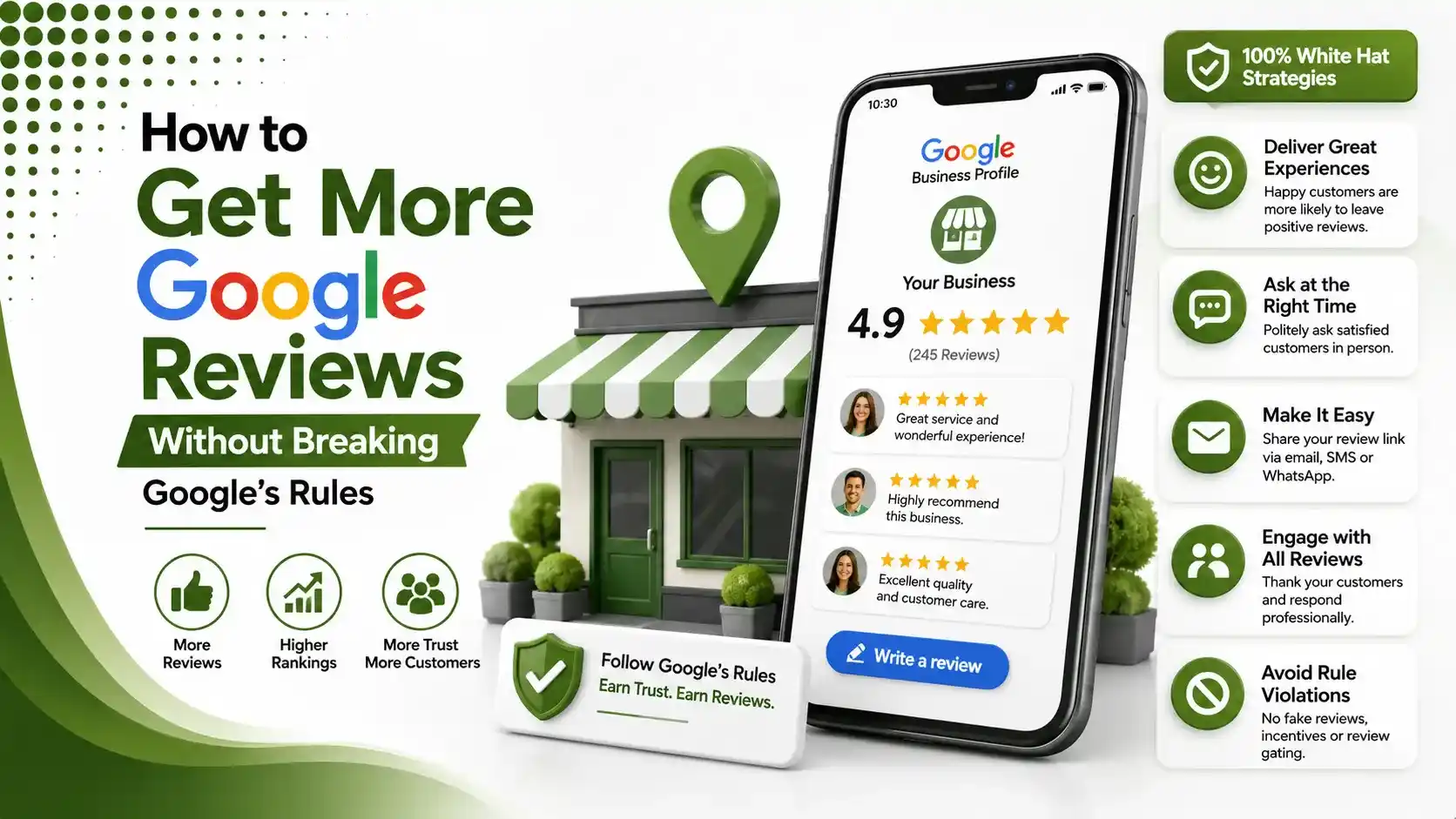
Google closed two loopholes in April 2026, review quotas and staff-name solicitation. Here's what's banned, what's still fine, and the compliant playbook that actually works.
Table of Contents
ToggleHow to get more Google reviews without breaking rules got harder to figure out in April 2026, when Google quietly closed two loopholes local businesses had leaned on for years. Review quotas and staff-name solicitation are now explicit violations, and the enforcement caught up the same week the policy changed.
A lot of businesses aren't trying to game the system. They inherited a review request script from an agency, a kiosk from a vendor, or a "ask happy customers first" habit that felt harmless. Some of that playbook quietly became a policy violation without anyone noticing.
Google's principle hasn't shifted: every review has to reflect a real, unbiased experience. What changed is how specifically Google now defines manipulation, and how aggressively its systems detect it, a shift McKinney Creative Ventures' plain-English guide to the policy documents in detail. In 2025 alone, Google's Trust and Safety team blocked or removed more than 292 million policy-violating reviews.
This guide walks through exactly what's banned, what changed in April 2026, and the compliant playbook that actually builds review volume without risking removal or profile suspension.
01The Core Rule Behind Every Google Review Policy
Everything Google enforces comes down to one requirement buried in its Maps user-generated content rules: a review has to be based on a real experience and accurately represent the business. Google's own Maps user-generated content policy prohibits content that isn't grounded in a genuine interaction.
If a review is invented, incentivized, written by someone with a stake in the business, or coached into existence, it fails that test regardless of how glowing it sounds. That single principle is what every specific rule below traces back to.
Kukui's June 2026 breakdown of the policy shift is worth internalizing: several of these practices were always against the rules, they're simply being actively enforced now in a way they weren't before.
02What Changed in Google's April 2026 Review Policy Update
On April 16, 2026, Google published a Maps blog post outlining new protections for businesses, and the following day, two new clauses landed in the rating manipulation section of its Prohibited and Restricted Content policy. ReplyOnTheFly's detailed writeup traces the timeline closely, and the two additions are specific.
The first bans merchants from requesting that staff solicit a certain number of reviews, closing the door on the "bring in ten reviews this week" quota that used to be common advice. The second bans requesting that staff solicit reviews naming a specific employee.
Threechaptermedia's coverage of the update makes an important clarification: Google didn't ban customers from mentioning staff by name organically. A customer writing "Jake was fantastic" on their own is completely fine. What's prohibited is the business engineering that mention through coached requests or campaigns.
03Review Gating Is Banned and Now Actively Enforced
Review gating means pre-screening customers by sentiment before sending them to leave a public review, usually through a satisfaction survey that routes four- and five-star responses to Google while sending anything lower to a private form.
Mainstreethost's coverage of the update frames the goal clearly: reviews need to happen naturally, not through a filtered or gamified process. Every customer has to get the same request, regardless of how you expect them to respond.
04Incentivized Reviews Are Never Allowed, Positive or Negative
Offering anything of value in exchange for a review, a discount, a free service, loyalty points, or a giveaway entry, violates Google's policy outright. The incentive taints the review whether the outcome ends up positive or negative.
That ban extends further than people expect. SocialPilot's 2026 review tactics guide points out that offering an incentive to revise or remove a negative review is prohibited too, not just incentives tied to leaving a new one.
05On-Premises Pressure and Review Kiosks Are Explicitly Banned
Google's policy states merchants shouldn't require or pressure customers to leave a review while still on the business's premises. That single line is the basis for the crackdown on review kiosks and shared tablets sitting at checkout counters.
Kukui's breakdown explains why these devices draw extra scrutiny: reviews clustered from one shared device and IP address look like manipulation to Google's spam systems, even when every individual review is genuine. The compliant pattern flips the timing entirely, customers review later, on their own device, after they've left.
06Insider Reviews and the FTC's Fake Review Rule
Reviews from anyone connected to the business, owners, current or former employees, contractors, family, or close friends, fall under Google's conflict-of-interest prohibition and can't be published.
In the United States, this stopped being purely a platform issue back in October 2024. The FTC's fake reviews rule makes it unlawful to buy or sell fake reviews and covers undisclosed insider reviews, with civil penalties available against businesses that knowingly violate it. A staff or family review campaign now carries legal exposure on top of the platform risk.
07Prohibited vs Compliant Review Practices at a Glance
Applausehq's coverage of the incentive rules and Birdeye's 2026 policy roundup both map cleanly onto the same side-by-side comparison.
| Practice | Status | Why |
|---|---|---|
| Asking every customer equally | Compliant | Reflects genuine, unbiased feedback across your customer base |
| Filtering by sentiment first (review gating) | Banned | Artificially inflates ratings by suppressing negative feedback |
| Automated SMS/email request after service | Compliant | Neutral timing, no pressure, customer reviews on their own device |
| In-store kiosk or shared tablet | Banned | Pressures on-premises reviews and creates same-device spam signals |
| Discount or gift for a review | Banned | Incentivizes the outcome regardless of rating |
| Staff quota or leaderboard for review counts | Banned (April 2026) | Manufactures volume rather than reflecting genuine demand |
08Compliant Review Request Templates You Can Use Today
The safest requests use open, neutral language rather than scripted prompts that direct customers toward specific content. Here's a compliant SMS and email template, plus the direct-link format that opens Google's review composer instead of just your profile page.
Hi [First Name], thanks for choosing [Business Name]!
If you have a moment, we'd love your honest feedback on Google:
[Direct Review Link]
No pressure at all, just helps other customers find us.
https://search.google.com/local/writereview?placeid=YOUR_PLACE_ID

Replace YOUR_PLACE_ID with your Google Business Profile's Place ID,
found via Google's Place ID Finder tool. This link opens the review
composer directly instead of the general profile page.
Notice what's absent from both templates: no mention of staff names, no request for specific content, and no conditional offer. That neutrality is exactly what keeps a request compliant.
09Compliant Review Collection Checklist
Reduce friction, ask everyone the same way, and let automation handle the timing. That's the entire compliant playbook once you strip out the shortcuts.
Ask every customer, not just the ones you expect to leave a five-star review.
Trigger the request after the job is marked complete, while the experience is still fresh but the customer has left the premises.
Use open language like "share your experience" instead of scripting specific phrases or names.
Send via SMS where possible; Applausehq's research on incentive rules notes it produces meaningfully higher response rates than email alone.
Respond to every review, positive or negative, since responding is fully permitted and builds trust with future readers.
Flag genuinely fake reviews through your profile rather than retaliating with fabricated positives of your own.
10Priority Action Stepper
Five moves matter most for compliant review growth. Tap each one for the specific action.
Remove Review Gating
Stop routing customers by sentiment before sending a review link. Every customer gets the exact same request, no pre-screening survey.
11Review Compliance Health Score
Score your current review collection process against Google's April 2026 policy requirements.
Review Compliance Health Score
Select the option that matches your current process for each factor
12FAQs on How to Get More Google Reviews Compliantly
Google added two explicit bans: staff review quotas and merchants soliciting reviews that name a specific employee. Both were rolled into the rating manipulation section on April 17, 2026.
Yes. An organic, unprompted mention is fine. What's banned is the business coaching customers to name staff or running a campaign built around it.
No. Any incentive, discount, gift, or giveaway entry tied to a review is prohibited, whether the resulting review is positive or negative.
Yes. Requiring or pressuring customers to review while on the premises is explicitly banned, and shared devices also trigger spam-detection flags.
No. These fall under Google's conflict-of-interest rule, and in the US, undisclosed insider reviews also carry exposure under the FTC's 2024 fake reviews rule.
Related Articles
What We Learn Today
Every review must reflect a genuine, unbiased customer experience
April 2026 banned staff review quotas and staff-name solicitation
Review gating and incentivized reviews remain fully prohibited
On-premises pressure and kiosks now trigger active enforcement
Insider reviews carry both platform and FTC legal risk in the US
Automated, neutral-timing requests outperform manual asks anyway
Build a Complete Local SEO Foundation
Compliant reviews are one piece of local visibility. Pair this guide with our Google Business Profile and Google Maps ranking guides for the complete picture.
Related Posts

Previous Post
Next Post


- Artificial Intelligence
- Content
- Core Web Vitals
- Development
- Digital Marketing
- Display Advertising
- Google Ads
- Google Search Console
- GTM
- HTML
- HTML CSS
- JavaScript
- Keyword Research
- Link Building
- LinkedIn Ads
- Local SEO
- Meta Ads
- Mobile SEO
- Off-Page SEO
- On-Page SEO
- Paid Media
- Paid Media Analytics
- PHP
- PPC Strategy
- Python
- SEO
- SEO Basics
- SEO Tools
- Social
- Technical SEO