

- Home
- SEODiscover the latest updates from across the United States, including politics, culture, economy, and trending stories. Stay informed on the key events shaping the nation and the topics everyone’s talking about.
- Technical SEOLearn technical SEO concepts including crawling, indexing, XML sitemaps, robots.txt, canonical tags, site architecture, and website performance.
- Local SEOOptimize your business for local seo with Google Business Profile, local citations, reviews, maps, and location-based SEO.
- Mobile SEOImprove your website’s mobile seo performance with responsive design, mobile-first indexing, usability, and page speed optimization.
- On-Page SEOExplore on-page seo optimization techniques such as title tags, meta descriptions, headings, URLs, internal linking, and content optimization.
- Off-Page SEODiscover off-page SEO strategies such as backlinks, digital PR, brand mentions, outreach, and authority building.
- SEO ToolsExplore the best SEO tools for keyword research, technical audits, backlink analysis, rank tracking, and website optimization.
- Core Web VitalsLearn how to improve Core Web Vitals including LCP, INP, CLS, page speed, and overall user experience for better rankings.
- Keyword ResearchLearn how to find profitable keywords, analyze search intent, evaluate competition, and build effective keyword strategies.
- Link BuildingMaster ethical link building techniques, backlink analysis, outreach methods, guest posting, and authority growth strategies.
- Google Search ConsoleLearn how to use Google Search Console to monitor indexing, fix errors, analyze search performance, and improve SEO.
- SEO BasicsLearn the fundamentals of search engine optimization (SEO Basics), including how search engines work, SEO terminology, and beginner-friendly best practices.
- Paid Media
- Display AdvertisingLearn display advertising strategies, banner ads, audience targeting, remarketing, Google Display campaigns, and optimization techniques.
- Google AdsLearn Google Ads strategies, campaign setup, bidding, keywords, Performance Max, Search Ads, and optimization techniques.
- LinkedIn AdsLearn LinkedIn Ads strategies for B2B marketing, lead generation, audience targeting, campaign optimization, and paid social advertising.
- Meta AdsLearn Meta Ads strategies for Facebook and Instagram, including campaign setup, targeting, retargeting, and performance optimization.
- Paid Media AnalyticsLearn paid media analytics, including CPC, CTR, CPA, ROAS, conversion tracking, attribution, reporting, and campaign performance analysis.
- PPC StrategyLearn effective PPC strategies, campaign planning, bidding, keyword targeting, landing pages, conversion optimization, and more.
- ContentTransform your living spaces with inspiration, tips, and trends in interior design. From minimalist decor to bold statements, find ideas for every style and budget.
- Social
- Digital MarketingExplore stories and advice on living your best life. From personal growth to entertainment, dive into the latest in lifestyle trends and inspiration.
- Artificial IntelligenceStay informed about health and wellness with expert advice, fitness tips, and the latest medical breakthroughs. Your guide to a healthier and happier life.
- DevelopmentYou will find development related educational articles
- GTMLearn Google Tag Manager (GTM) with practical guides for tags, triggers, variables, tracking, conversions, and website analytics implementation.
- HTMLLearn HTML with simple tutorials, examples, tags, elements, attributes, and best practices for building modern web pages.
- HTML CSSLearn HTML CSS together with practical tutorials, examples, layouts, styling techniques, responsive design, and modern web development practices.
- HTML JSLearn HTML JS – JavaScript with practical tutorials and examples for adding interactivity, dynamic content, events, and functionality to web pages.
- JavaScriptExplore JavaScript tutorials, examples, concepts, and practical techniques for creating interactive and dynamic websites and web applications.
- PHPLearn PHP programming with practical tutorials, examples, functions, syntax, and web development techniques for beginners and developers.
- PythonLearn Python programming with practical tutorials, examples, syntax, functions, automation techniques, and useful programming concepts.
- Home
- SEODiscover the latest updates from across the United States, including politics, culture, economy, and trending stories. Stay informed on the key events shaping the nation and the topics everyone’s talking about.
- Technical SEOLearn technical SEO concepts including crawling, indexing, XML sitemaps, robots.txt, canonical tags, site architecture, and website performance.
- Local SEOOptimize your business for local seo with Google Business Profile, local citations, reviews, maps, and location-based SEO.
- Mobile SEOImprove your website’s mobile seo performance with responsive design, mobile-first indexing, usability, and page speed optimization.
- On-Page SEOExplore on-page seo optimization techniques such as title tags, meta descriptions, headings, URLs, internal linking, and content optimization.
- Off-Page SEODiscover off-page SEO strategies such as backlinks, digital PR, brand mentions, outreach, and authority building.
- SEO ToolsExplore the best SEO tools for keyword research, technical audits, backlink analysis, rank tracking, and website optimization.
- Core Web VitalsLearn how to improve Core Web Vitals including LCP, INP, CLS, page speed, and overall user experience for better rankings.
- Keyword ResearchLearn how to find profitable keywords, analyze search intent, evaluate competition, and build effective keyword strategies.
- Link BuildingMaster ethical link building techniques, backlink analysis, outreach methods, guest posting, and authority growth strategies.
- Google Search ConsoleLearn how to use Google Search Console to monitor indexing, fix errors, analyze search performance, and improve SEO.
- SEO BasicsLearn the fundamentals of search engine optimization (SEO Basics), including how search engines work, SEO terminology, and beginner-friendly best practices.
- Paid Media
- Display AdvertisingLearn display advertising strategies, banner ads, audience targeting, remarketing, Google Display campaigns, and optimization techniques.
- Google AdsLearn Google Ads strategies, campaign setup, bidding, keywords, Performance Max, Search Ads, and optimization techniques.
- LinkedIn AdsLearn LinkedIn Ads strategies for B2B marketing, lead generation, audience targeting, campaign optimization, and paid social advertising.
- Meta AdsLearn Meta Ads strategies for Facebook and Instagram, including campaign setup, targeting, retargeting, and performance optimization.
- Paid Media AnalyticsLearn paid media analytics, including CPC, CTR, CPA, ROAS, conversion tracking, attribution, reporting, and campaign performance analysis.
- PPC StrategyLearn effective PPC strategies, campaign planning, bidding, keyword targeting, landing pages, conversion optimization, and more.
- ContentTransform your living spaces with inspiration, tips, and trends in interior design. From minimalist decor to bold statements, find ideas for every style and budget.
- Social
- Digital MarketingExplore stories and advice on living your best life. From personal growth to entertainment, dive into the latest in lifestyle trends and inspiration.
- Artificial IntelligenceStay informed about health and wellness with expert advice, fitness tips, and the latest medical breakthroughs. Your guide to a healthier and happier life.
- DevelopmentYou will find development related educational articles
- GTMLearn Google Tag Manager (GTM) with practical guides for tags, triggers, variables, tracking, conversions, and website analytics implementation.
- HTMLLearn HTML with simple tutorials, examples, tags, elements, attributes, and best practices for building modern web pages.
- HTML CSSLearn HTML CSS together with practical tutorials, examples, layouts, styling techniques, responsive design, and modern web development practices.
- HTML JSLearn HTML JS – JavaScript with practical tutorials and examples for adding interactivity, dynamic content, events, and functionality to web pages.
- JavaScriptExplore JavaScript tutorials, examples, concepts, and practical techniques for creating interactive and dynamic websites and web applications.
- PHPLearn PHP programming with practical tutorials, examples, functions, syntax, and web development techniques for beginners and developers.
- PythonLearn Python programming with practical tutorials, examples, syntax, functions, automation techniques, and useful programming concepts.
Now Reading: Redirect Manager in PHP: Manage 301s at Scale in 5 Steps
-
01
Redirect Manager in PHP: Manage 301s at Scale in 5 Steps
- Home//
- SEO//Discover the latest updates from across the United States, including politics, culture, economy, and trending stories. Stay informed on the key events shaping the nation and the topics everyone’s talking about.
- Technical SEO//Learn technical SEO concepts including crawling, indexing, XML sitemaps, robots.txt, canonical tags, site architecture, and website performance.
- Local SEO//Optimize your business for local seo with Google Business Profile, local citations, reviews, maps, and location-based SEO.
- Mobile SEO//Improve your website’s mobile seo performance with responsive design, mobile-first indexing, usability, and page speed optimization.
- On-Page SEO//Explore on-page seo optimization techniques such as title tags, meta descriptions, headings, URLs, internal linking, and content optimization.
- Off-Page SEO//Discover off-page SEO strategies such as backlinks, digital PR, brand mentions, outreach, and authority building.
- SEO Tools//Explore the best SEO tools for keyword research, technical audits, backlink analysis, rank tracking, and website optimization.
- Core Web Vitals//Learn how to improve Core Web Vitals including LCP, INP, CLS, page speed, and overall user experience for better rankings.
- Keyword Research//Learn how to find profitable keywords, analyze search intent, evaluate competition, and build effective keyword strategies.
- Link Building//Master ethical link building techniques, backlink analysis, outreach methods, guest posting, and authority growth strategies.
- Google Search Console//Learn how to use Google Search Console to monitor indexing, fix errors, analyze search performance, and improve SEO.
- SEO Basics//Learn the fundamentals of search engine optimization (SEO Basics), including how search engines work, SEO terminology, and beginner-friendly best practices.
- Paid Media//
- Display Advertising//Learn display advertising strategies, banner ads, audience targeting, remarketing, Google Display campaigns, and optimization techniques.
- Google Ads//Learn Google Ads strategies, campaign setup, bidding, keywords, Performance Max, Search Ads, and optimization techniques.
- LinkedIn Ads//Learn LinkedIn Ads strategies for B2B marketing, lead generation, audience targeting, campaign optimization, and paid social advertising.
- Meta Ads//Learn Meta Ads strategies for Facebook and Instagram, including campaign setup, targeting, retargeting, and performance optimization.
- Paid Media Analytics//Learn paid media analytics, including CPC, CTR, CPA, ROAS, conversion tracking, attribution, reporting, and campaign performance analysis.
- PPC Strategy//Learn effective PPC strategies, campaign planning, bidding, keyword targeting, landing pages, conversion optimization, and more.
- Content//Transform your living spaces with inspiration, tips, and trends in interior design. From minimalist decor to bold statements, find ideas for every style and budget.
- Social//
- Digital Marketing//Explore stories and advice on living your best life. From personal growth to entertainment, dive into the latest in lifestyle trends and inspiration.
- Artificial Intelligence//Stay informed about health and wellness with expert advice, fitness tips, and the latest medical breakthroughs. Your guide to a healthier and happier life.
- Development//You will find development related educational articles
- GTM//Learn Google Tag Manager (GTM) with practical guides for tags, triggers, variables, tracking, conversions, and website analytics implementation.
- HTML//Learn HTML with simple tutorials, examples, tags, elements, attributes, and best practices for building modern web pages.
- HTML CSS//Learn HTML CSS together with practical tutorials, examples, layouts, styling techniques, responsive design, and modern web development practices.
- HTML JS//Learn HTML JS – JavaScript with practical tutorials and examples for adding interactivity, dynamic content, events, and functionality to web pages.
- JavaScript//Explore JavaScript tutorials, examples, concepts, and practical techniques for creating interactive and dynamic websites and web applications.
- PHP//Learn PHP programming with practical tutorials, examples, functions, syntax, and web development techniques for beginners and developers.
- Python//Learn Python programming with practical tutorials, examples, syntax, functions, automation techniques, and useful programming concepts.
- Home
- Development
- PHP
- Redirect Manager in PHP: Manage 301s at Scale in 5 Steps
Redirect Manager in PHP: Manage 301s at Scale in 5 Steps

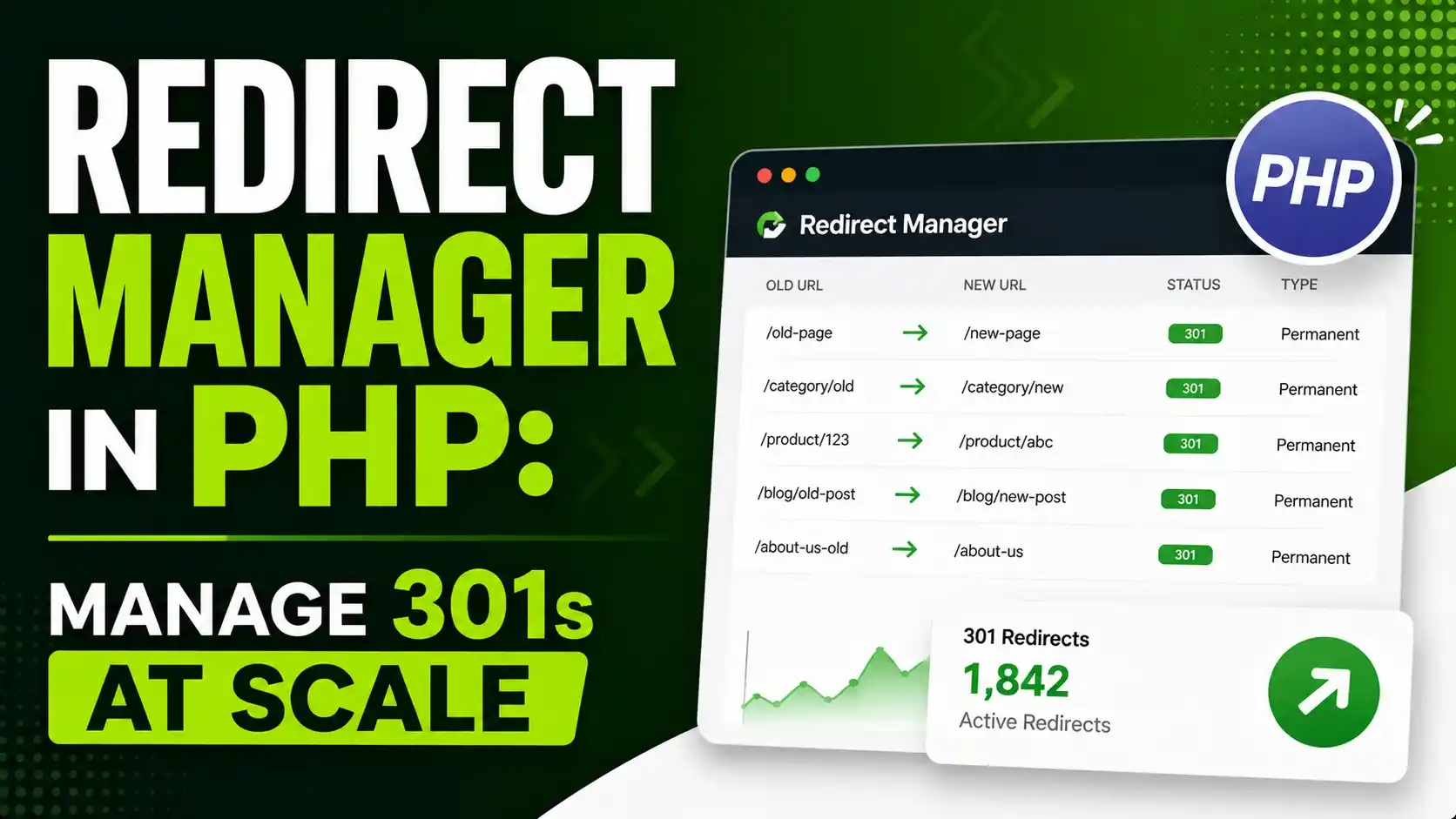
Build a redirect manager in PHP that replaces a bloated htaccess file with an indexed MySQL table, wildcard and regex matching, chain detection, and hit logging.
Table of Contents
ToggleA site migration that generates three thousand old URLs does not belong in a growing .htaccess file, since every added rule slows down every single request on the server. A redirect manager in PHP moves that lookup into a database where it belongs.
Why a Redirect Manager in PHP Beats a Giant htaccess File
Apache reads an .htaccess file from top to bottom on every request, checking each rule in order until one matches.
A file with a few dozen redirect rules barely registers. A file with several thousand rules, built up after two or three site migrations, adds real overhead to every page load.
It also becomes almost impossible to search, edit safely, or hand off to someone else on the team without breaking something.
A small PHP script backed by an indexed database table replaces all of that with a single fast lookup, no matter how many redirects the table holds.
Designing the Redirect Database Table
A single table covers most sites, as long as the source path column is indexed for fast lookups.
CREATE TABLE redirects (
    id INT AUTO_INCREMENT PRIMARY KEY,
    source_path VARCHAR(500) NOT NULL,
    destination_url VARCHAR(500) NOT NULL,
    status_code SMALLINT DEFAULT 301,
    is_regex BOOLEAN DEFAULT 0,
    hit_count INT DEFAULT 0,
    created_at TIMESTAMP DEFAULT CURRENT_TIMESTAMP,
    UNIQUE KEY idx_source (source_path)
);
The unique key on source_path does double duty. It keeps the lookup fast and stops the same old URL from ever being mapped to two different destinations by mistake. MySQL's own indexing guide explains why this matters more as a table grows past a few thousand rows.
Setting Up PDO and the Redirect Lookup Function
PDO with prepared statements keeps the lookup safe from injection, even though the only input here is the requested path itself.
$pdo = new PDO(
    'mysql:host=localhost;dbname=brandella;charset=utf8mb4',
    getenv('DB_USER'), getenv('DB_PASS')
);
$pdo->setAttribute(PDO::ATTR_ERRMODE, PDO::ERRMODE_EXCEPTION);

function find_redirect(PDO $pdo, $path) {
    $stmt = $pdo->prepare(
        'SELECT * FROM redirects WHERE source_path = ? AND is_regex = 0 LIMIT 1'
    );
    $stmt->execute([$path]);
    return $stmt->fetch(PDO::FETCH_ASSOC);
}
This function only checks exact matches for now. The next two sections add wildcard and regex support on top of it.
Handling the Request Before Anything Else Loads
The redirect check needs to run as early as possible in the request lifecycle, before the page template or any heavy application code loads.
$path = parse_url($_SERVER['REQUEST_URI'], PHP_URL_PATH);
$redirect = find_redirect($pdo, $path);

if ($redirect) {
    log_redirect_hit($pdo, $redirect['id']);
    header('Location: ' . $redirect['destination_url'], true, $redirect['status_code']);
    exit;
}
Passing the status code from the database into header() means the same function handles both a 301 permanent move and a 302 temporary redirect without any extra branching.
Supporting Wildcard and Regex Redirects
Not every redirect maps one old URL to one new URL. A whole folder of old product pages often needs to collapse into a single category page.
function find_regex_redirect(PDO $pdo, $path) {
    $stmt = $pdo->query(
        'SELECT * FROM redirects WHERE is_regex = 1'
    );
    foreach ($stmt as $rule) {
        if (preg_match($rule['source_path'], $path, $matches)) {
            return [
                'id' => $rule['id'],
                'destination_url' => preg_replace($rule['source_path'], $rule['destination_url'], $path),
                'status_code' => $rule['status_code']
            ];
        }
    }
    return null;
}
Regex rules are checked only after the exact match table lookup fails, since scanning every regex row on every single request would erase the speed advantage the exact match index provides.
| Matching Strategy | Speed | Best For |
|---|---|---|
| Exact path lookup | Fastest, uses the index directly | Individual page moves |
| Wildcard prefix match | Fast, small candidate set | Whole folders moving together |
| Regex pattern match | Slower, checked as a fallback | Complex URL structure changes |
Detecting and Preventing Redirect Chains
A chain forms when one redirect points at a URL that is itself another redirect, and Google's own redirect guidance flags long chains as a real crawl efficiency problem.
function creates_chain(PDO $pdo, $destination) {
    $path = parse_url($destination, PHP_URL_PATH);
    $stmt = $pdo->prepare('SELECT id FROM redirects WHERE source_path = ?');
    $stmt->execute([$path]);
    return $stmt->fetch() !== false;
}
Running this check before saving a new redirect catches the chain at creation time, which is far easier than untangling one after it has been live for months.
Logging Hits and Finding Unused Redirects
Not every redirect stays useful forever. Some stop receiving any traffic once old backlinks and bookmarks age out, a pattern Search Engine Journal's redirect guide covers in more depth from the SEO side of things.
function log_redirect_hit(PDO $pdo, $id) {
    $stmt = $pdo->prepare(
        'UPDATE redirects SET hit_count = hit_count + 1 WHERE id = ?'
    );
    $stmt->execute([$id]);
}
A quarterly query for rows where hit_count stayed at zero surfaces redirects nobody is actually using anymore, safe candidates for cleanup. This kind of ongoing maintenance is exactly what a redirect manager in PHP makes practical at a scale .htaccess never could.
- Index the source_path column: without it, the lookup falls back to a full table scan on every single request.
- Check exact matches before regex: keeping the fast path first protects performance as the table grows into the thousands.
- Block chains at creation time: a check before saving a new redirect is far cheaper than an audit months later.
- Review zero hit redirects quarterly: a smaller, cleaner table stays easier to reason about than one that only grows.
- Cache the lookup where traffic is heavy: a high traffic site can front the database check with a fast in memory cache layer like Redis.
Watch: Fetching Data From MySQL in PHP
Traversy Media, referenced earlier in this series for a working PHP contact form, also covers the database fetching pattern that a redirect lookup builds directly on.
Video credit: Traversy Media.
Swapping the query shown in the video for the prepared statement lookup in this guide is the entire difference between a demo and a production ready redirect manager in PHP.
Related Articles
Frequently Asked Questions
Well into the hundreds of thousands, since an indexed exact match lookup stays fast regardless of table size, unlike a growing .htaccess file that Apache reads line by line. Watching crawl stats in Search Console is a good way to confirm the migration went smoothly.
Performance at scale, easier editing through an admin interface, built in chain detection, and hit logging that shows which redirects are still actually needed.
Only permanent moves should. A temporary change, like a seasonal page, is a better fit for a 302, which the status_code column in this design already supports.
The exact match table always takes priority in this design, and regex rules are only checked once the exact match lookup comes back empty.
Checking at creation time, as shown in this guide, prevents most chains before they exist, so a full audit is really only needed after a large migration.
What We Learn Today
htaccess does not scale forever
Thousands of rules read line by line add real overhead to every request.
An index makes the lookup fast
A unique key on source_path keeps performance flat as the table grows.
Exact match should run first
Checking regex rules only as a fallback protects the fast path.
Chains are easiest to stop early
A check at creation time beats untangling a chain months later.
Hit counts reveal dead weight
Zero hit redirects are safe, low risk candidates for cleanup.
Status codes should match intent
301 for permanent moves, 302 for anything meant to be temporary.
Ready to Take Redirects Out of htaccess?
Pair a redirect manager in PHP with a wider toolkit to keep every site migration clean and every old URL accounted for.
Related Posts



Previous Post
Next Post
Previous Post

Next Post






- Artificial Intelligence
- Content
- Core Web Vitals
- Development
- Digital Marketing
- Display Advertising
- Google Ads
- Google Search Console
- GTM
- HTML
- HTML CSS
- JavaScript
- Keyword Research
- Link Building
- LinkedIn Ads
- Local SEO
- Meta Ads
- Mobile SEO
- Off-Page SEO
- On-Page SEO
- Paid Media
- Paid Media Analytics
- PHP
- PPC Strategy
- Python
- SEO
- SEO Basics
- SEO Tools
- Social
- Technical SEO