
Now Reading: Why Digital PR in AI Search Matters More Than Ever in 2026
-
01
Why Digital PR in AI Search Matters More Than Ever in 2026
Why Digital PR in AI Search Matters More Than Ever in 2026

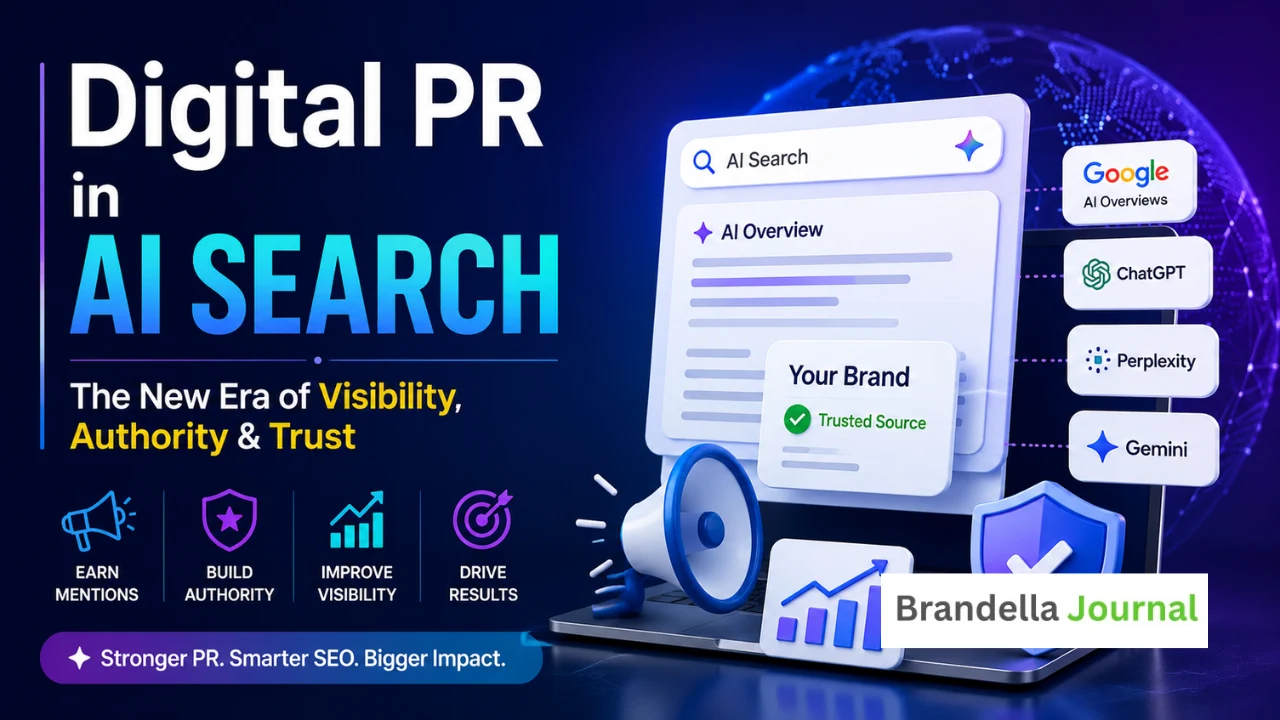
AI search is transforming the way users discover information online. But while the format of search results has changed, the fundamentals of digital PR and SEO remain the same. Learn why original content, authority, audience understanding, and strategic digital PR are now more important than ever in the age of AI-powered search.
Digital PR in AI Search: Introduction
The SEO world is changing rapidly.
Google AI Overviews, ChatGPT, Gemini, Claude, and Perplexity are transforming how people search for information online. Users no longer click through ten blue links the way they did a few years ago. Instead, AI platforms now generate direct answers instantly.
Many marketers believe this means traditional SEO is dying.
But that is not true.
In reality, AI search has not replaced SEO fundamentals. It has simply made them more important.
The brands that will dominate AI search results are not the ones publishing massive amounts of low-quality AI-generated content. The winners will be businesses that create original insights, trusted authority, strong digital PR campaigns, and audience-focused content.
In short, digital PR is becoming the backbone of AI SEO.
1. AI Search Changed the Format — Not the User Intent
Search behavior has evolved dramatically.
Earlier, users searched Google and manually visited websites to find answers. Today, AI systems summarize information directly inside search results.
For example:
- Google AI Overviews provide instant summaries
- ChatGPT recommends websites and brands
- Perplexity cites sources directly
- Gemini combines conversational AI with search intent
But despite all these changes, one thing remains exactly the same:
People still want accurate answers to their questions.
Whether someone searches:
- “Best CRM software”
- “How to improve website traffic”
- “Best digital marketing agency”
- “What is AI SEO”
the user’s intent remains unchanged.
This is why businesses must focus less on manipulating algorithms and more on genuinely helping users.
AI systems are becoming smarter at identifying useful, trustworthy, and original content.
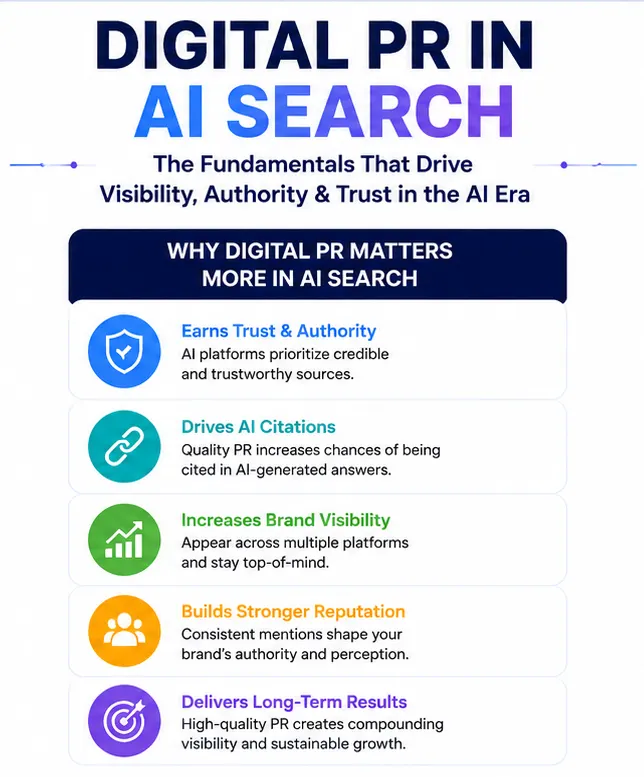
2. Digital PR Is Now a Major Ranking Signal
In traditional SEO, backlinks played a huge role in rankings.
Today, digital PR goes much further than backlinks.
AI search engines now analyze:
- Brand mentions
- Authority signals
- Expert citations
- Original research
- Media visibility
- Industry relevance
- User trust signals
If reputable websites consistently mention your brand, AI systems recognize your authority.
This means digital PR is no longer optional.
It is becoming one of the strongest visibility drivers in AI-powered search.
For example, if your brand is regularly featured on:
- Forbes
- HubSpot
- Search Engine Journal
- Entrepreneur
- niche industry websites
AI systems are more likely to trust and reference your content.
That trust directly impacts your visibility in AI-generated answers.
3. AI Search Rewards Original Content More Than Ever
One of the biggest problems online today is commodity content.
Thousands of websites are publishing nearly identical AI-generated articles every day.
Search engines know this.
That is why originality has become critical.
AI search platforms prefer content that includes:
- Original research
- Real-world experience
- Expert opinions
- Case studies
- Unique statistics
- Practical insights
- First-hand knowledge
Generic rewritten content no longer performs well.
For example, if 500 websites publish the same “Top SEO Tips” article, AI systems have little reason to cite any of them.
But if your company publishes:
- unique survey data
- customer success stories
- original industry insights
- expert interviews
- practical frameworks
your chances of being cited increase significantly.
This is exactly why digital PR and content marketing now work together more closely than ever before.
4. Brand Mentions Matter Even Without Clicks
One of the biggest shifts in AI search is the rise of “zero-click visibility.”
Users often get answers directly from AI systems without visiting websites.
Many marketers panic when they see fewer clicks.
But visibility still matters.
If AI tools repeatedly mention your brand as a trusted source, your authority grows even if users do not immediately click through.
This creates:
- Brand familiarity
- Market trust
- Higher conversion potential
- Increased branded searches
- Stronger long-term recognition
In many cases, users later search specifically for brands they discovered through AI-generated answers.
That means brand visibility itself is becoming a major SEO asset.
5. Why Audience Understanding Is Still Everything
Many businesses rely too heavily on analytics tools alone.
But AI-era marketing requires deeper audience understanding.
You must know:
- What your audience fears
- What problems they want solved
- What language they use
- What information they trust
- What motivates their decisions
The brands winning in AI search are creating content that genuinely matches user intent.
This means businesses should:
- Talk directly to customers
- Monitor industry discussions
- Analyze community questions
- Study customer pain points
- Build content around real problems
AI systems increasingly reward content that satisfies actual human needs rather than keyword stuffing.
6. Authority Is the New SEO Currency
In the AI search era, authority matters more than ever.
Anyone can generate content using AI tools.
But not everyone can build credibility.
That credibility comes from:
- Expert knowledge
- Media coverage
- Industry recognition
- Strong digital PR
- Real expertise
- Trustworthy publishing
This is why Google continues emphasizing:
- Experience
- Expertise
- Authoritativeness
- Trustworthiness
AI search engines want reliable sources because inaccurate answers damage user trust.
As a result, authority-driven brands are gaining a massive advantage.
7. Digital PR Helps Brands Earn AI Citations
Getting cited in AI-generated answers is becoming the new version of ranking on page one of Google.
To increase citation opportunities, brands should focus on:
- Publishing expert-led content
- Creating original studies
- Building media relationships
- Earning high-authority mentions
- Producing data-driven reports
- Sharing unique opinions
- Becoming a trusted industry voice
The future of SEO is no longer just about ranking webpages.
It is about becoming a trusted source that AI systems repeatedly reference.
8. Content Quality Standards Are Rising Fast
AI search is raising the quality bar dramatically.
Thin content is becoming less effective every year.
Successful content in 2026 must be:
- Helpful
- Detailed
- Original
- Accurate
- Human-focused
- Experience-driven
- Well-structured
Businesses that publish low-value mass content may see declining visibility over time.
Meanwhile, companies investing in:
- expert content
- strategic PR
- thought leadership
- audience trust
will continue growing.
9. SEO, GEO, and AEO Are Not Separate Things
Many marketers now use terms like:
- GEO (Generative Engine Optimization)
- AEO (Answer Engine Optimization)
While the terminology sounds new, the core principles remain very similar to SEO.
The objective is still:
- Understanding user intent
- Providing valuable answers
- Building authority
- Creating trusted content
- Improving discoverability
The difference is simply the delivery format.
Instead of only ranking webpages, businesses now need visibility inside AI-generated answers.
10. The Future Belongs to Trusted Brands
The internet is entering an era of content overload.
As AI-generated content increases, trust becomes more valuable.
This creates a huge opportunity for brands willing to:
- Invest in digital PR
- Build authority
- Publish original insights
- Develop expert-driven content
- Focus on audience value
AI systems are becoming better at identifying meaningful, trustworthy information.
That means shortcuts and low-quality tactics will continue losing effectiveness.
The brands that succeed will be those that consistently provide genuine value.
What we lean today?
AI search is changing how information is delivered online.
But the foundation of successful SEO has not changed.
Brands still need:
- Trust
- Authority
- Originality
- Audience understanding
- High-quality content
- Strong digital PR
The businesses that recognize this early will have a major advantage in the coming years.
In 2026 and beyond, digital PR is no longer just about media coverage or backlinks.
It is becoming the core strategy for earning visibility, authority, and trust in the AI search ecosystem.
Source inspiration adapted and rewritten from shared reference content.
Thanks for reading ! Plaese repost/share in your network.