
Now Reading: Can AI Influencer Marketing at Scale Really Work?
-
01
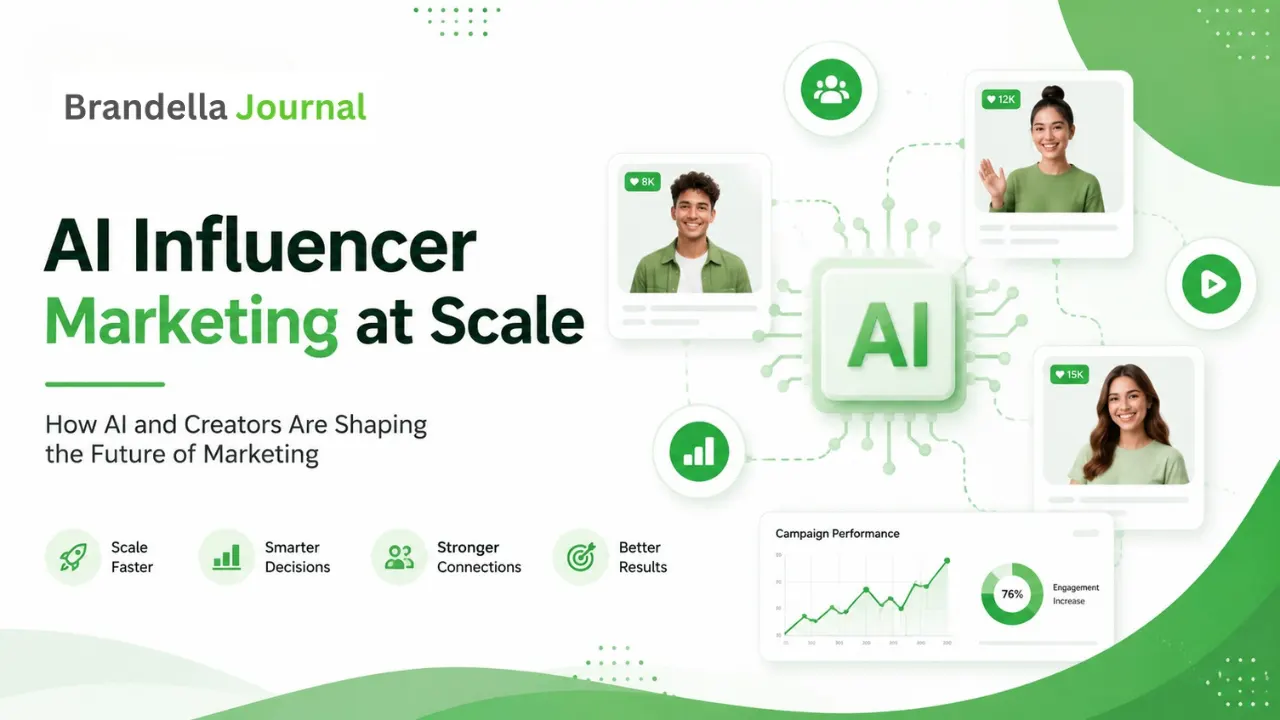
Can AI Influencer Marketing at Scale Really Work?
Can AI Influencer Marketing at Scale Really Work?

“Scaling content is easy with AI, but measuring what actually works is the real challenge. The future belongs to brands who can turn data into intelligent decisions.”
Introduction: Understanding AI Influencer Marketing at Scale
If you are working in blogging, SEO, or digital marketing, you have probably noticed a major shift happening in the industry. Brands are no longer relying only on traditional advertising. Instead, they are moving towards AI influencer marketing at scale.
A perfect example of this transformation is Unilever. The company has built a network of nearly 300,000 creators and shifted a significant portion of its marketing budget towards social-first strategies.
At the same time, artificial intelligence is becoming a core part of content creation. Modern creators are using AI tools to produce faster, more engaging, and data-driven content.
This combination of large-scale influencer marketing and AI-powered content creation is changing how brands communicate with their audience.
Why Unilever’s Strategy Matters
Unilever’s shift toward a creator-first model is one of the biggest changes in modern marketing.
The company has increased its investment in social media marketing to nearly half of its total advertising budget and expanded its influencer network rapidly.
Instead of working with a few celebrities, the focus is now on micro-influencers. These creators operate in local markets and build more authentic connections with their audiences.
For example, the company has targeted thousands of local creators in regions like India to create a more relatable and trustworthy presence.
This strategy is based on a simple idea: people trust individuals more than large corporate messages.
The Role of AI in Content Creation
AI is becoming an essential part of influencer marketing.
According to research from Adobe,
- 71% of creators use AI tools for video generation or editing
- 41% use these tools weekly
- More than half save significant time per content piece
This means that content production is no longer limited by time or resources.
Creators can now produce:
- Videos
- Blog posts
- Social media content
- Marketing creatives
at a much faster rate. As a result, AI influencer marketing at scale is not just possible but already happening.
The Main Challenge: Does It Actually Work?
Even though the scale is impressive, there is one major question that remains unanswered.
Can such a massive content network deliver consistent results?
1. Content Overload
When thousands of creators publish content at the same time, it becomes difficult to identify which content is actually performing well.
The volume creates a signal-to-noise problem where meaningful insights can get lost.
2. Inconsistent Brand Messaging
With hundreds of thousands of creators involved, maintaining a consistent brand message becomes difficult.
Each creator has their own style, tone, and approach. This can dilute the overall brand identity.
3. Measurement Limitations
Traditional methods like A/B testing and manual campaign analysis are not designed for this level of scale.
Brands need advanced systems to track performance in real time and make data-driven decisions.
How AI Platforms Are Solving the Problem
To handle these challenges, new AI-based platforms are emerging.
Examples include:
- https://www.daivid.co
- https://www.adin.ai
These platforms focus on connecting creative performance with marketing results.
According to industry data, these systems can:
- Predict how well content will perform
- Measure emotional engagement
- Track brand recall and audience attention
They also allow marketers to optimize campaigns immediately by increasing the budget for high-performing content and reducing spend on underperforming assets.
This creates a feedback loop where decisions are based on real data rather than assumptions.
Importance for SEO and Digital Marketing Professionals
The rise of AI influencer marketing at scale has major implications for marketers and content creators.
Increased Content Competition
With AI tools, content production has become faster and cheaper. This has increased competition across all digital platforms.
Need for Data-Driven Decisions
Success now depends on analyzing performance metrics instead of relying only on creativity.
Marketers must track:
- Engagement
- Watch time
- Conversion rates
to understand what works.
Shift Toward Authentic Content
Even with AI, authenticity remains important. People are more likely to engage with content that feels real and relatable.
Research shows that AI improves efficiency but does not replace the need for human storytelling.
Advantages of AI Influencer Marketing at Scale
There are several clear benefits to this approach:
- Faster content creation
- Lower production costs
- Better audience targeting
- Real-time campaign optimization
- Increased engagement potential
AI enables marketers to manage large-scale campaigns efficiently while maintaining performance tracking.
Risks and Limitations
Despite its benefits, there are also risks:
- Overuse of AI may reduce originality
- Lack of control over influencer-generated content
- Difficulty maintaining brand consistency
- Potential trust issues with audiences
These challenges highlight the importance of balancing AI automation with human creativity.
Final Thoughts: The Future of AI Influencer Marketing
AI influencer marketing at scale is not a temporary trend. It represents the future of digital marketing.
However, success depends on how well brands manage three key elements:
- Content quality
- Performance measurement
- Authentic audience connection
Unilever’s strategy shows what is possible when AI and influencer marketing are combined at scale. At the same time, it also highlights the complexity involved in making such a system work effectively.
For bloggers and marketers, the key takeaway is simple:
Use AI to improve efficiency, but do not ignore the importance of human creativity and trust.
Thanks for reading !