
- Home
- SEODiscover the latest updates from across the United States, including politics, culture, economy, and trending stories. Stay informed on the key events shaping the nation and the topics everyone’s talking about.
- Technical SEOLearn technical SEO concepts including crawling, indexing, XML sitemaps, robots.txt, canonical tags, site architecture, and website performance.
- Local SEOOptimize your business for local seo with Google Business Profile, local citations, reviews, maps, and location-based SEO.
- Mobile SEOImprove your website’s mobile seo performance with responsive design, mobile-first indexing, usability, and page speed optimization.
- On-Page SEOExplore on-page seo optimization techniques such as title tags, meta descriptions, headings, URLs, internal linking, and content optimization.
- Off-Page SEODiscover off-page SEO strategies such as backlinks, digital PR, brand mentions, outreach, and authority building.
- SEO ToolsExplore the best SEO tools for keyword research, technical audits, backlink analysis, rank tracking, and website optimization.
- Core Web VitalsLearn how to improve Core Web Vitals including LCP, INP, CLS, page speed, and overall user experience for better rankings.
- Keyword ResearchLearn how to find profitable keywords, analyze search intent, evaluate competition, and build effective keyword strategies.
- Link BuildingMaster ethical link building techniques, backlink analysis, outreach methods, guest posting, and authority growth strategies.
- Google Search ConsoleLearn how to use Google Search Console to monitor indexing, fix errors, analyze search performance, and improve SEO.
- SEO BasicsLearn the fundamentals of search engine optimization (SEO Basics), including how search engines work, SEO terminology, and beginner-friendly best practices.
- Paid Media
- Display AdvertisingLearn display advertising strategies, banner ads, audience targeting, remarketing, Google Display campaigns, and optimization techniques.
- Google AdsLearn Google Ads strategies, campaign setup, bidding, keywords, Performance Max, Search Ads, and optimization techniques.
- LinkedIn AdsLearn LinkedIn Ads strategies for B2B marketing, lead generation, audience targeting, campaign optimization, and paid social advertising.
- Meta AdsLearn Meta Ads strategies for Facebook and Instagram, including campaign setup, targeting, retargeting, and performance optimization.
- Paid Media AnalyticsLearn paid media analytics, including CPC, CTR, CPA, ROAS, conversion tracking, attribution, reporting, and campaign performance analysis.
- PPC StrategyLearn effective PPC strategies, campaign planning, bidding, keyword targeting, landing pages, conversion optimization, and more.
- ContentTransform your living spaces with inspiration, tips, and trends in interior design. From minimalist decor to bold statements, find ideas for every style and budget.
- Social
- Digital MarketingExplore stories and advice on living your best life. From personal growth to entertainment, dive into the latest in lifestyle trends and inspiration.
- Artificial IntelligenceStay informed about health and wellness with expert advice, fitness tips, and the latest medical breakthroughs. Your guide to a healthier and happier life.
- DevelopmentYou will find development related educational articles
- GTMLearn Google Tag Manager (GTM) with practical guides for tags, triggers, variables, tracking, conversions, and website analytics implementation.
- HTMLLearn HTML with simple tutorials, examples, tags, elements, attributes, and best practices for building modern web pages.
- HTML CSSLearn HTML CSS together with practical tutorials, examples, layouts, styling techniques, responsive design, and modern web development practices.
- HTML JSLearn HTML JS – JavaScript with practical tutorials and examples for adding interactivity, dynamic content, events, and functionality to web pages.
- JavaScriptExplore JavaScript tutorials, examples, concepts, and practical techniques for creating interactive and dynamic websites and web applications.
- PHPLearn PHP programming with practical tutorials, examples, functions, syntax, and web development techniques for beginners and developers.
- PythonLearn Python programming with practical tutorials, examples, syntax, functions, automation techniques, and useful programming concepts.
- Home
- SEODiscover the latest updates from across the United States, including politics, culture, economy, and trending stories. Stay informed on the key events shaping the nation and the topics everyone’s talking about.
- Technical SEOLearn technical SEO concepts including crawling, indexing, XML sitemaps, robots.txt, canonical tags, site architecture, and website performance.
- Local SEOOptimize your business for local seo with Google Business Profile, local citations, reviews, maps, and location-based SEO.
- Mobile SEOImprove your website’s mobile seo performance with responsive design, mobile-first indexing, usability, and page speed optimization.
- On-Page SEOExplore on-page seo optimization techniques such as title tags, meta descriptions, headings, URLs, internal linking, and content optimization.
- Off-Page SEODiscover off-page SEO strategies such as backlinks, digital PR, brand mentions, outreach, and authority building.
- SEO ToolsExplore the best SEO tools for keyword research, technical audits, backlink analysis, rank tracking, and website optimization.
- Core Web VitalsLearn how to improve Core Web Vitals including LCP, INP, CLS, page speed, and overall user experience for better rankings.
- Keyword ResearchLearn how to find profitable keywords, analyze search intent, evaluate competition, and build effective keyword strategies.
- Link BuildingMaster ethical link building techniques, backlink analysis, outreach methods, guest posting, and authority growth strategies.
- Google Search ConsoleLearn how to use Google Search Console to monitor indexing, fix errors, analyze search performance, and improve SEO.
- SEO BasicsLearn the fundamentals of search engine optimization (SEO Basics), including how search engines work, SEO terminology, and beginner-friendly best practices.
- Paid Media
- Display AdvertisingLearn display advertising strategies, banner ads, audience targeting, remarketing, Google Display campaigns, and optimization techniques.
- Google AdsLearn Google Ads strategies, campaign setup, bidding, keywords, Performance Max, Search Ads, and optimization techniques.
- LinkedIn AdsLearn LinkedIn Ads strategies for B2B marketing, lead generation, audience targeting, campaign optimization, and paid social advertising.
- Meta AdsLearn Meta Ads strategies for Facebook and Instagram, including campaign setup, targeting, retargeting, and performance optimization.
- Paid Media AnalyticsLearn paid media analytics, including CPC, CTR, CPA, ROAS, conversion tracking, attribution, reporting, and campaign performance analysis.
- PPC StrategyLearn effective PPC strategies, campaign planning, bidding, keyword targeting, landing pages, conversion optimization, and more.
- ContentTransform your living spaces with inspiration, tips, and trends in interior design. From minimalist decor to bold statements, find ideas for every style and budget.
- Social
- Digital MarketingExplore stories and advice on living your best life. From personal growth to entertainment, dive into the latest in lifestyle trends and inspiration.
- Artificial IntelligenceStay informed about health and wellness with expert advice, fitness tips, and the latest medical breakthroughs. Your guide to a healthier and happier life.
- DevelopmentYou will find development related educational articles
- GTMLearn Google Tag Manager (GTM) with practical guides for tags, triggers, variables, tracking, conversions, and website analytics implementation.
- HTMLLearn HTML with simple tutorials, examples, tags, elements, attributes, and best practices for building modern web pages.
- HTML CSSLearn HTML CSS together with practical tutorials, examples, layouts, styling techniques, responsive design, and modern web development practices.
- HTML JSLearn HTML JS – JavaScript with practical tutorials and examples for adding interactivity, dynamic content, events, and functionality to web pages.
- JavaScriptExplore JavaScript tutorials, examples, concepts, and practical techniques for creating interactive and dynamic websites and web applications.
- PHPLearn PHP programming with practical tutorials, examples, functions, syntax, and web development techniques for beginners and developers.
- PythonLearn Python programming with practical tutorials, examples, syntax, functions, automation techniques, and useful programming concepts.
Now Reading: Google Ads Terms of Service Just Changed: What It Means for Advertiser Liability
-
01
Google Ads Terms of Service Just Changed: What It Means for Advertiser Liability
- Home//
- SEO//Discover the latest updates from across the United States, including politics, culture, economy, and trending stories. Stay informed on the key events shaping the nation and the topics everyone’s talking about.
- Technical SEO//Learn technical SEO concepts including crawling, indexing, XML sitemaps, robots.txt, canonical tags, site architecture, and website performance.
- Local SEO//Optimize your business for local seo with Google Business Profile, local citations, reviews, maps, and location-based SEO.
- Mobile SEO//Improve your website’s mobile seo performance with responsive design, mobile-first indexing, usability, and page speed optimization.
- On-Page SEO//Explore on-page seo optimization techniques such as title tags, meta descriptions, headings, URLs, internal linking, and content optimization.
- Off-Page SEO//Discover off-page SEO strategies such as backlinks, digital PR, brand mentions, outreach, and authority building.
- SEO Tools//Explore the best SEO tools for keyword research, technical audits, backlink analysis, rank tracking, and website optimization.
- Core Web Vitals//Learn how to improve Core Web Vitals including LCP, INP, CLS, page speed, and overall user experience for better rankings.
- Keyword Research//Learn how to find profitable keywords, analyze search intent, evaluate competition, and build effective keyword strategies.
- Link Building//Master ethical link building techniques, backlink analysis, outreach methods, guest posting, and authority growth strategies.
- Google Search Console//Learn how to use Google Search Console to monitor indexing, fix errors, analyze search performance, and improve SEO.
- SEO Basics//Learn the fundamentals of search engine optimization (SEO Basics), including how search engines work, SEO terminology, and beginner-friendly best practices.
- Paid Media//
- Display Advertising//Learn display advertising strategies, banner ads, audience targeting, remarketing, Google Display campaigns, and optimization techniques.
- Google Ads//Learn Google Ads strategies, campaign setup, bidding, keywords, Performance Max, Search Ads, and optimization techniques.
- LinkedIn Ads//Learn LinkedIn Ads strategies for B2B marketing, lead generation, audience targeting, campaign optimization, and paid social advertising.
- Meta Ads//Learn Meta Ads strategies for Facebook and Instagram, including campaign setup, targeting, retargeting, and performance optimization.
- Paid Media Analytics//Learn paid media analytics, including CPC, CTR, CPA, ROAS, conversion tracking, attribution, reporting, and campaign performance analysis.
- PPC Strategy//Learn effective PPC strategies, campaign planning, bidding, keyword targeting, landing pages, conversion optimization, and more.
- Content//Transform your living spaces with inspiration, tips, and trends in interior design. From minimalist decor to bold statements, find ideas for every style and budget.
- Social//
- Digital Marketing//Explore stories and advice on living your best life. From personal growth to entertainment, dive into the latest in lifestyle trends and inspiration.
- Artificial Intelligence//Stay informed about health and wellness with expert advice, fitness tips, and the latest medical breakthroughs. Your guide to a healthier and happier life.
- Development//You will find development related educational articles
- GTM//Learn Google Tag Manager (GTM) with practical guides for tags, triggers, variables, tracking, conversions, and website analytics implementation.
- HTML//Learn HTML with simple tutorials, examples, tags, elements, attributes, and best practices for building modern web pages.
- HTML CSS//Learn HTML CSS together with practical tutorials, examples, layouts, styling techniques, responsive design, and modern web development practices.
- HTML JS//Learn HTML JS – JavaScript with practical tutorials and examples for adding interactivity, dynamic content, events, and functionality to web pages.
- JavaScript//Explore JavaScript tutorials, examples, concepts, and practical techniques for creating interactive and dynamic websites and web applications.
- PHP//Learn PHP programming with practical tutorials, examples, functions, syntax, and web development techniques for beginners and developers.
- Python//Learn Python programming with practical tutorials, examples, syntax, functions, automation techniques, and useful programming concepts.
- Home
- Paid Media
- Google Ads
- Google Ads Terms of Service Just Changed: What It Means for Advertiser Liability
Google Ads Terms of Service Just Changed: What It Means for Advertiser Liability

what changed in the ToS language, before/after comparison, Google's framing vs. critic Anthony Higman's pushback, regional updates, and a tie-in to the August 17 bidding change.
Table of Contents
ToggleGoogle Ads quietly rewrote its terms of service on July 1, 2026, and the update hands its automated systems more room to format, select, and generate campaign elements on your behalf. Nothing changed in your dashboard. Everything changed in who is accountable when automation gets it wrong.
No pop-up asked you to agree. No account setting flipped overnight. The new Google Ads terms simply took effect, and most advertisers will never read them.
That is exactly why this matters. The updated Google Ads terms of service expand how far Google's AI-driven automation can reach into your account.
The responsibility for the results stays squarely on you. If you run paid search, Shopping, or Performance Max campaigns, the new Google Ads terms are worth five minutes of your time.
This update sits alongside a separate change to Google Ads automation and Smart Bidding arriving in August, which we cover further down. Together, they mark one of the more consequential shifts to how Google Ads accounts are run in 2026.
What Actually Changed in the Google Ads Terms
Google says the new Google Ads terms exist to support the growing use of automation and AI inside the platform. The changes apply only to Google Ads accounts, not to Google Workspace or Cloud Identity.
Three things shifted in the language of the Google Ads terms. Google broadened how it can use the inputs advertisers provide across Google Ads features to improve performance.
It also clarified that anything typed into conversational tools inside Google Ads can be used by its systems. And it updated the provisions covering which URLs and accounts advertisers authorize Google to access and crawl for automated campaign setup.
Previous Google Ads Terms
Updated Google Ads Terms (July 2026)
The core language now states that the customer authorizes Google and its affiliates to serve ads, including through automated features that format, select, or generate targets, ads, or destinations on the customer's behalf.
Why This Google Ads Update Matters for Advertisers
On paper, this looks like routine legal housekeeping. In practice, it formalizes something many advertisers already suspected: automation is no longer a feature you turn on, it is the default operating layer of Google Ads.
Google Gets Broader Authority, Not Full Control
The updated Google Ads terms give Google's systems more room to act automatically, but advertisers are still the ones who must review, edit, or remove anything that gets generated on their account.
Liability Sits With the Advertiser, Not the Algorithm
Even when Google's automation formats an ad or selects a landing page, the advertiser remains responsible for the resulting campaign and any assets that come out of it.
Conversational Tools Now Feed the System
Anything typed into Google Ads conversational and AI-assisted tools can be used by Google's systems, which means casual prompts inside the platform carry more weight than before.
Crawling Permissions Are More Explicit
The Google Ads terms now spell out more clearly which URLs and accounts advertisers authorize Google to access and crawl for automated campaign setup, rather than leaving it implied.
Regional Terms Are Also Shifting
Google updated arbitration language in several markets, added references to regulatory operating fees in certain jurisdictions, and clarified Google BR's role in operating ad inventory in Brazil.
Two Ways to Read This Update
Not everyone agrees on what this change means in practice. Tap through both takes below.
Google frames the update as necessary housekeeping to reflect how automation already works across Google Ads features. The company maintains that advertisers keep the final say, since every automatically generated asset can still be reviewed, edited, or removed before it goes live.
Not every voice in the industry agrees that this benefits advertisers. AdSquire founder Anthony Higman argued the update erodes relevance and control, two things he considers core pillars of Google Ads.
He pointed out that advertisers still carry the responsibility for campaigns shaped by systems they did not directly build, and that the updated Google Ads terms give advertisers fewer explicit ways to opt out of automation than before.
Old Terms vs. New Terms at a Glance
| Provision | Before July 2026 | After July 2026 |
|---|---|---|
| Automated ad generation | Offered as an optional tool | Explicitly authorized on the advertiser's behalf |
| Conversational tool inputs | Not clearly addressed | Can be used by Google's systems |
| Crawling permissions | Implied through account access | Explicitly defined for automated setup |
| Advertiser responsibility | Applied to submitted content | Applied to all resulting campaigns and assets |
| Regional provisions | Largely uniform globally | Jurisdiction-specific updates in several markets |
What You Are Still Responsible For
The updated Google Ads terms place extra weight on one theme: oversight. Even as automation expands, the account holder carries the compliance burden.
What Google's Automation Now Handles
What Still Sits With the Advertiser
A Related Change Coming August 17
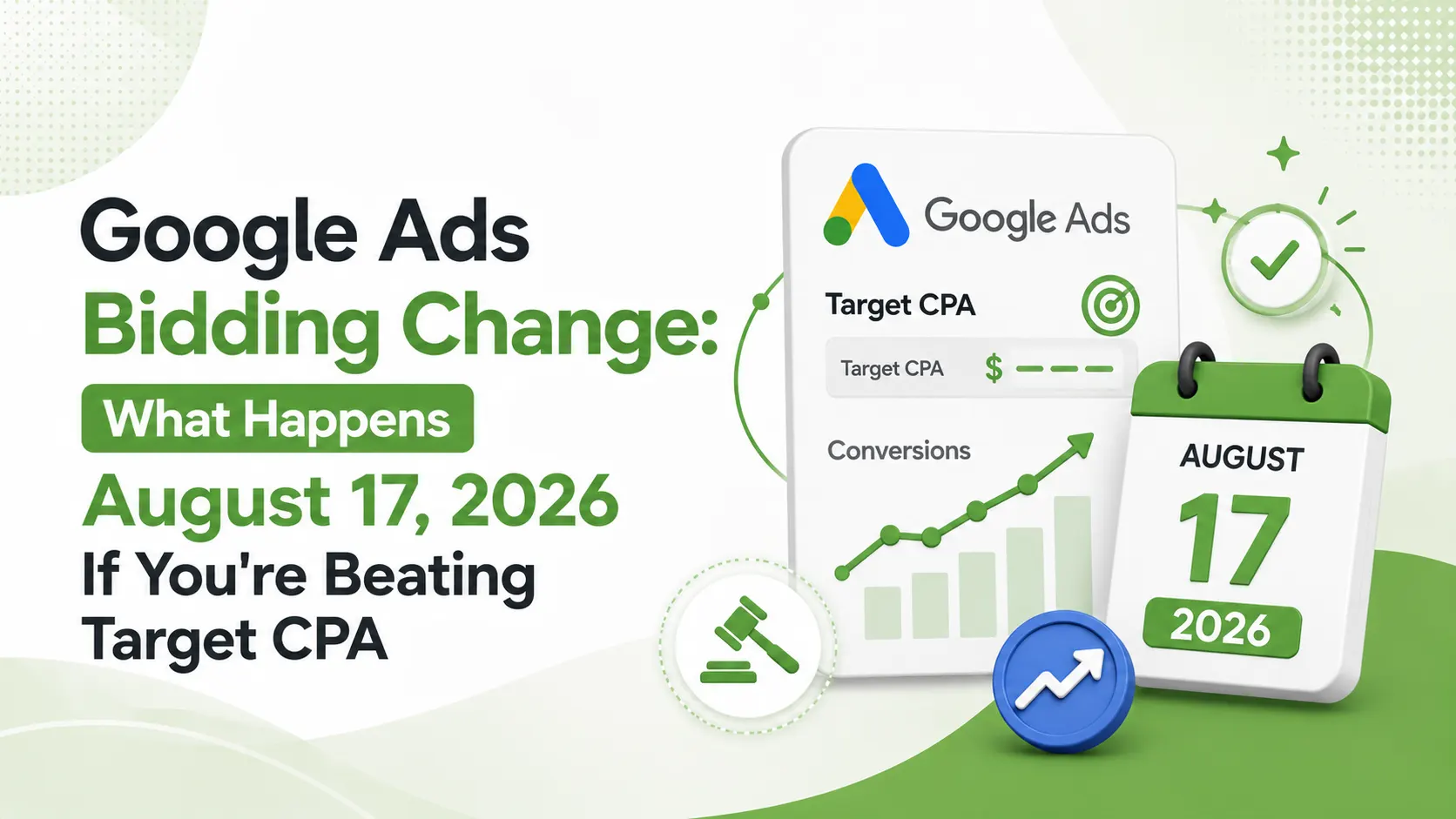
The updated Google Ads terms are not the only shift advertisers need to track this summer. On June 15, 2026, Google separately announced a change to how Target CPA and Target ROAS campaigns behave when they are limited by budget.
Starting August 17, 2026, budget-limited campaigns that have been quietly beating their stated targets will be steered back toward the number you actually typed in.
A campaign set to a $10 Target CPA that has been converting around $5 will start drifting up toward $10 after that date.
Google is rolling out a Bid Target Adjustment Tool from July 6, 2026, giving advertisers a window to review historical performance before enforcement begins.
Advertisers can choose to keep, adjust, or reset their targets during that window. This pairs directly with the updated Google Ads terms, since both changes hand more of the day-to-day decision-making to Google's automated systems while leaving oversight duties with the advertiser.
For a deeper breakdown of adapting campaigns to automation-heavy Google Ads, see our PPC best practices guide for 2026.
What to Do Before Your Next Campaign Review
Start by pulling up the actual Google Ads Terms of Service inside your account and skimming the sections on automated features and advertiser responsibility. Reading the Google Ads terms takes less time than most advertisers assume.
Next, audit any Target CPA or Target ROAS campaigns that are marked "Limited by budget." If they have been quietly beating their targets, decide now whether you want to keep that target or adjust it using the Bid Target Adjustment Tool before August 17.
Finally, revisit your review process for automatically generated assets. The updated Google Ads terms make it clear that Google's systems can format and generate more on your behalf.
The compliance and quality burden has not moved an inch, though. Pair this with a broader look at your paid media strategy for 2026 so automation works for your goals instead of quietly working around them.
Why the Google Ads Terms Changed Now
This update did not happen in isolation. Google has spent the better part of 2026 pushing automation deeper into Google Ads, from Performance Max expansion to AI-assisted ad creation, and the Google Ads terms simply caught up to how the platform already behaves.
Reading the Google Ads terms as a standalone legal document misses the bigger pattern. Every major platform update this year has moved decision-making further toward Google's systems, and the terms update is the legal foundation that makes that shift explicit rather than implied.
For advertisers, the practical takeaway is that the Google Ads terms are no longer just a compliance formality to skim once and forget.
As automation expands, revisiting the Google Ads terms periodically is becoming part of normal account hygiene, the same way checking negative keyword lists or conversion tracking used to be.
How This Compares to Other Ad Platforms
Google is not alone in expanding automation authority through its terms. Meta and other major ad platforms have made similar moves over the past year, giving their systems more latitude to generate creative and targeting while keeping advertisers responsible for outcomes.
What sets the Google Ads terms apart is the scale involved. Google Ads processes an enormous share of global search and Shopping intent, so a shift in its terms of service touches far more advertiser budgets than a similar change on a smaller platform would.
FAQs on the Google Ads Terms of Service Update
Related Articles
What We Learn Today
The updated Google Ads terms took effect July 1, 2026, with no action required from advertisers.
Google's automated systems can now format, select, or generate targets, ads, and destinations directly.
Advertisers remain fully responsible for reviewing and approving whatever automation produces.
Inputs typed into Google Ads conversational tools can now be used by Google's systems.
A separate bidding change arrives August 17, steering budget-limited campaigns back to stated targets.
Reviewing account permissions and campaign targets now is far easier than adjusting after enforcement.
Related Posts

Previous Post
Next Post




- Artificial Intelligence
- Content
- Core Web Vitals
- Development
- Digital Marketing
- Google Ads
- Google Search Console
- GTM
- HTML
- HTML CSS
- JavaScript
- Keyword Research
- Link Building
- Local SEO
- Meta Ads
- Mobile SEO
- Off-Page SEO
- On-Page SEO
- Paid Media
- Paid Media Analytics
- PHP
- PPC Strategy
- Python
- SEO
- SEO Basics
- SEO Tools
- Social
- Technical SEO