
- Home
- SEODiscover the latest updates from across the United States, including politics, culture, economy, and trending stories. Stay informed on the key events shaping the nation and the topics everyone’s talking about.
- Technical SEOLearn technical SEO concepts including crawling, indexing, XML sitemaps, robots.txt, canonical tags, site architecture, and website performance.
- Local SEOOptimize your business for local seo with Google Business Profile, local citations, reviews, maps, and location-based SEO.
- Mobile SEOImprove your website’s mobile seo performance with responsive design, mobile-first indexing, usability, and page speed optimization.
- On-Page SEOExplore on-page seo optimization techniques such as title tags, meta descriptions, headings, URLs, internal linking, and content optimization.
- Off-Page SEODiscover off-page SEO strategies such as backlinks, digital PR, brand mentions, outreach, and authority building.
- SEO ToolsExplore the best SEO tools for keyword research, technical audits, backlink analysis, rank tracking, and website optimization.
- Core Web VitalsLearn how to improve Core Web Vitals including LCP, INP, CLS, page speed, and overall user experience for better rankings.
- Keyword ResearchLearn how to find profitable keywords, analyze search intent, evaluate competition, and build effective keyword strategies.
- Link BuildingMaster ethical link building techniques, backlink analysis, outreach methods, guest posting, and authority growth strategies.
- Google Search ConsoleLearn how to use Google Search Console to monitor indexing, fix errors, analyze search performance, and improve SEO.
- SEO BasicsLearn the fundamentals of search engine optimization (SEO Basics), including how search engines work, SEO terminology, and beginner-friendly best practices.
- Paid Media
- Display AdvertisingLearn display advertising strategies, banner ads, audience targeting, remarketing, Google Display campaigns, and optimization techniques.
- Google AdsLearn Google Ads strategies, campaign setup, bidding, keywords, Performance Max, Search Ads, and optimization techniques.
- LinkedIn AdsLearn LinkedIn Ads strategies for B2B marketing, lead generation, audience targeting, campaign optimization, and paid social advertising.
- Meta AdsLearn Meta Ads strategies for Facebook and Instagram, including campaign setup, targeting, retargeting, and performance optimization.
- Paid Media AnalyticsLearn paid media analytics, including CPC, CTR, CPA, ROAS, conversion tracking, attribution, reporting, and campaign performance analysis.
- PPC StrategyLearn effective PPC strategies, campaign planning, bidding, keyword targeting, landing pages, conversion optimization, and more.
- ContentTransform your living spaces with inspiration, tips, and trends in interior design. From minimalist decor to bold statements, find ideas for every style and budget.
- Social
- Digital MarketingExplore stories and advice on living your best life. From personal growth to entertainment, dive into the latest in lifestyle trends and inspiration.
- Artificial IntelligenceStay informed about health and wellness with expert advice, fitness tips, and the latest medical breakthroughs. Your guide to a healthier and happier life.
- DevelopmentYou will find development related educational articles
- GTMLearn Google Tag Manager (GTM) with practical guides for tags, triggers, variables, tracking, conversions, and website analytics implementation.
- HTMLLearn HTML with simple tutorials, examples, tags, elements, attributes, and best practices for building modern web pages.
- HTML CSSLearn HTML CSS together with practical tutorials, examples, layouts, styling techniques, responsive design, and modern web development practices.
- HTML JSLearn HTML JS – JavaScript with practical tutorials and examples for adding interactivity, dynamic content, events, and functionality to web pages.
- JavaScriptExplore JavaScript tutorials, examples, concepts, and practical techniques for creating interactive and dynamic websites and web applications.
- PHPLearn PHP programming with practical tutorials, examples, functions, syntax, and web development techniques for beginners and developers.
- PythonLearn Python programming with practical tutorials, examples, syntax, functions, automation techniques, and useful programming concepts.
- Home
- SEODiscover the latest updates from across the United States, including politics, culture, economy, and trending stories. Stay informed on the key events shaping the nation and the topics everyone’s talking about.
- Technical SEOLearn technical SEO concepts including crawling, indexing, XML sitemaps, robots.txt, canonical tags, site architecture, and website performance.
- Local SEOOptimize your business for local seo with Google Business Profile, local citations, reviews, maps, and location-based SEO.
- Mobile SEOImprove your website’s mobile seo performance with responsive design, mobile-first indexing, usability, and page speed optimization.
- On-Page SEOExplore on-page seo optimization techniques such as title tags, meta descriptions, headings, URLs, internal linking, and content optimization.
- Off-Page SEODiscover off-page SEO strategies such as backlinks, digital PR, brand mentions, outreach, and authority building.
- SEO ToolsExplore the best SEO tools for keyword research, technical audits, backlink analysis, rank tracking, and website optimization.
- Core Web VitalsLearn how to improve Core Web Vitals including LCP, INP, CLS, page speed, and overall user experience for better rankings.
- Keyword ResearchLearn how to find profitable keywords, analyze search intent, evaluate competition, and build effective keyword strategies.
- Link BuildingMaster ethical link building techniques, backlink analysis, outreach methods, guest posting, and authority growth strategies.
- Google Search ConsoleLearn how to use Google Search Console to monitor indexing, fix errors, analyze search performance, and improve SEO.
- SEO BasicsLearn the fundamentals of search engine optimization (SEO Basics), including how search engines work, SEO terminology, and beginner-friendly best practices.
- Paid Media
- Display AdvertisingLearn display advertising strategies, banner ads, audience targeting, remarketing, Google Display campaigns, and optimization techniques.
- Google AdsLearn Google Ads strategies, campaign setup, bidding, keywords, Performance Max, Search Ads, and optimization techniques.
- LinkedIn AdsLearn LinkedIn Ads strategies for B2B marketing, lead generation, audience targeting, campaign optimization, and paid social advertising.
- Meta AdsLearn Meta Ads strategies for Facebook and Instagram, including campaign setup, targeting, retargeting, and performance optimization.
- Paid Media AnalyticsLearn paid media analytics, including CPC, CTR, CPA, ROAS, conversion tracking, attribution, reporting, and campaign performance analysis.
- PPC StrategyLearn effective PPC strategies, campaign planning, bidding, keyword targeting, landing pages, conversion optimization, and more.
- ContentTransform your living spaces with inspiration, tips, and trends in interior design. From minimalist decor to bold statements, find ideas for every style and budget.
- Social
- Digital MarketingExplore stories and advice on living your best life. From personal growth to entertainment, dive into the latest in lifestyle trends and inspiration.
- Artificial IntelligenceStay informed about health and wellness with expert advice, fitness tips, and the latest medical breakthroughs. Your guide to a healthier and happier life.
- DevelopmentYou will find development related educational articles
- GTMLearn Google Tag Manager (GTM) with practical guides for tags, triggers, variables, tracking, conversions, and website analytics implementation.
- HTMLLearn HTML with simple tutorials, examples, tags, elements, attributes, and best practices for building modern web pages.
- HTML CSSLearn HTML CSS together with practical tutorials, examples, layouts, styling techniques, responsive design, and modern web development practices.
- HTML JSLearn HTML JS – JavaScript with practical tutorials and examples for adding interactivity, dynamic content, events, and functionality to web pages.
- JavaScriptExplore JavaScript tutorials, examples, concepts, and practical techniques for creating interactive and dynamic websites and web applications.
- PHPLearn PHP programming with practical tutorials, examples, functions, syntax, and web development techniques for beginners and developers.
- PythonLearn Python programming with practical tutorials, examples, syntax, functions, automation techniques, and useful programming concepts.
Now Reading: AI Overviews Are Eating Your Clicks: How to Still Get Cited in 2026
-
01
AI Overviews Are Eating Your Clicks: How to Still Get Cited in 2026
- Home//
- SEO//Discover the latest updates from across the United States, including politics, culture, economy, and trending stories. Stay informed on the key events shaping the nation and the topics everyone’s talking about.
- Technical SEO//Learn technical SEO concepts including crawling, indexing, XML sitemaps, robots.txt, canonical tags, site architecture, and website performance.
- Local SEO//Optimize your business for local seo with Google Business Profile, local citations, reviews, maps, and location-based SEO.
- Mobile SEO//Improve your website’s mobile seo performance with responsive design, mobile-first indexing, usability, and page speed optimization.
- On-Page SEO//Explore on-page seo optimization techniques such as title tags, meta descriptions, headings, URLs, internal linking, and content optimization.
- Off-Page SEO//Discover off-page SEO strategies such as backlinks, digital PR, brand mentions, outreach, and authority building.
- SEO Tools//Explore the best SEO tools for keyword research, technical audits, backlink analysis, rank tracking, and website optimization.
- Core Web Vitals//Learn how to improve Core Web Vitals including LCP, INP, CLS, page speed, and overall user experience for better rankings.
- Keyword Research//Learn how to find profitable keywords, analyze search intent, evaluate competition, and build effective keyword strategies.
- Link Building//Master ethical link building techniques, backlink analysis, outreach methods, guest posting, and authority growth strategies.
- Google Search Console//Learn how to use Google Search Console to monitor indexing, fix errors, analyze search performance, and improve SEO.
- SEO Basics//Learn the fundamentals of search engine optimization (SEO Basics), including how search engines work, SEO terminology, and beginner-friendly best practices.
- Paid Media//
- Display Advertising//Learn display advertising strategies, banner ads, audience targeting, remarketing, Google Display campaigns, and optimization techniques.
- Google Ads//Learn Google Ads strategies, campaign setup, bidding, keywords, Performance Max, Search Ads, and optimization techniques.
- LinkedIn Ads//Learn LinkedIn Ads strategies for B2B marketing, lead generation, audience targeting, campaign optimization, and paid social advertising.
- Meta Ads//Learn Meta Ads strategies for Facebook and Instagram, including campaign setup, targeting, retargeting, and performance optimization.
- Paid Media Analytics//Learn paid media analytics, including CPC, CTR, CPA, ROAS, conversion tracking, attribution, reporting, and campaign performance analysis.
- PPC Strategy//Learn effective PPC strategies, campaign planning, bidding, keyword targeting, landing pages, conversion optimization, and more.
- Content//Transform your living spaces with inspiration, tips, and trends in interior design. From minimalist decor to bold statements, find ideas for every style and budget.
- Social//
- Digital Marketing//Explore stories and advice on living your best life. From personal growth to entertainment, dive into the latest in lifestyle trends and inspiration.
- Artificial Intelligence//Stay informed about health and wellness with expert advice, fitness tips, and the latest medical breakthroughs. Your guide to a healthier and happier life.
- Development//You will find development related educational articles
- GTM//Learn Google Tag Manager (GTM) with practical guides for tags, triggers, variables, tracking, conversions, and website analytics implementation.
- HTML//Learn HTML with simple tutorials, examples, tags, elements, attributes, and best practices for building modern web pages.
- HTML CSS//Learn HTML CSS together with practical tutorials, examples, layouts, styling techniques, responsive design, and modern web development practices.
- HTML JS//Learn HTML JS – JavaScript with practical tutorials and examples for adding interactivity, dynamic content, events, and functionality to web pages.
- JavaScript//Explore JavaScript tutorials, examples, concepts, and practical techniques for creating interactive and dynamic websites and web applications.
- PHP//Learn PHP programming with practical tutorials, examples, functions, syntax, and web development techniques for beginners and developers.
- Python//Learn Python programming with practical tutorials, examples, syntax, functions, automation techniques, and useful programming concepts.
- Home
- Artificial Intelligence
- AI Overviews Are Eating Your Clicks: How to Still Get Cited in 2026
AI Overviews Are Eating Your Clicks: How to Still Get Cited in 2026

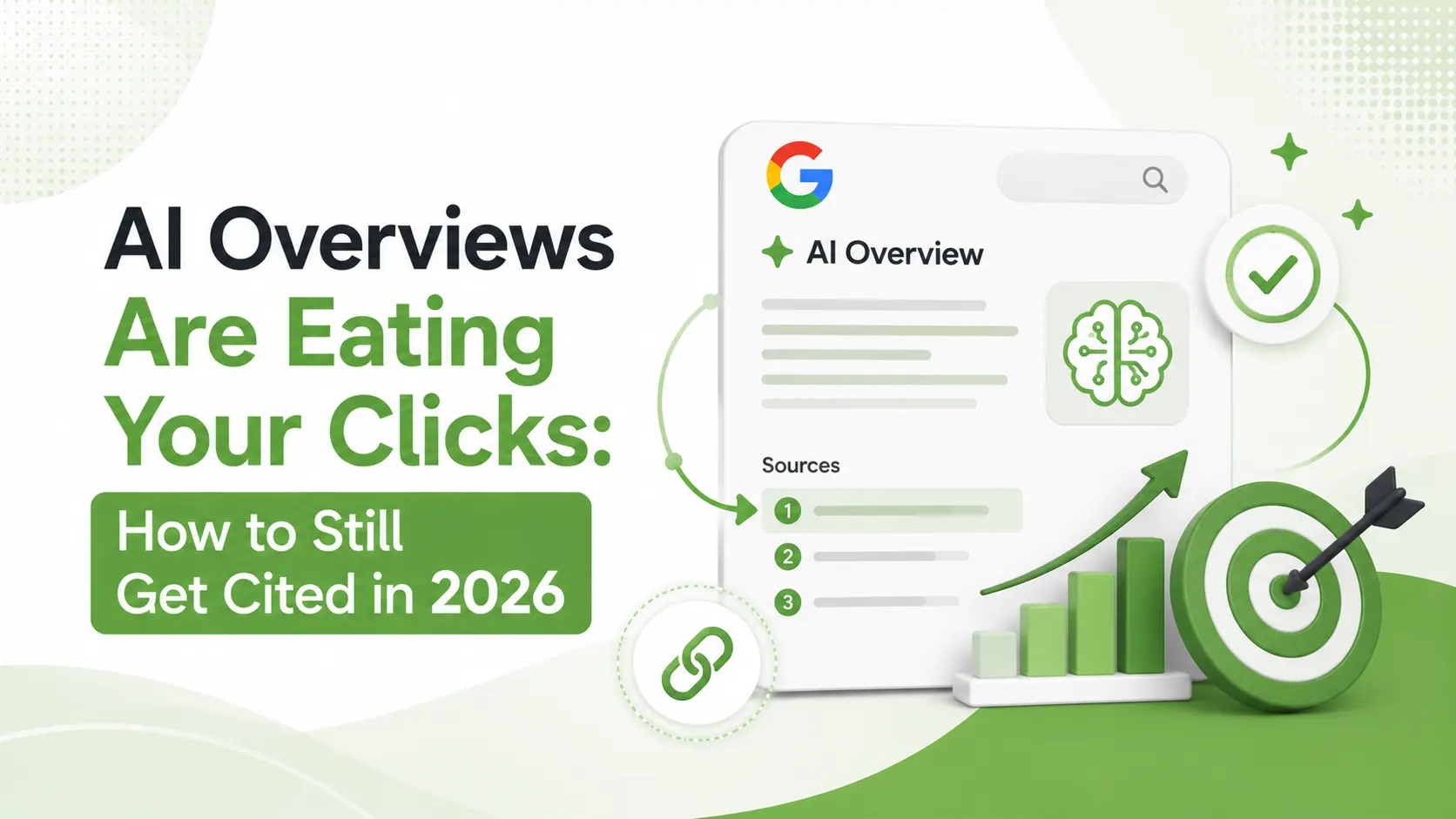
click-decline stats, "good vs. bad" zero-click, answer-first structure, query fan-out mechanics, a citation-readiness checklist, and content-cluster strategy.
Table of Contents
ToggleRoughly 68% of Google searches in the US now end without a single click. AI Overviews are a big part of why, and if your SEO strategy still measures success purely by clicks, you are already missing half the picture. Here is how to stay visible inside AI Overviews when they answer the question before anyone reaches your site.
This is not a small dip. AI Overviews now trigger on a large share of informational queries, and independent studies keep finding the same pattern: when AI Overviews appear, organic click-through rates fall sharply, sometimes by more than half.
Understanding how AI Overviews select their sources is the first step toward staying visible inside them, rather than losing traffic to them.
We covered the mechanics of getting cited by AI systems in our piece on why specific content earns more AI citations.
This article goes further and focuses specifically on AI Overviews: what the click decline actually looks like, and the exact content structure that keeps you visible inside the answer itself.
of US Google searches now end without a click to any website
of tracked queries now trigger an AI Overview, up sharply year over year
average drop in organic click-through rate when an AI Overview appears
Why AI Overviews Are Eating Your Clicks
AI Overviews answer a question directly at the top of the results page. For informational queries, that often means the searcher gets what they came for without ever scrolling down to the traditional blue links.
This single design choice is the root cause behind most of the click decline discussed above.
Pew Research tracked close to 69,000 real Google searches and found that when an AI Overview is present, users click through to an organic result only about 8% of the time.
That compares to roughly 15% without one. Session abandonment climbs too, since many searchers simply close the tab once the AI Overview answers their question.
Not All Zero-Click Traffic Is a Loss
Before you panic about the numbers, it helps to separate "good" zero-click from "bad" zero-click. Bad zero-click is informational traffic that vanishes with nothing gained in return.
Good zero-click is a brand impression: your site gets cited inside the AI Overview, the searcher remembers your name, and they come back to you directly later.
This assisted-conversion pattern is becoming a real part of AI Overviews strategy. A searcher who sees your brand cited while researching a topic may remember your name.
Days later, when they are ready to act, they may search for you directly, even though that first AI Overview interaction never generated a click.
Content Built for Clicks
Content Built to Get Cited in AI Overviews
What Actually Gets Cited by AI Overviews
AI Overviews do not simply pull from the top 10 organic results. Google's systems break your original query into several related sub-queries, retrieve relevant passages for each, and stitch the clearest answers together. That process rewards a very specific kind of writing.
Answer-First Structure
Most AI Overview citations are pulled from the first third of a page. Open every section with a direct one or two sentence answer before you explain the reasoning behind it.
Short, Standalone Paragraphs
AI systems break content into small chunks and reassemble them. Paragraphs of one to five sentences that make sense on their own get pulled far more often than dense, interconnected blocks.
Specific Numbers Over Vague Claims
AI Overviews favor sentences with named studies, dates, and precise figures. A vague phrase like "many businesses" gets skipped in favor of a sentence with an actual percentage attached.
Clear H2 and H3 Structure
Descriptive, question-style headings help AI systems understand what each section covers before they even read the body text underneath it.
Existing Organic Authority
Pages that already rank reasonably well organically are far more likely to be pulled into AI Overviews. Citation-focused structure works best as a layer on top of solid rankings, not a replacement for them.
Content That Gets Cited vs. Content That Gets Skipped
The gap between the two is rarely about topic quality. It is almost always about structure. Tap through both examples below.
A page that answers "what is X" in the first two sentences, then backs it up with a specific statistic and a clear H2 for each related sub-question.
Add a short FAQ block near the bottom. Every section can be lifted on its own and still make complete sense to a reader.
A page that opens with a long story or brand introduction before getting to the point, and buries the actual answer three paragraphs down.
It relies on long, winding sentences that reference earlier points to make sense. Even genuinely good research gets passed over if it is structured this way.
Citation Behavior by Content Format
| Content Format | Citation Behavior | Best Use Case |
|---|---|---|
| Answer-first blog guide | Makes up a large share of AI Overview citations | Definitions, explainers, how-to content |
| Ranked listicle | Strong performer for commercial-intent queries | "Best X for Y" and comparison-style searches |
| Video content | Growing fast as a cited source in recent months | Tutorials and visual step-by-step content |
| Long-form narrative | Cited less often due to buried answers | Better suited to loyal readers than AI extraction |
| Thin overview page | Rarely cited, regardless of keyword targeting | Not recommended for AI Overview visibility |
Weighing Clicks Against Citations
What You Gain by Optimizing for Citations
What to Keep in Mind
How to Rebuild an Existing Page for AI Overviews
Start with your highest-traffic informational pages, since those are the ones most likely to face AI Overview competition already. Rewrite the opening two sentences of each major section so they answer the question directly, before any background or context.
Next, break up any paragraph longer than five sentences. Each chunk should be able to stand alone and still make sense if an AI system lifts it out of the page entirely.
Finally, replace vague claims with specific numbers wherever you can back them up. "Many companies struggle with this" becomes far more citable once it reads "68% of companies report this challenge."
Pair this rewrite process with a broader Generative Engine Optimization strategy so your content is built for both AI Overviews and standalone AI chat tools at once.
How AI Overviews Actually Choose Sources
Understanding the mechanism behind AI Overviews makes the structure advice above feel less like guesswork and more like cause and effect.
When someone searches a question, AI Overviews do not simply retrieve one answer from one page. Google's system breaks the original query into several related sub-queries, a process often called query fan-out, and retrieves relevant passages for each one separately.
This means a single AI Overview can pull from several different sources, each contributing the piece it answers best.
A page that thoroughly covers one specific sub-question has a real chance of being pulled into an AI Overview, even if it never ranks first for the broader head term.
This is also why AI Overviews tend to favor hub-and-spoke content structures.
A central guide surrounded by focused supporting pages, each answering one distinct sub-question in detail, gives AI Overviews more entry points to cite than a single sprawling page trying to cover everything at once.
Building an AI Overviews Content Cluster
Rather than optimizing one page at a time, think in clusters. Identify the main question your audience asks, then map out the five or six related sub-questions AI Overviews are likely to fan out into.
Write a focused page for each sub-question, with the answer in the first sentences and supporting detail underneath. Link these pages to each other and back to a central hub page, so both traditional crawlers and AI Overviews can trace the relationship between them.
Measuring Success Beyond Clicks
Traditional SEO reporting leans heavily on organic clicks and rankings. That single lens misses most of what is happening when AI Overviews absorb a search before it ever reaches your analytics.
Track impressions and average position in Search Console alongside clicks, since impressions often keep climbing even as click-through rate falls.
Where possible, track brand search volume too, since a rise in people searching your brand name directly is often a delayed sign that AI Overview citations are working. For a wider content approach built around this shift, see our content marketing guide for SEO.
FAQs on AI Overviews and Getting Cited
Related Articles
What We Learn Today
About 68% of US Google searches now end without a click to any website.
AI Overviews cut organic click-through rate roughly in half when they appear.
Not all zero-click traffic is a loss. Citations can still build brand recognition.
Answer-first structure and short, standalone paragraphs drive most AI Overview citations.
Specific numbers and named sources get cited far more than vague claims.
Track impressions and brand search alongside clicks to measure real AI Overview impact.
Related Posts

Previous Post
Next Post
Previous Post
Next Post
- Artificial Intelligence
- Content
- Core Web Vitals
- Development
- Digital Marketing
- Google Ads
- Google Search Console
- GTM
- HTML
- HTML CSS
- JavaScript
- Keyword Research
- Link Building
- Local SEO
- Meta Ads
- Mobile SEO
- Off-Page SEO
- On-Page SEO
- Paid Media
- Paid Media Analytics
- PHP
- PPC Strategy
- Python
- SEO
- SEO Basics
- SEO Tools
- Social
- Technical SEO