
- Home
- SEODiscover the latest updates from across the United States, including politics, culture, economy, and trending stories. Stay informed on the key events shaping the nation and the topics everyone’s talking about.
- Technical SEOLearn technical SEO concepts including crawling, indexing, XML sitemaps, robots.txt, canonical tags, site architecture, and website performance.
- Local SEOOptimize your business for local seo with Google Business Profile, local citations, reviews, maps, and location-based SEO.
- Mobile SEOImprove your website’s mobile seo performance with responsive design, mobile-first indexing, usability, and page speed optimization.
- On-Page SEOExplore on-page seo optimization techniques such as title tags, meta descriptions, headings, URLs, internal linking, and content optimization.
- Off-Page SEODiscover off-page SEO strategies such as backlinks, digital PR, brand mentions, outreach, and authority building.
- SEO ToolsExplore the best SEO tools for keyword research, technical audits, backlink analysis, rank tracking, and website optimization.
- Core Web VitalsLearn how to improve Core Web Vitals including LCP, INP, CLS, page speed, and overall user experience for better rankings.
- Keyword ResearchLearn how to find profitable keywords, analyze search intent, evaluate competition, and build effective keyword strategies.
- Link BuildingMaster ethical link building techniques, backlink analysis, outreach methods, guest posting, and authority growth strategies.
- Google Search ConsoleLearn how to use Google Search Console to monitor indexing, fix errors, analyze search performance, and improve SEO.
- SEO BasicsLearn the fundamentals of search engine optimization (SEO Basics), including how search engines work, SEO terminology, and beginner-friendly best practices.
- Paid Media
- Display AdvertisingLearn display advertising strategies, banner ads, audience targeting, remarketing, Google Display campaigns, and optimization techniques.
- Google AdsLearn Google Ads strategies, campaign setup, bidding, keywords, Performance Max, Search Ads, and optimization techniques.
- LinkedIn AdsLearn LinkedIn Ads strategies for B2B marketing, lead generation, audience targeting, campaign optimization, and paid social advertising.
- Meta AdsLearn Meta Ads strategies for Facebook and Instagram, including campaign setup, targeting, retargeting, and performance optimization.
- Paid Media AnalyticsLearn paid media analytics, including CPC, CTR, CPA, ROAS, conversion tracking, attribution, reporting, and campaign performance analysis.
- PPC StrategyLearn effective PPC strategies, campaign planning, bidding, keyword targeting, landing pages, conversion optimization, and more.
- ContentTransform your living spaces with inspiration, tips, and trends in interior design. From minimalist decor to bold statements, find ideas for every style and budget.
- Social
- Digital MarketingExplore stories and advice on living your best life. From personal growth to entertainment, dive into the latest in lifestyle trends and inspiration.
- Artificial IntelligenceStay informed about health and wellness with expert advice, fitness tips, and the latest medical breakthroughs. Your guide to a healthier and happier life.
- DevelopmentYou will find development related educational articles
- GTMLearn Google Tag Manager (GTM) with practical guides for tags, triggers, variables, tracking, conversions, and website analytics implementation.
- HTMLLearn HTML with simple tutorials, examples, tags, elements, attributes, and best practices for building modern web pages.
- HTML CSSLearn HTML CSS together with practical tutorials, examples, layouts, styling techniques, responsive design, and modern web development practices.
- HTML JSLearn HTML JS – JavaScript with practical tutorials and examples for adding interactivity, dynamic content, events, and functionality to web pages.
- JavaScriptExplore JavaScript tutorials, examples, concepts, and practical techniques for creating interactive and dynamic websites and web applications.
- PHPLearn PHP programming with practical tutorials, examples, functions, syntax, and web development techniques for beginners and developers.
- PythonLearn Python programming with practical tutorials, examples, syntax, functions, automation techniques, and useful programming concepts.
- Home
- SEODiscover the latest updates from across the United States, including politics, culture, economy, and trending stories. Stay informed on the key events shaping the nation and the topics everyone’s talking about.
- Technical SEOLearn technical SEO concepts including crawling, indexing, XML sitemaps, robots.txt, canonical tags, site architecture, and website performance.
- Local SEOOptimize your business for local seo with Google Business Profile, local citations, reviews, maps, and location-based SEO.
- Mobile SEOImprove your website’s mobile seo performance with responsive design, mobile-first indexing, usability, and page speed optimization.
- On-Page SEOExplore on-page seo optimization techniques such as title tags, meta descriptions, headings, URLs, internal linking, and content optimization.
- Off-Page SEODiscover off-page SEO strategies such as backlinks, digital PR, brand mentions, outreach, and authority building.
- SEO ToolsExplore the best SEO tools for keyword research, technical audits, backlink analysis, rank tracking, and website optimization.
- Core Web VitalsLearn how to improve Core Web Vitals including LCP, INP, CLS, page speed, and overall user experience for better rankings.
- Keyword ResearchLearn how to find profitable keywords, analyze search intent, evaluate competition, and build effective keyword strategies.
- Link BuildingMaster ethical link building techniques, backlink analysis, outreach methods, guest posting, and authority growth strategies.
- Google Search ConsoleLearn how to use Google Search Console to monitor indexing, fix errors, analyze search performance, and improve SEO.
- SEO BasicsLearn the fundamentals of search engine optimization (SEO Basics), including how search engines work, SEO terminology, and beginner-friendly best practices.
- Paid Media
- Display AdvertisingLearn display advertising strategies, banner ads, audience targeting, remarketing, Google Display campaigns, and optimization techniques.
- Google AdsLearn Google Ads strategies, campaign setup, bidding, keywords, Performance Max, Search Ads, and optimization techniques.
- LinkedIn AdsLearn LinkedIn Ads strategies for B2B marketing, lead generation, audience targeting, campaign optimization, and paid social advertising.
- Meta AdsLearn Meta Ads strategies for Facebook and Instagram, including campaign setup, targeting, retargeting, and performance optimization.
- Paid Media AnalyticsLearn paid media analytics, including CPC, CTR, CPA, ROAS, conversion tracking, attribution, reporting, and campaign performance analysis.
- PPC StrategyLearn effective PPC strategies, campaign planning, bidding, keyword targeting, landing pages, conversion optimization, and more.
- ContentTransform your living spaces with inspiration, tips, and trends in interior design. From minimalist decor to bold statements, find ideas for every style and budget.
- Social
- Digital MarketingExplore stories and advice on living your best life. From personal growth to entertainment, dive into the latest in lifestyle trends and inspiration.
- Artificial IntelligenceStay informed about health and wellness with expert advice, fitness tips, and the latest medical breakthroughs. Your guide to a healthier and happier life.
- DevelopmentYou will find development related educational articles
- GTMLearn Google Tag Manager (GTM) with practical guides for tags, triggers, variables, tracking, conversions, and website analytics implementation.
- HTMLLearn HTML with simple tutorials, examples, tags, elements, attributes, and best practices for building modern web pages.
- HTML CSSLearn HTML CSS together with practical tutorials, examples, layouts, styling techniques, responsive design, and modern web development practices.
- HTML JSLearn HTML JS – JavaScript with practical tutorials and examples for adding interactivity, dynamic content, events, and functionality to web pages.
- JavaScriptExplore JavaScript tutorials, examples, concepts, and practical techniques for creating interactive and dynamic websites and web applications.
- PHPLearn PHP programming with practical tutorials, examples, functions, syntax, and web development techniques for beginners and developers.
- PythonLearn Python programming with practical tutorials, examples, syntax, functions, automation techniques, and useful programming concepts.
Now Reading: 25 Content Writing Mistakes That Reduce Rankings
-
01
25 Content Writing Mistakes That Reduce Rankings
- Home//
- SEO//Discover the latest updates from across the United States, including politics, culture, economy, and trending stories. Stay informed on the key events shaping the nation and the topics everyone’s talking about.
- Technical SEO//Learn technical SEO concepts including crawling, indexing, XML sitemaps, robots.txt, canonical tags, site architecture, and website performance.
- Local SEO//Optimize your business for local seo with Google Business Profile, local citations, reviews, maps, and location-based SEO.
- Mobile SEO//Improve your website’s mobile seo performance with responsive design, mobile-first indexing, usability, and page speed optimization.
- On-Page SEO//Explore on-page seo optimization techniques such as title tags, meta descriptions, headings, URLs, internal linking, and content optimization.
- Off-Page SEO//Discover off-page SEO strategies such as backlinks, digital PR, brand mentions, outreach, and authority building.
- SEO Tools//Explore the best SEO tools for keyword research, technical audits, backlink analysis, rank tracking, and website optimization.
- Core Web Vitals//Learn how to improve Core Web Vitals including LCP, INP, CLS, page speed, and overall user experience for better rankings.
- Keyword Research//Learn how to find profitable keywords, analyze search intent, evaluate competition, and build effective keyword strategies.
- Link Building//Master ethical link building techniques, backlink analysis, outreach methods, guest posting, and authority growth strategies.
- Google Search Console//Learn how to use Google Search Console to monitor indexing, fix errors, analyze search performance, and improve SEO.
- SEO Basics//Learn the fundamentals of search engine optimization (SEO Basics), including how search engines work, SEO terminology, and beginner-friendly best practices.
- Paid Media//
- Display Advertising//Learn display advertising strategies, banner ads, audience targeting, remarketing, Google Display campaigns, and optimization techniques.
- Google Ads//Learn Google Ads strategies, campaign setup, bidding, keywords, Performance Max, Search Ads, and optimization techniques.
- LinkedIn Ads//Learn LinkedIn Ads strategies for B2B marketing, lead generation, audience targeting, campaign optimization, and paid social advertising.
- Meta Ads//Learn Meta Ads strategies for Facebook and Instagram, including campaign setup, targeting, retargeting, and performance optimization.
- Paid Media Analytics//Learn paid media analytics, including CPC, CTR, CPA, ROAS, conversion tracking, attribution, reporting, and campaign performance analysis.
- PPC Strategy//Learn effective PPC strategies, campaign planning, bidding, keyword targeting, landing pages, conversion optimization, and more.
- Content//Transform your living spaces with inspiration, tips, and trends in interior design. From minimalist decor to bold statements, find ideas for every style and budget.
- Social//
- Digital Marketing//Explore stories and advice on living your best life. From personal growth to entertainment, dive into the latest in lifestyle trends and inspiration.
- Artificial Intelligence//Stay informed about health and wellness with expert advice, fitness tips, and the latest medical breakthroughs. Your guide to a healthier and happier life.
- Development//You will find development related educational articles
- GTM//Learn Google Tag Manager (GTM) with practical guides for tags, triggers, variables, tracking, conversions, and website analytics implementation.
- HTML//Learn HTML with simple tutorials, examples, tags, elements, attributes, and best practices for building modern web pages.
- HTML CSS//Learn HTML CSS together with practical tutorials, examples, layouts, styling techniques, responsive design, and modern web development practices.
- HTML JS//Learn HTML JS – JavaScript with practical tutorials and examples for adding interactivity, dynamic content, events, and functionality to web pages.
- JavaScript//Explore JavaScript tutorials, examples, concepts, and practical techniques for creating interactive and dynamic websites and web applications.
- PHP//Learn PHP programming with practical tutorials, examples, functions, syntax, and web development techniques for beginners and developers.
- Python//Learn Python programming with practical tutorials, examples, syntax, functions, automation techniques, and useful programming concepts.
25 Content Writing Mistakes That Reduce Rankings

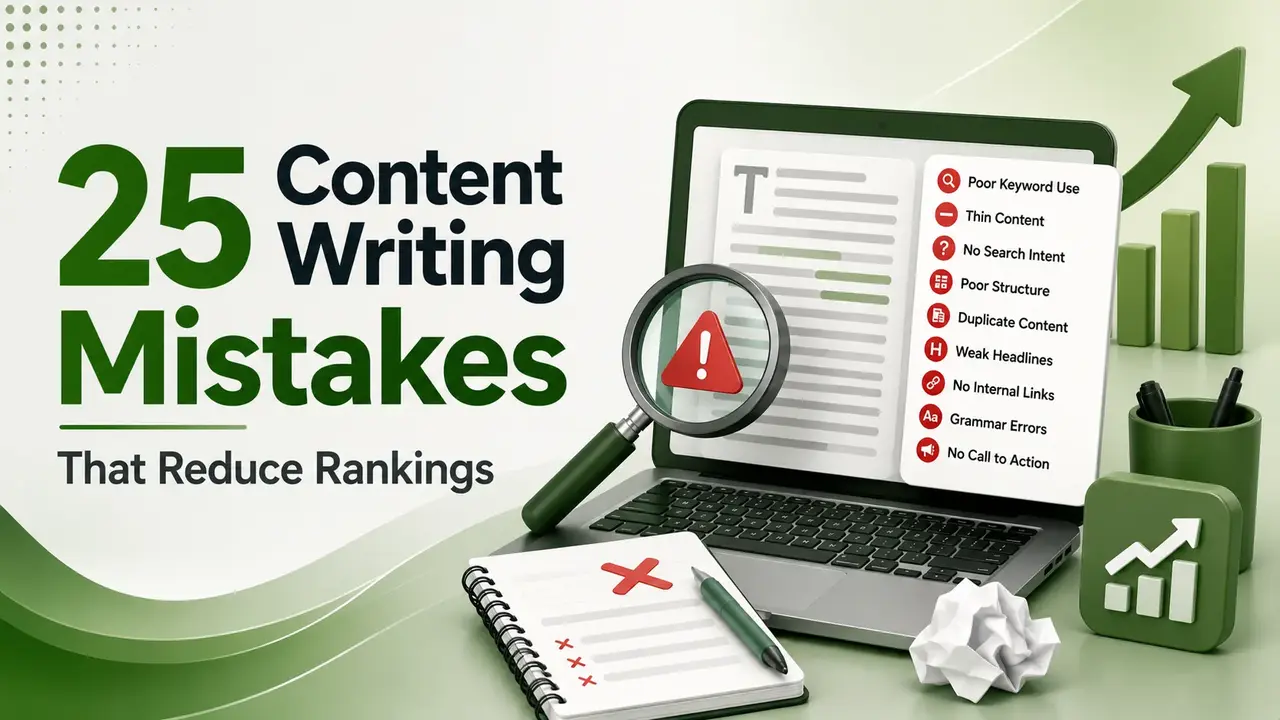
A well-known Ahrefs study found 91% of content never gets a single visit from Google. Here are all 25 content writing mistakes behind that number keyword misuse, weak structure, mismatched intent, technical neglect, and neglected maintenance — plus a calculator to score your own risk.
Table of Contents
ToggleA well-researched study by Ahrefs found that 91% of content published on the web never gets a single visit from Google search. Not zero rankings, zero traffic. Most of the time, the cause is not a mysterious algorithm penalty. It is a handful of avoidable content writing mistakes, repeated on page after page, quietly capping how far that content can ever rank.
Content writing mistakes that reduce rankings usually fall into five categories: keyword misuse, weak structure, mismatched search intent, technical neglect, and outdated content nobody ever revisits.
This article walks through all 25 content writing mistakes, organized so you can find and fix the ones actually holding your pages back.
We covered the positive framework for this in our guide to writing SEO-friendly blog posts. This article is the mirror image: what to stop doing, not just what to start.
of published content receives zero organic search traffic from Google
of global visits now come from mobile devices, where content mistakes cost the most
broad categories cover nearly all 25 content writing mistakes in this guide
How These Content Writing Mistakes Compound Over Time
A single mistake rarely tanks a page on its own.
The real damage comes from several compounding together, each one quietly capping how far a page can climb.
All 25 Content Writing Mistakes, Organized by Category
Below is the full list of content writing mistakes covered in this guide, grouped into five practical categories for easier auditing.
Keyword & Optimization Mistakes
1-5- Keyword stuffing, repeating a phrase until sentences read unnaturally
- Forced keyword variations that make phrasing sound robotic
- Missing the primary keyword from the title and URL slug entirely
- Ignoring long-tail keywords with real, attainable search volume
- Over-optimizing anchor text on internal and outbound links
These five keyword-related content writing mistakes are the most frequently discussed, yet still among the most common in live audits.
Structure & Readability Mistakes
6-10- No clear heading hierarchy, just one long wall of text
- Paragraphs running five or more sentences with no break
- Burying the direct answer several paragraphs into a section
- Skipping bullet points, tables, or visuals entirely
- Writing sentences that sound awkward when read out loud
Structural content writing mistakes hurt readability first, then rankings second, as engagement signals drop.
Intent & Relevance Mistakes
11-15- Writing a sales pitch for a purely informational keyword
- Publishing a long guide when the query wants a quick, direct answer
- Targeting a topic with genuinely no search demand at all
- Ignoring what format currently ranks for the target keyword
- Copying a competitor's structure without adding distinct value
Intent-related content writing mistakes are the hardest to spot without directly checking the current top-ranking results.
Technical & Link Mistakes
16-20- Thin content that fails to demonstrate real E-E-A-T signals
- Duplicate or near-duplicate content across multiple pages
- Weak or nonexistent internal linking between related pages
- Publishing with no author attribution or credentials shown
- Skipping outbound links to credible, authoritative sources
Freshness & Maintenance Mistakes
21-25- Publishing once, then never revisiting or updating the page
- Leaving outdated statistics and dead links live for years
- Relying on unedited AI-generated drafts with no human review
- Ignoring Search Console data showing declining click-through rate
- Never auditing content in bulk, only fixing pages one at a time
These final five content writing mistakes are the easiest to overlook, since none of them show up in a single-page review.
Video: "SEO Mistakes: Why 91% of Content Gets No Organic Traffic" by Sam Oh, Ahrefs — credit to the original creator, via YouTube
The Two Mistakes That Explain Most of the 91%
Not all 25 mistakes carry equal weight. Tap through the two root causes behind the vast majority of zero-traffic content.
A large share of zero-traffic pages are written about topics nobody is actually searching for. No amount of on-page polish fixes a keyword with no real demand behind it. Keyword research before writing, not after, prevents this entirely.
The second major cause is a lack of quality backlinks and internal links pointing to the page. Even excellent content struggles to rank without some signal that other credible sources or sections of your own site consider it worth referencing.
Content Writing Mistakes Risk Calculator
Answer honestly about a specific page to see how many high-impact content writing mistakes it is likely carrying.
Content Writing Mistakes Risk Calculator
Select the option that best matches your page for each factor
Why These Content Writing Mistakes Are So Common
According to Bora Agency's 2026 guide to SEO mistakes, unnatural language is now an obvious red flag, since AI models and search engines can easily detect content written for algorithms rather than for actual readers.
Most content writing mistakes are not the result of ignorance. They come from teams optimizing for an outdated rulebook, one built around exact-match keyword density and mechanical formulas that stopped working years ago but never got formally retired from internal style guides.
According to Hashtag Digital Marketing's 2026 ranking mistakes guide, tactics that worked in 2021, exact-match stuffing, thin content padded with synonyms, low-quality backlink schemes, do not just stop working in 2026. They actively work against a page's chances of ranking at all.
Content Writing Mistakes and AI Search Visibility
According to Lucidly's guide to common SEO mistakes, the same content writing mistakes that hurt traditional rankings, thin content, poor structure, missing sourcing, also reduce a page's odds of being cited inside AI-generated answers.
This connects the two visibility channels more tightly than many teams realize.
According to The Crawl Theory's guide to avoiding SEO mistakes, content that directly and completely answers a user's actual question consistently outperforms content engineered purely around keyword density.
This holds true in both traditional search and AI-assisted retrieval systems alike. Avoiding the core content writing mistakes covered here pays off across both visibility channels simultaneously, according to Digikestra's 2026 SEO mistakes guide.
How to Prioritize Fixing These Mistakes
Not every mistake deserves equal urgency. According to Red Rattler Creative's 2026 SEO mistakes guide, intent mismatch and thin content tend to cause the sharpest ranking drops, making them the right place to start any content writing mistakes audit.
According to DigiForBiz's guide to common SEO mistakes, always verify against the top-ranking pages for a target keyword before assuming a content format is wrong, since intent requirements vary meaningfully across different query types.
FAQs on Content Writing Mistakes and Rankings
Related Articles
What We Learn Today
91% of published content gets zero organic traffic from Google.
Mistakes compound. Five small issues cap a page far more than one.
Intent mismatch and no search demand explain most zero-traffic pages.
Keyword stuffing still gets flagged as low-quality, not rewarded.
Weak internal linking quietly limits even well-written content.
Content needs ongoing maintenance, not a one-time publish-and-forget approach.
Related Posts

Previous Post
Next Post
Previous Post

Next Post




- Artificial Intelligence
- Content
- Core Web Vitals
- Development
- Digital Marketing
- Google Ads
- Google Search Console
- GTM
- HTML
- HTML CSS
- JavaScript
- Keyword Research
- Link Building
- Local SEO
- Meta Ads
- Mobile SEO
- Off-Page SEO
- On-Page SEO
- Paid Media
- Paid Media Analytics
- PHP
- PPC Strategy
- Python
- SEO
- SEO Basics
- SEO Tools
- Social
- Technical SEO