
- Home
- SEODiscover the latest updates from across the United States, including politics, culture, economy, and trending stories. Stay informed on the key events shaping the nation and the topics everyone’s talking about.
- Technical SEOLearn technical SEO concepts including crawling, indexing, XML sitemaps, robots.txt, canonical tags, site architecture, and website performance.
- Local SEOOptimize your business for local seo with Google Business Profile, local citations, reviews, maps, and location-based SEO.
- Mobile SEOImprove your website’s mobile seo performance with responsive design, mobile-first indexing, usability, and page speed optimization.
- On-Page SEOExplore on-page seo optimization techniques such as title tags, meta descriptions, headings, URLs, internal linking, and content optimization.
- Off-Page SEODiscover off-page SEO strategies such as backlinks, digital PR, brand mentions, outreach, and authority building.
- SEO ToolsExplore the best SEO tools for keyword research, technical audits, backlink analysis, rank tracking, and website optimization.
- Core Web VitalsLearn how to improve Core Web Vitals including LCP, INP, CLS, page speed, and overall user experience for better rankings.
- Keyword ResearchLearn how to find profitable keywords, analyze search intent, evaluate competition, and build effective keyword strategies.
- Link BuildingMaster ethical link building techniques, backlink analysis, outreach methods, guest posting, and authority growth strategies.
- Google Search ConsoleLearn how to use Google Search Console to monitor indexing, fix errors, analyze search performance, and improve SEO.
- SEO BasicsLearn the fundamentals of search engine optimization (SEO Basics), including how search engines work, SEO terminology, and beginner-friendly best practices.
- Paid Media
- Display AdvertisingLearn display advertising strategies, banner ads, audience targeting, remarketing, Google Display campaigns, and optimization techniques.
- Google AdsLearn Google Ads strategies, campaign setup, bidding, keywords, Performance Max, Search Ads, and optimization techniques.
- LinkedIn AdsLearn LinkedIn Ads strategies for B2B marketing, lead generation, audience targeting, campaign optimization, and paid social advertising.
- Meta AdsLearn Meta Ads strategies for Facebook and Instagram, including campaign setup, targeting, retargeting, and performance optimization.
- Paid Media AnalyticsLearn paid media analytics, including CPC, CTR, CPA, ROAS, conversion tracking, attribution, reporting, and campaign performance analysis.
- PPC StrategyLearn effective PPC strategies, campaign planning, bidding, keyword targeting, landing pages, conversion optimization, and more.
- ContentTransform your living spaces with inspiration, tips, and trends in interior design. From minimalist decor to bold statements, find ideas for every style and budget.
- Social
- Digital MarketingExplore stories and advice on living your best life. From personal growth to entertainment, dive into the latest in lifestyle trends and inspiration.
- Artificial IntelligenceStay informed about health and wellness with expert advice, fitness tips, and the latest medical breakthroughs. Your guide to a healthier and happier life.
- DevelopmentYou will find development related educational articles
- GTMLearn Google Tag Manager (GTM) with practical guides for tags, triggers, variables, tracking, conversions, and website analytics implementation.
- HTMLLearn HTML with simple tutorials, examples, tags, elements, attributes, and best practices for building modern web pages.
- HTML CSSLearn HTML CSS together with practical tutorials, examples, layouts, styling techniques, responsive design, and modern web development practices.
- HTML JSLearn HTML JS – JavaScript with practical tutorials and examples for adding interactivity, dynamic content, events, and functionality to web pages.
- JavaScriptExplore JavaScript tutorials, examples, concepts, and practical techniques for creating interactive and dynamic websites and web applications.
- PHPLearn PHP programming with practical tutorials, examples, functions, syntax, and web development techniques for beginners and developers.
- PythonLearn Python programming with practical tutorials, examples, syntax, functions, automation techniques, and useful programming concepts.
- Home
- SEODiscover the latest updates from across the United States, including politics, culture, economy, and trending stories. Stay informed on the key events shaping the nation and the topics everyone’s talking about.
- Technical SEOLearn technical SEO concepts including crawling, indexing, XML sitemaps, robots.txt, canonical tags, site architecture, and website performance.
- Local SEOOptimize your business for local seo with Google Business Profile, local citations, reviews, maps, and location-based SEO.
- Mobile SEOImprove your website’s mobile seo performance with responsive design, mobile-first indexing, usability, and page speed optimization.
- On-Page SEOExplore on-page seo optimization techniques such as title tags, meta descriptions, headings, URLs, internal linking, and content optimization.
- Off-Page SEODiscover off-page SEO strategies such as backlinks, digital PR, brand mentions, outreach, and authority building.
- SEO ToolsExplore the best SEO tools for keyword research, technical audits, backlink analysis, rank tracking, and website optimization.
- Core Web VitalsLearn how to improve Core Web Vitals including LCP, INP, CLS, page speed, and overall user experience for better rankings.
- Keyword ResearchLearn how to find profitable keywords, analyze search intent, evaluate competition, and build effective keyword strategies.
- Link BuildingMaster ethical link building techniques, backlink analysis, outreach methods, guest posting, and authority growth strategies.
- Google Search ConsoleLearn how to use Google Search Console to monitor indexing, fix errors, analyze search performance, and improve SEO.
- SEO BasicsLearn the fundamentals of search engine optimization (SEO Basics), including how search engines work, SEO terminology, and beginner-friendly best practices.
- Paid Media
- Display AdvertisingLearn display advertising strategies, banner ads, audience targeting, remarketing, Google Display campaigns, and optimization techniques.
- Google AdsLearn Google Ads strategies, campaign setup, bidding, keywords, Performance Max, Search Ads, and optimization techniques.
- LinkedIn AdsLearn LinkedIn Ads strategies for B2B marketing, lead generation, audience targeting, campaign optimization, and paid social advertising.
- Meta AdsLearn Meta Ads strategies for Facebook and Instagram, including campaign setup, targeting, retargeting, and performance optimization.
- Paid Media AnalyticsLearn paid media analytics, including CPC, CTR, CPA, ROAS, conversion tracking, attribution, reporting, and campaign performance analysis.
- PPC StrategyLearn effective PPC strategies, campaign planning, bidding, keyword targeting, landing pages, conversion optimization, and more.
- ContentTransform your living spaces with inspiration, tips, and trends in interior design. From minimalist decor to bold statements, find ideas for every style and budget.
- Social
- Digital MarketingExplore stories and advice on living your best life. From personal growth to entertainment, dive into the latest in lifestyle trends and inspiration.
- Artificial IntelligenceStay informed about health and wellness with expert advice, fitness tips, and the latest medical breakthroughs. Your guide to a healthier and happier life.
- DevelopmentYou will find development related educational articles
- GTMLearn Google Tag Manager (GTM) with practical guides for tags, triggers, variables, tracking, conversions, and website analytics implementation.
- HTMLLearn HTML with simple tutorials, examples, tags, elements, attributes, and best practices for building modern web pages.
- HTML CSSLearn HTML CSS together with practical tutorials, examples, layouts, styling techniques, responsive design, and modern web development practices.
- HTML JSLearn HTML JS – JavaScript with practical tutorials and examples for adding interactivity, dynamic content, events, and functionality to web pages.
- JavaScriptExplore JavaScript tutorials, examples, concepts, and practical techniques for creating interactive and dynamic websites and web applications.
- PHPLearn PHP programming with practical tutorials, examples, functions, syntax, and web development techniques for beginners and developers.
- PythonLearn Python programming with practical tutorials, examples, syntax, functions, automation techniques, and useful programming concepts.
Now Reading: Threads Ads Are Open Globally: Should You Test Budget There Before It Gets Crowded?
-
01
Threads Ads Are Open Globally: Should You Test Budget There Before It Gets Crowded?
- Home//
- SEO//Discover the latest updates from across the United States, including politics, culture, economy, and trending stories. Stay informed on the key events shaping the nation and the topics everyone’s talking about.
- Technical SEO//Learn technical SEO concepts including crawling, indexing, XML sitemaps, robots.txt, canonical tags, site architecture, and website performance.
- Local SEO//Optimize your business for local seo with Google Business Profile, local citations, reviews, maps, and location-based SEO.
- Mobile SEO//Improve your website’s mobile seo performance with responsive design, mobile-first indexing, usability, and page speed optimization.
- On-Page SEO//Explore on-page seo optimization techniques such as title tags, meta descriptions, headings, URLs, internal linking, and content optimization.
- Off-Page SEO//Discover off-page SEO strategies such as backlinks, digital PR, brand mentions, outreach, and authority building.
- SEO Tools//Explore the best SEO tools for keyword research, technical audits, backlink analysis, rank tracking, and website optimization.
- Core Web Vitals//Learn how to improve Core Web Vitals including LCP, INP, CLS, page speed, and overall user experience for better rankings.
- Keyword Research//Learn how to find profitable keywords, analyze search intent, evaluate competition, and build effective keyword strategies.
- Link Building//Master ethical link building techniques, backlink analysis, outreach methods, guest posting, and authority growth strategies.
- Google Search Console//Learn how to use Google Search Console to monitor indexing, fix errors, analyze search performance, and improve SEO.
- SEO Basics//Learn the fundamentals of search engine optimization (SEO Basics), including how search engines work, SEO terminology, and beginner-friendly best practices.
- Paid Media//
- Display Advertising//Learn display advertising strategies, banner ads, audience targeting, remarketing, Google Display campaigns, and optimization techniques.
- Google Ads//Learn Google Ads strategies, campaign setup, bidding, keywords, Performance Max, Search Ads, and optimization techniques.
- LinkedIn Ads//Learn LinkedIn Ads strategies for B2B marketing, lead generation, audience targeting, campaign optimization, and paid social advertising.
- Meta Ads//Learn Meta Ads strategies for Facebook and Instagram, including campaign setup, targeting, retargeting, and performance optimization.
- Paid Media Analytics//Learn paid media analytics, including CPC, CTR, CPA, ROAS, conversion tracking, attribution, reporting, and campaign performance analysis.
- PPC Strategy//Learn effective PPC strategies, campaign planning, bidding, keyword targeting, landing pages, conversion optimization, and more.
- Content//Transform your living spaces with inspiration, tips, and trends in interior design. From minimalist decor to bold statements, find ideas for every style and budget.
- Social//
- Digital Marketing//Explore stories and advice on living your best life. From personal growth to entertainment, dive into the latest in lifestyle trends and inspiration.
- Artificial Intelligence//Stay informed about health and wellness with expert advice, fitness tips, and the latest medical breakthroughs. Your guide to a healthier and happier life.
- Development//You will find development related educational articles
- GTM//Learn Google Tag Manager (GTM) with practical guides for tags, triggers, variables, tracking, conversions, and website analytics implementation.
- HTML//Learn HTML with simple tutorials, examples, tags, elements, attributes, and best practices for building modern web pages.
- HTML CSS//Learn HTML CSS together with practical tutorials, examples, layouts, styling techniques, responsive design, and modern web development practices.
- HTML JS//Learn HTML JS – JavaScript with practical tutorials and examples for adding interactivity, dynamic content, events, and functionality to web pages.
- JavaScript//Explore JavaScript tutorials, examples, concepts, and practical techniques for creating interactive and dynamic websites and web applications.
- PHP//Learn PHP programming with practical tutorials, examples, functions, syntax, and web development techniques for beginners and developers.
- Python//Learn Python programming with practical tutorials, examples, syntax, functions, automation techniques, and useful programming concepts.
- Home
- Paid Media
- Meta Ads
- Threads Ads Are Open Globally: Should You Test Budget There Before It Gets Crowded?
Threads Ads Are Open Globally: Should You Test Budget There Before It Gets Crowded?

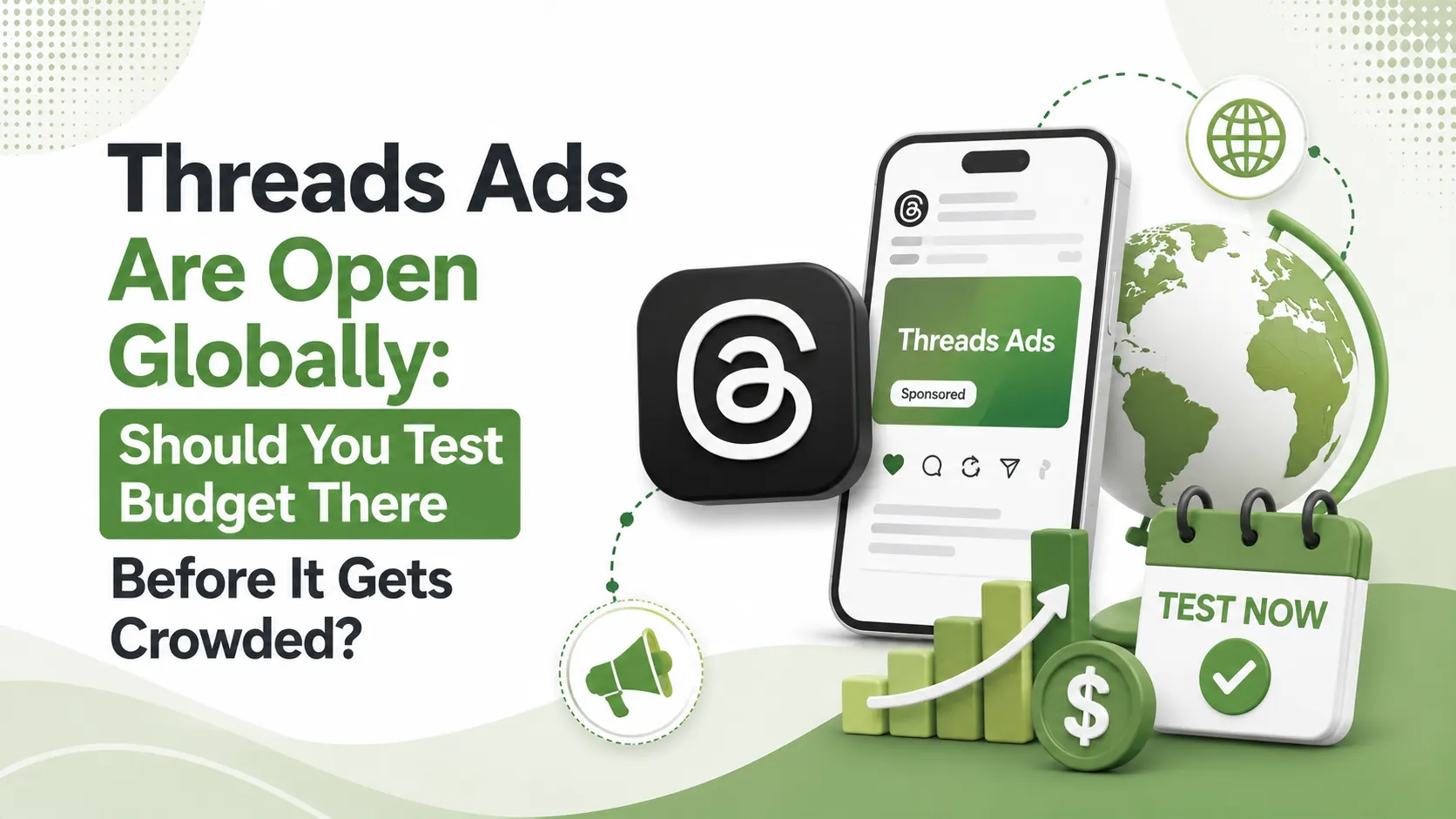
Meta announced the global expansion of Threads ads on January 21, 2026, with the rollout to all users beginning the following week.
Table of Contents
ToggleThreads ads went fully global on January 26, 2026, opening more than 400 million monthly active users to advertisers for the first time. CPMs on Threads ads are still low, competition is still thin, and the window to build organic-feeling creative before the platform gets crowded is open right now.
Threads launched in July 2023 and spent close to two years as a text-first, ad-free space.
That changed in stages: limited testing in the US and Japan through 2025, expanded advertiser access in April 2025, and finally a complete global rollout to every user in January 2026.
We recently covered Meta's one-click Conversions API update, part of the same broader push to make Meta's ad ecosystem easier to run campaigns across. Threads ads plug directly into that same infrastructure, which is exactly why testing budget there is now a low-friction decision.
monthly active users on Threads as of the January 2026 global ad rollout
typical Threads CPM range, compared to $6-18 on Instagram
higher median engagement rate on Threads compared to X, per Buffer's analysis
What Just Happened With Threads Ads
Meta announced the global expansion of Threads ads on January 21, 2026, with the rollout to all users beginning the following week.
According to Search Engine Land's coverage of the announcement, this gives advertisers access to a platform Meta CEO Mark Zuckerberg has called a potential "next big hit," with ambitions to reach a billion users.
Advertisers can now add Threads as a placement through Advantage+ campaigns or set it up manually in Ads Manager, managed alongside Facebook, Instagram, and WhatsApp inside the same Business Settings panel, as TechCrunch reported when the news broke.
Limited Testing
Threads ads test with select advertisers in the US and Japan, starting with image formats.
Advertiser Access Opens
Ad access expands to advertisers worldwide, with video and carousel formats added through the year.
Global User Rollout
Ads begin appearing for all Threads users worldwide, completing the platform's full monetization.
Early-Mover Window
Ad delivery remains lighter than mature platforms as Meta scales the rollout gradually.
Threads Ads vs. Instagram Ads: The Real Differences
Threads is not simply Instagram with a different feed. The format, the tone, and the competitive landscape around Threads ads are all meaningfully different right now, which is exactly why a copy-paste approach from Instagram tends to underperform.
Instagram Ads
Threads Ads
Why Testing Threads Ads Now Makes Sense
Early access to a growing ad platform rarely lasts long. A handful of specific factors make this particular window worth paying attention to.
Lower Competition Means Lower CPMs
With fewer advertisers actively bidding on Threads inventory, current CPMs sit well below Instagram's, according to 1ClickReport's 2026 carousel ads guide.
Organic Engagement Is Already Strong
Threads drives meaningfully higher engagement than X on organic posts, and that advantage appears to carry over into paid placements as well.
Setup Requires No New Learning Curve
Threads ads run through the same Ads Manager, the same Advantage+ system, and the same targeting tools advertisers already use for Facebook and Instagram.
Your Best Organic Content Is Reusable
According to Postory's founder-focused guide to Threads ads, the winning creative strategy is mining existing organic posts and reusing those hooks as paid creative, rather than producing new assets from scratch.
The Reading Experience Stays Protected
Meta designed the rollout without unskippable pre-rolls or interruptions in the Following feed, according to Lemonade Digital Media's coverage of the launch, which keeps the platform's tone intact for advertisers who match it.
Is Threads Ads a Good Fit for Your Brand Right Now?
Not every account should rush in immediately. Tap through both perspectives below.
Brands with an active organic Threads presence, a conversational brand voice, and existing Meta Ads Manager campaigns are well positioned to test now. Low CPMs make it a relatively cheap way to learn what resonates before competition increases.
Brands relying entirely on highly polished, produced visuals, or those with no bandwidth to create platform-native creative, may see weaker early results.
According to ALM Corp's complete guide to Threads ads, the overall creative approach should prioritize text content, with visuals playing a supporting role rather than carrying the ad.
Threads Ad Formats at a Glance
| Format | Specs | Notes |
|---|---|---|
| Single image | 1:1 or 4:5, up to 30MB, JPG/PNG | 4:5 vertical recommended for feed display |
| Video | 1:1 to 9:16, 1,440x1,440px recommended | 4:5 vertical performs best for most brands |
| Carousel | 1:1 at 1,080x1,080px per card | No hashtags, URLs, or dynamic media supported yet |
| Advantage+ catalog | Image and image carousel | Expanded to Threads in late 2025, global by early 2026 |
Weighing the Trade-Offs
What Works in Your Favor
What to Keep in Mind
How to Set Up Your First Threads Ads Test
Start inside Meta Ads Manager by creating a new campaign or duplicating an existing Instagram campaign that has performed reasonably well.
In the placements section, add Threads manually rather than relying solely on Advantage+ placements, at least for your first test. This lets you isolate Threads performance data separately from your other Meta placements.
Keep the creative simple. A single image or short video that reads like a genuine thread post, paired with concise primary text between 80 and 160 characters, tends to outperform anything that looks like a traditional ad unit, based on ALM Corp's format specifications.
Run the test for at least one to two weeks before drawing conclusions, since Meta noted that ad delivery would stay intentionally low while the platform scales its rollout globally, as Campaign US reported following the announcement.
What This Means for Your Broader Meta Strategy
Threads ads are not a replacement for Instagram or Facebook campaigns. They are an additional placement worth testing while the cost-to-reach ratio still favors early movers.
According to JumpFly's analysis of the global rollout, Threads is included within Advantage+ placements by default.
Many advertisers may already be running Threads impressions without realizing it. Checking your placement breakdown in Ads Manager is a useful first step, even before launching a dedicated test.
Pair any Threads test with solid server-side tracking, since accurate conversion data becomes more important as you spread budget across more placements.
Our recent piece on Meta's one-click Conversions API setup is a good next step if your tracking is not already dialed in. For a broader view of how paid platforms are evolving in 2026, see our paid media strategy guide.
How to Measure Threads Ads Performance Correctly
Because Threads is a newer placement, it deserves its own performance review rather than being lumped into overall Meta account numbers.
In Ads Manager, break out reporting by placement and isolate Threads specifically. Compare cost per result, click-through rate, and engagement rate against your Instagram benchmarks from the same campaign objective, not against your account-wide average.
Early Threads ads data often looks noisy for the first week or two, simply because delivery volume is lower than on more established placements. Waiting for a meaningful sample size before making budget decisions avoids overreacting to a handful of early results.
If your Threads ads numbers look promising after two to three weeks, consider shifting a modest percentage of your Instagram test budget toward Threads rather than adding entirely new spend.
This keeps your overall Meta ads budget stable while still capturing the lower-CPM advantage Threads currently offers.
Common Mistakes to Avoid With Threads Ads
The most common mistake advertisers make with Threads ads is treating the placement exactly like Instagram. Reused Instagram creative, without adjustment, tends to feel out of place in a feed built around short, conversational text.
A second common mistake is expecting desktop-level reach. Since Threads ads currently run mobile-only, campaigns planned with a desktop-first mindset will underdeliver relative to expectations.
A third mistake is judging Threads ads performance too early. Meta has been explicit that ad delivery stays intentionally low during the platform's gradual scaling, so a slow first week is expected behavior, not a signal to pause the test.
FAQs on Threads Ads
Related Articles
What We Learn Today
Threads ads went fully global on January 26, 2026, reaching over 400 million users.
Threads CPMs currently run $3-8, well below Instagram's $6-18 range.
Threads drives 73.6% higher median engagement than X on organic content.
Ads run through the same Meta Ads Manager already used for Facebook and Instagram.
Organic-style creative outperforms polished ads, and reused organic hooks work well.
Threads ads are mobile-only for now, with no desktop placement support yet.
Related Posts
Previous Post
Next Post
Previous Post
Next Post
- Artificial Intelligence
- Content
- Core Web Vitals
- Development
- Digital Marketing
- Google Ads
- Google Search Console
- GTM
- HTML
- HTML CSS
- JavaScript
- Keyword Research
- Link Building
- Local SEO
- Meta Ads
- Mobile SEO
- Off-Page SEO
- On-Page SEO
- Paid Media
- Paid Media Analytics
- PHP
- PPC Strategy
- Python
- SEO
- SEO Basics
- SEO Tools
- Social
- Technical SEO