
- Home
- SEODiscover the latest updates from across the United States, including politics, culture, economy, and trending stories. Stay informed on the key events shaping the nation and the topics everyone’s talking about.
- Technical SEOLearn technical SEO concepts including crawling, indexing, XML sitemaps, robots.txt, canonical tags, site architecture, and website performance.
- Local SEOOptimize your business for local seo with Google Business Profile, local citations, reviews, maps, and location-based SEO.
- Mobile SEOImprove your website’s mobile seo performance with responsive design, mobile-first indexing, usability, and page speed optimization.
- On-Page SEOExplore on-page seo optimization techniques such as title tags, meta descriptions, headings, URLs, internal linking, and content optimization.
- Off-Page SEODiscover off-page SEO strategies such as backlinks, digital PR, brand mentions, outreach, and authority building.
- SEO ToolsExplore the best SEO tools for keyword research, technical audits, backlink analysis, rank tracking, and website optimization.
- Core Web VitalsLearn how to improve Core Web Vitals including LCP, INP, CLS, page speed, and overall user experience for better rankings.
- Keyword ResearchLearn how to find profitable keywords, analyze search intent, evaluate competition, and build effective keyword strategies.
- Link BuildingMaster ethical link building techniques, backlink analysis, outreach methods, guest posting, and authority growth strategies.
- Google Search ConsoleLearn how to use Google Search Console to monitor indexing, fix errors, analyze search performance, and improve SEO.
- SEO BasicsLearn the fundamentals of search engine optimization (SEO Basics), including how search engines work, SEO terminology, and beginner-friendly best practices.
- Paid Media
- Display AdvertisingLearn display advertising strategies, banner ads, audience targeting, remarketing, Google Display campaigns, and optimization techniques.
- Google AdsLearn Google Ads strategies, campaign setup, bidding, keywords, Performance Max, Search Ads, and optimization techniques.
- LinkedIn AdsLearn LinkedIn Ads strategies for B2B marketing, lead generation, audience targeting, campaign optimization, and paid social advertising.
- Meta AdsLearn Meta Ads strategies for Facebook and Instagram, including campaign setup, targeting, retargeting, and performance optimization.
- Paid Media AnalyticsLearn paid media analytics, including CPC, CTR, CPA, ROAS, conversion tracking, attribution, reporting, and campaign performance analysis.
- PPC StrategyLearn effective PPC strategies, campaign planning, bidding, keyword targeting, landing pages, conversion optimization, and more.
- ContentTransform your living spaces with inspiration, tips, and trends in interior design. From minimalist decor to bold statements, find ideas for every style and budget.
- Social
- Digital MarketingExplore stories and advice on living your best life. From personal growth to entertainment, dive into the latest in lifestyle trends and inspiration.
- Artificial IntelligenceStay informed about health and wellness with expert advice, fitness tips, and the latest medical breakthroughs. Your guide to a healthier and happier life.
- DevelopmentYou will find development related educational articles
- GTMLearn Google Tag Manager (GTM) with practical guides for tags, triggers, variables, tracking, conversions, and website analytics implementation.
- HTMLLearn HTML with simple tutorials, examples, tags, elements, attributes, and best practices for building modern web pages.
- HTML CSSLearn HTML CSS together with practical tutorials, examples, layouts, styling techniques, responsive design, and modern web development practices.
- HTML JSLearn HTML JS – JavaScript with practical tutorials and examples for adding interactivity, dynamic content, events, and functionality to web pages.
- JavaScriptExplore JavaScript tutorials, examples, concepts, and practical techniques for creating interactive and dynamic websites and web applications.
- PHPLearn PHP programming with practical tutorials, examples, functions, syntax, and web development techniques for beginners and developers.
- PythonLearn Python programming with practical tutorials, examples, syntax, functions, automation techniques, and useful programming concepts.
- Home
- SEODiscover the latest updates from across the United States, including politics, culture, economy, and trending stories. Stay informed on the key events shaping the nation and the topics everyone’s talking about.
- Technical SEOLearn technical SEO concepts including crawling, indexing, XML sitemaps, robots.txt, canonical tags, site architecture, and website performance.
- Local SEOOptimize your business for local seo with Google Business Profile, local citations, reviews, maps, and location-based SEO.
- Mobile SEOImprove your website’s mobile seo performance with responsive design, mobile-first indexing, usability, and page speed optimization.
- On-Page SEOExplore on-page seo optimization techniques such as title tags, meta descriptions, headings, URLs, internal linking, and content optimization.
- Off-Page SEODiscover off-page SEO strategies such as backlinks, digital PR, brand mentions, outreach, and authority building.
- SEO ToolsExplore the best SEO tools for keyword research, technical audits, backlink analysis, rank tracking, and website optimization.
- Core Web VitalsLearn how to improve Core Web Vitals including LCP, INP, CLS, page speed, and overall user experience for better rankings.
- Keyword ResearchLearn how to find profitable keywords, analyze search intent, evaluate competition, and build effective keyword strategies.
- Link BuildingMaster ethical link building techniques, backlink analysis, outreach methods, guest posting, and authority growth strategies.
- Google Search ConsoleLearn how to use Google Search Console to monitor indexing, fix errors, analyze search performance, and improve SEO.
- SEO BasicsLearn the fundamentals of search engine optimization (SEO Basics), including how search engines work, SEO terminology, and beginner-friendly best practices.
- Paid Media
- Display AdvertisingLearn display advertising strategies, banner ads, audience targeting, remarketing, Google Display campaigns, and optimization techniques.
- Google AdsLearn Google Ads strategies, campaign setup, bidding, keywords, Performance Max, Search Ads, and optimization techniques.
- LinkedIn AdsLearn LinkedIn Ads strategies for B2B marketing, lead generation, audience targeting, campaign optimization, and paid social advertising.
- Meta AdsLearn Meta Ads strategies for Facebook and Instagram, including campaign setup, targeting, retargeting, and performance optimization.
- Paid Media AnalyticsLearn paid media analytics, including CPC, CTR, CPA, ROAS, conversion tracking, attribution, reporting, and campaign performance analysis.
- PPC StrategyLearn effective PPC strategies, campaign planning, bidding, keyword targeting, landing pages, conversion optimization, and more.
- ContentTransform your living spaces with inspiration, tips, and trends in interior design. From minimalist decor to bold statements, find ideas for every style and budget.
- Social
- Digital MarketingExplore stories and advice on living your best life. From personal growth to entertainment, dive into the latest in lifestyle trends and inspiration.
- Artificial IntelligenceStay informed about health and wellness with expert advice, fitness tips, and the latest medical breakthroughs. Your guide to a healthier and happier life.
- DevelopmentYou will find development related educational articles
- GTMLearn Google Tag Manager (GTM) with practical guides for tags, triggers, variables, tracking, conversions, and website analytics implementation.
- HTMLLearn HTML with simple tutorials, examples, tags, elements, attributes, and best practices for building modern web pages.
- HTML CSSLearn HTML CSS together with practical tutorials, examples, layouts, styling techniques, responsive design, and modern web development practices.
- HTML JSLearn HTML JS – JavaScript with practical tutorials and examples for adding interactivity, dynamic content, events, and functionality to web pages.
- JavaScriptExplore JavaScript tutorials, examples, concepts, and practical techniques for creating interactive and dynamic websites and web applications.
- PHPLearn PHP programming with practical tutorials, examples, functions, syntax, and web development techniques for beginners and developers.
- PythonLearn Python programming with practical tutorials, examples, syntax, functions, automation techniques, and useful programming concepts.
Now Reading: Meta’s One-Click Conversions API: What It Actually Fixes for Advertisers
-
01
Meta’s One-Click Conversions API: What It Actually Fixes for Advertisers
- Home//
- SEO//Discover the latest updates from across the United States, including politics, culture, economy, and trending stories. Stay informed on the key events shaping the nation and the topics everyone’s talking about.
- Technical SEO//Learn technical SEO concepts including crawling, indexing, XML sitemaps, robots.txt, canonical tags, site architecture, and website performance.
- Local SEO//Optimize your business for local seo with Google Business Profile, local citations, reviews, maps, and location-based SEO.
- Mobile SEO//Improve your website’s mobile seo performance with responsive design, mobile-first indexing, usability, and page speed optimization.
- On-Page SEO//Explore on-page seo optimization techniques such as title tags, meta descriptions, headings, URLs, internal linking, and content optimization.
- Off-Page SEO//Discover off-page SEO strategies such as backlinks, digital PR, brand mentions, outreach, and authority building.
- SEO Tools//Explore the best SEO tools for keyword research, technical audits, backlink analysis, rank tracking, and website optimization.
- Core Web Vitals//Learn how to improve Core Web Vitals including LCP, INP, CLS, page speed, and overall user experience for better rankings.
- Keyword Research//Learn how to find profitable keywords, analyze search intent, evaluate competition, and build effective keyword strategies.
- Link Building//Master ethical link building techniques, backlink analysis, outreach methods, guest posting, and authority growth strategies.
- Google Search Console//Learn how to use Google Search Console to monitor indexing, fix errors, analyze search performance, and improve SEO.
- SEO Basics//Learn the fundamentals of search engine optimization (SEO Basics), including how search engines work, SEO terminology, and beginner-friendly best practices.
- Paid Media//
- Display Advertising//Learn display advertising strategies, banner ads, audience targeting, remarketing, Google Display campaigns, and optimization techniques.
- Google Ads//Learn Google Ads strategies, campaign setup, bidding, keywords, Performance Max, Search Ads, and optimization techniques.
- LinkedIn Ads//Learn LinkedIn Ads strategies for B2B marketing, lead generation, audience targeting, campaign optimization, and paid social advertising.
- Meta Ads//Learn Meta Ads strategies for Facebook and Instagram, including campaign setup, targeting, retargeting, and performance optimization.
- Paid Media Analytics//Learn paid media analytics, including CPC, CTR, CPA, ROAS, conversion tracking, attribution, reporting, and campaign performance analysis.
- PPC Strategy//Learn effective PPC strategies, campaign planning, bidding, keyword targeting, landing pages, conversion optimization, and more.
- Content//Transform your living spaces with inspiration, tips, and trends in interior design. From minimalist decor to bold statements, find ideas for every style and budget.
- Social//
- Digital Marketing//Explore stories and advice on living your best life. From personal growth to entertainment, dive into the latest in lifestyle trends and inspiration.
- Artificial Intelligence//Stay informed about health and wellness with expert advice, fitness tips, and the latest medical breakthroughs. Your guide to a healthier and happier life.
- Development//You will find development related educational articles
- GTM//Learn Google Tag Manager (GTM) with practical guides for tags, triggers, variables, tracking, conversions, and website analytics implementation.
- HTML//Learn HTML with simple tutorials, examples, tags, elements, attributes, and best practices for building modern web pages.
- HTML CSS//Learn HTML CSS together with practical tutorials, examples, layouts, styling techniques, responsive design, and modern web development practices.
- HTML JS//Learn HTML JS – JavaScript with practical tutorials and examples for adding interactivity, dynamic content, events, and functionality to web pages.
- JavaScript//Explore JavaScript tutorials, examples, concepts, and practical techniques for creating interactive and dynamic websites and web applications.
- PHP//Learn PHP programming with practical tutorials, examples, functions, syntax, and web development techniques for beginners and developers.
- Python//Learn Python programming with practical tutorials, examples, syntax, functions, automation techniques, and useful programming concepts.
- Home
- Paid Media
- Meta Ads
- Meta’s One-Click Conversions API: What It Actually Fixes for Advertisers
Meta’s One-Click Conversions API: What It Actually Fixes for Advertisers

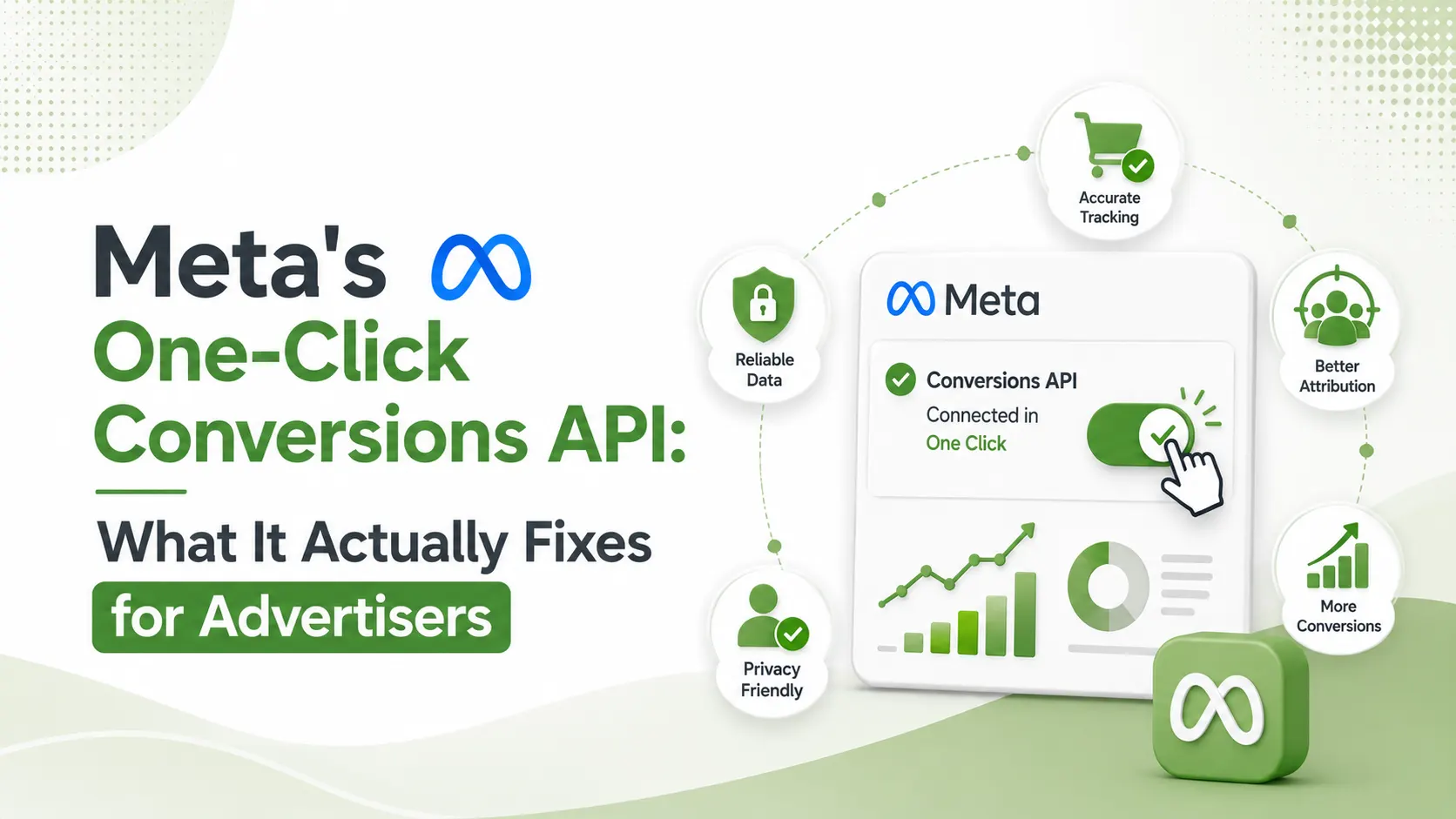
Meta launched a no-cost, one-click Conversions API setup on April 15, 2026, No developer or code required. Here's what it actually fixes for advertisers still running on Pixel-only tracking.
Table of Contents
ToggleMeta quietly removed one of the biggest technical barriers in advertising this year. On April 15, 2026, it launched a one-click Conversions API setup that needs no developer, no code, and no ongoing maintenance, alongside an AI-enhanced Pixel that keeps product data in sync automatically. For any advertiser who has put off implementing Conversions API because it felt like too much of a technical lift, this update changes the calculation entirely.
If you have been running Meta ads on Pixel data alone, this update is worth pausing for. Pixel-only accounts are reportedly missing a significant share of real conversions in 2026, thanks to ad blockers, iOS privacy restrictions, and Safari's cookie limits.
The Conversions API has always been the fix for this gap. Setting it up has just never been this simple, as Zenda's breakdown of the April rollout points out.
We covered a related shift toward automation in Google's updated Ads terms of service. Meta's move follows the same pattern: platforms are increasingly building the infrastructure advertisers used to have to build themselves.
lower average cost per result for advertisers using Conversions API for web events
of real conversions estimated to go untracked on Pixel-only setups in 2026
is now all it takes to activate Meta-enabled Conversions API from Events Manager
What Meta Actually Shipped on April 15
Meta announced two connected updates to its measurement stack on the same day. The first is an AI-enhanced Meta Pixel that automatically detects and syncs product and page details, such as names, prices, and availability, without any manual catalog work.
The second, and more significant change, is the Meta-enabled Conversions API. According to PPC Land's coverage of the rollout, this is a no-cost, one-click path to server-side tracking that Meta hosts and maintains entirely on its own infrastructure.
A separate report on the announcement confirmed the option is aimed specifically at advertisers with low event coverage or no existing setup.
Update Announced
Meta announces AI-enhanced Pixel and one-click Conversions API setup in one release.
Feature Rolls Out
The "Activate Conversions API" button becomes visible inside Events Manager for eligible advertisers.
AI Pixel Auto-Enabled
Meta begins auto-enabling AI Pixel Enhancements for eligible pixels unless advertisers opt out.
Wider Adoption
Advertisers with low event coverage or no prior CAPI setup continue adopting the one-click option.
Why Pixel-Only Tracking Keeps Losing Ground
The Meta Pixel runs entirely in the browser. That made sense in 2015, when the Pixel launched, but browsers have changed dramatically since then.
Ad blockers, iOS App Tracking Transparency, and Safari's Intelligent Tracking Prevention all interfere with browser-based tracking in different ways. According to one detailed 2026 Conversions API guide, Pixel-only accounts are systematically missing between 30% and 60% of their actual conversions as a result.
Pixel-Only Tracking
Pixel + Conversions API
What the One-Click Setup Actually Fixes
The technical concept behind Conversions API is not new. What changed is who can realistically access it.
Removes the Developer Bottleneck
A proper server-side CAPI integration traditionally required developer resources to build and maintain. The one-click option removes that requirement entirely, since Meta hosts the infrastructure itself.
Closes the Gap for Smaller Advertisers
As Jon Loomer noted in his analysis of the update, this has historically divided advertisers into those with engineering resources and those relying entirely on client-side tracking. The gap narrows significantly now.
Handles Deduplication Automatically
Meta's one-click setup inherits the standard event settings from the existing browser Pixel and automatically sets matching event IDs, so Pixel and server events do not get double-counted.
Requires No Ongoing Maintenance
Unlike a custom integration, which needs updates as your site or app changes, the Meta-hosted setup is maintained entirely on Meta's side going forward.
Leaves Existing Setups Untouched
Advertisers who already run a custom server-side integration or a partner-based CAPI setup through Shopify or Google Tag Manager are not affected and do not need to change anything.
Should You Use One-Click Setup or Something More Custom?
The right path depends on where your account currently stands. Tap through both scenarios below.
If you currently have low event coverage or no Conversions API implementation at all, the one-click setup is the clear starting point. It covers standard web conversions on typical platforms with no development work required, according to Affect Group's 2026 Pixel audit guide.
If you rely on offline events, custom event logic, or cross-channel attribution scenarios, a custom or partner-based integration through Shopify, WooCommerce, or a dedicated tag manager setup still offers more control than the one-click option currently provides.
Three Ways to Set Up Conversions API
| Method | Setup Effort | Best For |
|---|---|---|
| Meta-enabled one-click setup | Minutes, no code | Standard web conversions, no prior CAPI |
| Partner integration (Shopify, WooCommerce) | Low, platform-guided | Ecommerce sites on supported platforms |
| Custom server-side integration | High, developer required | Offline events, custom logic, complex funnels |
Weighing the Trade-Offs
What You Gain
What to Watch For
How to Activate One-Click Conversions API
Open Events Manager and select the Pixel connected to your ad account. On the Overview tab, look for the "Activate Conversions API" button, which Meta introduced as part of the April rollout.
Click it, connect your dataset, and Meta handles the server-side setup automatically. According to LeadsBridge's breakdown of the three CAPI setup methods, this is the simplest of the available paths, with no code and no ongoing maintenance required.
After activation, give it a few days and check your event match quality score in Events Manager. A rising match quality score is the clearest sign the server-side Conversions API connection is working correctly alongside your existing Pixel.
Most accounts see measurable improvement in Conversions API match quality within the first two to three weeks of activation, as Meta's system accumulates enough server-side events to fill in gaps left by browser-level blocking.
What This Means for Your Broader Ad Strategy
Better signal quality does not just improve reporting accuracy, it improves what Meta's algorithm can actually optimize toward. Segwise's analysis of the April updates points out that richer event data feeds directly into better creative-level intelligence and campaign decisions.
This is part of a wider pattern across paid platforms in 2026, where infrastructure that used to require custom engineering is increasingly handled by the platform itself. Meta's own coverage of the follow-up AI Pixel Enhancements rollout reinforces the same direction.
For more on adapting your broader account strategy to this shift, see our paid media strategy guide for 2026.
Why Event Match Quality Matters More Than Ever
Conversions API does not automatically guarantee great results just because it is active. The quality of the data you send still matters enormously.
Meta scores every dataset with an Event Match Quality rating, based on how well the customer information in each event matches a real Meta user.
Fields like email, phone, or browser identifiers all feed into this score. Higher match quality means Meta can attribute conversions more accurately and optimize campaigns more effectively.
According to the 2026 Conversions API guide referenced above, advertisers running one-click setup should still check their EMQ score periodically. A low score often points to missing customer information fields, not a problem with the Conversions API connection itself.
Improving match quality usually means passing more customer parameters with each event, such as a hashed email address alongside a phone number.
Relying on just one identifier tends to cap your score lower than necessary. Small improvements to the data you send can meaningfully raise your Conversions API match quality score over a few weeks.
Conversions API and Data Privacy Considerations
Sending more customer data to Meta through Conversions API raises fair privacy questions, and advertisers should not skip this step. Meta requires that all personally identifiable information sent through Conversions API be hashed before transmission, which is handled automatically in the one-click setup.
Advertisers operating in regions with strict consent requirements, such as the EU, still need a valid consent management setup feeding into their Conversions API implementation.
The one-click activation does not replace the need for proper consent banners and data processing agreements.
For a broader look at how automation and compliance intersect on ad platforms this year, see our coverage of Google's updated Ads terms, which covers a similar compliance shift on a different platform.
FAQs on Meta's One-Click Conversions API
Related Articles
What We Learn Today
Meta launched a free, one-click Conversions API setup on April 15, 2026, needing no code.
Pixel-only tracking can miss 30-60% of real conversions due to browser privacy restrictions.
Advertisers using Conversions API saw a 17.8% lower average cost per result.
Existing custom or partner-based CAPI setups are unaffected by this update.
The AI-enhanced Pixel auto-syncs product data without any manual catalog work.
Activation takes minutes inside Events Manager under the Pixel's Overview tab.
Related Posts
Previous Post
Next Post
Previous Post
Next Post
- Artificial Intelligence
- Content
- Core Web Vitals
- Development
- Digital Marketing
- Google Ads
- Google Search Console
- GTM
- HTML
- HTML CSS
- JavaScript
- Keyword Research
- Link Building
- Local SEO
- Meta Ads
- Mobile SEO
- Off-Page SEO
- On-Page SEO
- Paid Media
- Paid Media Analytics
- PHP
- PPC Strategy
- Python
- SEO
- SEO Basics
- SEO Tools
- Social
- Technical SEO