
Now Reading: Eligibility Era Marketing: How AI Is Reshaping Who Gets Recommended
-
01
Eligibility Era Marketing: How AI Is Reshaping Who Gets Recommended
Eligibility Era Marketing: How AI Is Reshaping Who Gets Recommended

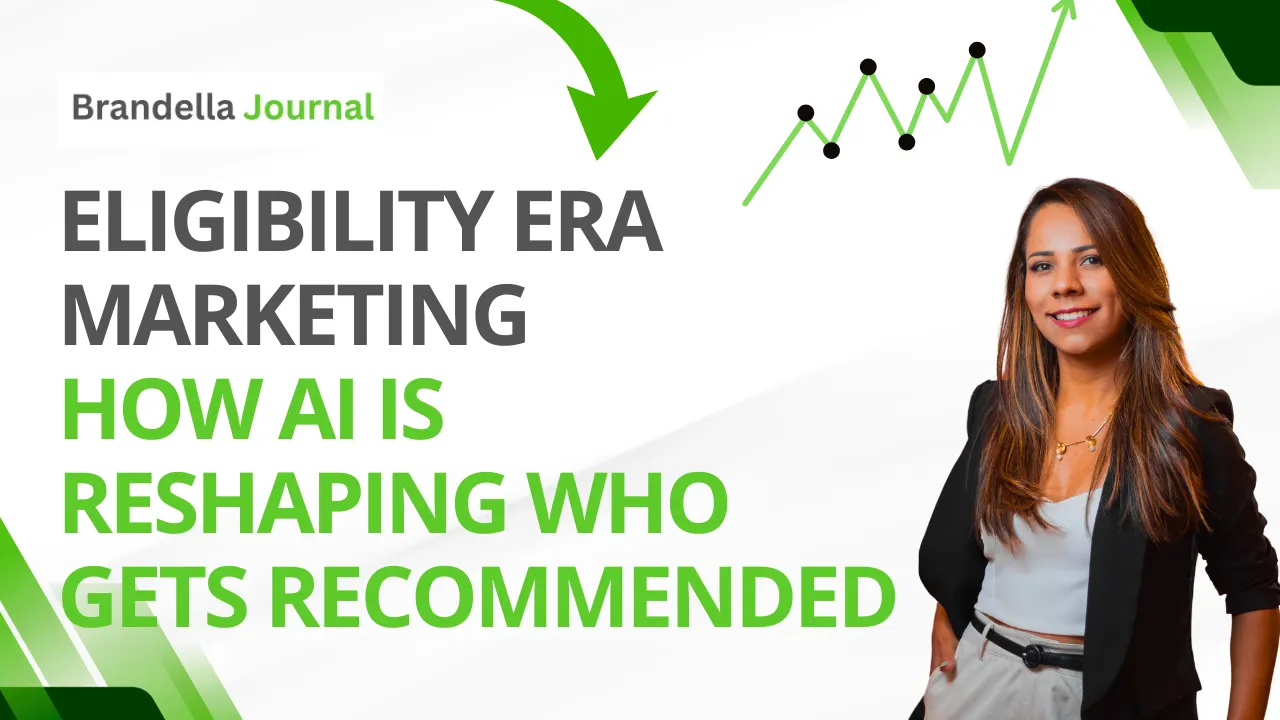
Eligibility Era Marketing is changing how brands get discovered. As AI becomes the decision layer in search and commerce, visibility is no longer enough — eligibility determines who gets recommended.
Eligibility Era Marketing: Introduction
Eligibility Era Marketing is redefining digital strategy in 2026.
For decades, marketing revolved around visibility. Rank on page one. Appear in feeds. Capture attention.
Now the architecture has changed.
AI systems are no longer just helping users discover options. They are helping determine decisions.
And that shift marks the beginning of Eligibility Era Marketing.
From Visibility to Eligibility
Traditional digital marketing was built on discovery systems.
-
Search engines ranked results.
-
Social media platforms curated feeds.
-
Marketers competed for impressions and clicks.
But with AI assistants like ChatGPT, Google Gemini, and Microsoft Copilot, the interface is changing.
Instead of browsing 10 links, users now ask:
“What’s the best B2B marketing automation platform for a 50-person firm?”
AI evaluates, synthesizes, and presents a shortlist.
That shortlist becomes the new SERP.
Eligibility Era Marketing means competing not just for attention but for inclusion.
What Big Platforms Are Actually Building
If you examine recent announcements from major platforms, the pattern becomes clear.
-
Google’s AI-powered Search and Commerce roadmap focuses on assistive, agent-driven experiences that reduce shopping friction.
-
Microsoft is embedding AI deeply across productivity and search ecosystems.
-
Meta is integrating AI into ad creative, targeting, and performance optimization.
These are not incremental changes.
This is a structural rebuild.
Eligibility Era Marketing recognizes that AI is becoming the decision layer not just the discovery layer.
AI Is Turning Search into a Decision Interface
Historically, marketing operated upstream of the decision.
-
A buyer searched.
-
Compared options.
-
Read reviews.
-
Visited multiple websites.
-
Finally chose a vendor.
Now AI compresses that workflow.
Instead of opening multiple tabs, users receive curated answers.
Research from SparkToro highlights how AI-generated recommendations vary dynamically, making traditional rank tracking less reliable.
This means position tracking is no longer the primary metric.
Eligibility Era Marketing shifts the core question to:
“Are we consistently included in AI-generated shortlists?”
The Eligibility Stack: What AI Systems Evaluate
Eligibility Era Marketing depends on understanding what AI systems actually lean on.
AI systems draw from signals across the web. These signals fall into five essential categories.
1. Structured Clarity
AI systems require clean, interpretable information.
This includes:
-
Clear product descriptions
-
Structured data markup
-
Transparent pricing
-
Organized site architecture
-
API-accessible catalogs
Google’s structured data guidelines available via Google Search Central emphasize machine-readable clarity.
If your data is inconsistent or vague, AI confidence drops.
Eligibility decreases.
2. Reputation and Independent Validation
AI systems prefer brands validated by third parties.
Important signals include:
-
Verified customer reviews
-
Industry publications
-
Case studies
-
Analyst mentions
-
Awards
For example, platforms like G2 and Capterra provide structured third-party validation that AI systems can reference.
Eligibility Era Marketing requires credibility beyond your own website.
3. Authority Across the Ecosystem
Consistent presence across trusted platforms builds authority.
This includes:
-
Media mentions
-
Podcast appearances
-
Expert roundups
-
Thought leadership articles
-
Industry forums
AI models detect patterns of presence.
Absence is also a signal.
Eligibility Era Marketing requires ecosystem-wide visibility.
4. Trust and Risk-Reduction Signals
AI recommendation systems implicitly manage risk.
Signals that improve trust include:
-
Security certifications
-
Compliance documentation
-
Transparent policies
-
Service level agreements
-
Customer support visibility
In B2B contexts especially, risk mitigation influences recommendation probability.
Eligibility Era Marketing prioritizes reliability.
5. Decision-Enabling Content
AI systems perform better when evaluating decision-grade content.
This includes:
-
“Best for X” comparisons
-
Implementation guides
-
Transparent feature comparisons
-
Pros and cons breakdowns
-
Use-case documentation
According to insights from McKinsey Digital, AI-driven decision compression is accelerating buyer journeys.
Content now serves two audiences:
-
Humans making decisions
-
AI systems assisting them
Eligibility Era Marketing demands clarity and depth.
Monetization Will Follow Decision Authority
Marketing historically monetized attention.
-
Search monetized intent.
-
Social monetized attention streams.
-
Marketplaces monetized transactions.
AI will monetize decision authority.
Sponsored placements will exist. However, paid visibility cannot override poor eligibility signals.
If AI deems a brand risky, low-authority, or unclear, paid placement loses effectiveness.
Eligibility Era Marketing means qualification precedes promotion.
This Shift Is As Big As Search and Social
Search required SEO mastery.
Social required algorithmic content mastery.
Eligibility Era Marketing requires structured credibility mastery.
Optimization is no longer about ranking higher.
It is about being selectable.
That changes everything.
What This Means for Marketing Strategy
Eligibility Era Marketing expands the marketing mandate.
It requires collaboration across:
-
Content strategy
-
Product marketing
-
Engineering
-
PR
-
Customer success
Eligibility is cross-functional.
Marketing teams must now ensure:
-
Clean data architecture
-
Authoritative presence
-
Trust signals
-
Review ecosystem strength
-
Decision-grade content
Eligibility Era Marketing blends technical, reputational, and strategic execution.
The New Mandate
AI will increasingly sit between buyers and decisions.
It will:
-
Compress discovery
-
Evaluate options
-
Weigh trade-offs
-
Trigger actions
Marketing does not disappear.
The leverage point moves.
Eligibility Era Marketing means becoming the obvious, safest, strongest recommendation — for both humans and machines.
A shortlist spot is no longer assumed.
It is earned.
Thanks for reading! If found useful please share/repost.