
- Home
- SEODiscover the latest updates from across the United States, including politics, culture, economy, and trending stories. Stay informed on the key events shaping the nation and the topics everyone’s talking about.
- Technical SEOLearn technical SEO concepts including crawling, indexing, XML sitemaps, robots.txt, canonical tags, site architecture, and website performance.
- Local SEOOptimize your business for local seo with Google Business Profile, local citations, reviews, maps, and location-based SEO.
- Mobile SEOImprove your website’s mobile seo performance with responsive design, mobile-first indexing, usability, and page speed optimization.
- On-Page SEOExplore on-page seo optimization techniques such as title tags, meta descriptions, headings, URLs, internal linking, and content optimization.
- Off-Page SEODiscover off-page SEO strategies such as backlinks, digital PR, brand mentions, outreach, and authority building.
- SEO ToolsExplore the best SEO tools for keyword research, technical audits, backlink analysis, rank tracking, and website optimization.
- Core Web VitalsLearn how to improve Core Web Vitals including LCP, INP, CLS, page speed, and overall user experience for better rankings.
- Keyword ResearchLearn how to find profitable keywords, analyze search intent, evaluate competition, and build effective keyword strategies.
- Link BuildingMaster ethical link building techniques, backlink analysis, outreach methods, guest posting, and authority growth strategies.
- Google Search ConsoleLearn how to use Google Search Console to monitor indexing, fix errors, analyze search performance, and improve SEO.
- SEO BasicsLearn the fundamentals of search engine optimization (SEO Basics), including how search engines work, SEO terminology, and beginner-friendly best practices.
- Paid Media
- Display AdvertisingLearn display advertising strategies, banner ads, audience targeting, remarketing, Google Display campaigns, and optimization techniques.
- Google AdsLearn Google Ads strategies, campaign setup, bidding, keywords, Performance Max, Search Ads, and optimization techniques.
- LinkedIn AdsLearn LinkedIn Ads strategies for B2B marketing, lead generation, audience targeting, campaign optimization, and paid social advertising.
- Meta AdsLearn Meta Ads strategies for Facebook and Instagram, including campaign setup, targeting, retargeting, and performance optimization.
- Paid Media AnalyticsLearn paid media analytics, including CPC, CTR, CPA, ROAS, conversion tracking, attribution, reporting, and campaign performance analysis.
- PPC StrategyLearn effective PPC strategies, campaign planning, bidding, keyword targeting, landing pages, conversion optimization, and more.
- ContentTransform your living spaces with inspiration, tips, and trends in interior design. From minimalist decor to bold statements, find ideas for every style and budget.
- Social
- Digital MarketingExplore stories and advice on living your best life. From personal growth to entertainment, dive into the latest in lifestyle trends and inspiration.
- Artificial IntelligenceStay informed about health and wellness with expert advice, fitness tips, and the latest medical breakthroughs. Your guide to a healthier and happier life.
- DevelopmentYou will find development related educational articles
- GTMLearn Google Tag Manager (GTM) with practical guides for tags, triggers, variables, tracking, conversions, and website analytics implementation.
- HTMLLearn HTML with simple tutorials, examples, tags, elements, attributes, and best practices for building modern web pages.
- HTML CSSLearn HTML CSS together with practical tutorials, examples, layouts, styling techniques, responsive design, and modern web development practices.
- HTML JSLearn HTML JS – JavaScript with practical tutorials and examples for adding interactivity, dynamic content, events, and functionality to web pages.
- JavaScriptExplore JavaScript tutorials, examples, concepts, and practical techniques for creating interactive and dynamic websites and web applications.
- PHPLearn PHP programming with practical tutorials, examples, functions, syntax, and web development techniques for beginners and developers.
- PythonLearn Python programming with practical tutorials, examples, syntax, functions, automation techniques, and useful programming concepts.
- Home
- SEODiscover the latest updates from across the United States, including politics, culture, economy, and trending stories. Stay informed on the key events shaping the nation and the topics everyone’s talking about.
- Technical SEOLearn technical SEO concepts including crawling, indexing, XML sitemaps, robots.txt, canonical tags, site architecture, and website performance.
- Local SEOOptimize your business for local seo with Google Business Profile, local citations, reviews, maps, and location-based SEO.
- Mobile SEOImprove your website’s mobile seo performance with responsive design, mobile-first indexing, usability, and page speed optimization.
- On-Page SEOExplore on-page seo optimization techniques such as title tags, meta descriptions, headings, URLs, internal linking, and content optimization.
- Off-Page SEODiscover off-page SEO strategies such as backlinks, digital PR, brand mentions, outreach, and authority building.
- SEO ToolsExplore the best SEO tools for keyword research, technical audits, backlink analysis, rank tracking, and website optimization.
- Core Web VitalsLearn how to improve Core Web Vitals including LCP, INP, CLS, page speed, and overall user experience for better rankings.
- Keyword ResearchLearn how to find profitable keywords, analyze search intent, evaluate competition, and build effective keyword strategies.
- Link BuildingMaster ethical link building techniques, backlink analysis, outreach methods, guest posting, and authority growth strategies.
- Google Search ConsoleLearn how to use Google Search Console to monitor indexing, fix errors, analyze search performance, and improve SEO.
- SEO BasicsLearn the fundamentals of search engine optimization (SEO Basics), including how search engines work, SEO terminology, and beginner-friendly best practices.
- Paid Media
- Display AdvertisingLearn display advertising strategies, banner ads, audience targeting, remarketing, Google Display campaigns, and optimization techniques.
- Google AdsLearn Google Ads strategies, campaign setup, bidding, keywords, Performance Max, Search Ads, and optimization techniques.
- LinkedIn AdsLearn LinkedIn Ads strategies for B2B marketing, lead generation, audience targeting, campaign optimization, and paid social advertising.
- Meta AdsLearn Meta Ads strategies for Facebook and Instagram, including campaign setup, targeting, retargeting, and performance optimization.
- Paid Media AnalyticsLearn paid media analytics, including CPC, CTR, CPA, ROAS, conversion tracking, attribution, reporting, and campaign performance analysis.
- PPC StrategyLearn effective PPC strategies, campaign planning, bidding, keyword targeting, landing pages, conversion optimization, and more.
- ContentTransform your living spaces with inspiration, tips, and trends in interior design. From minimalist decor to bold statements, find ideas for every style and budget.
- Social
- Digital MarketingExplore stories and advice on living your best life. From personal growth to entertainment, dive into the latest in lifestyle trends and inspiration.
- Artificial IntelligenceStay informed about health and wellness with expert advice, fitness tips, and the latest medical breakthroughs. Your guide to a healthier and happier life.
- DevelopmentYou will find development related educational articles
- GTMLearn Google Tag Manager (GTM) with practical guides for tags, triggers, variables, tracking, conversions, and website analytics implementation.
- HTMLLearn HTML with simple tutorials, examples, tags, elements, attributes, and best practices for building modern web pages.
- HTML CSSLearn HTML CSS together with practical tutorials, examples, layouts, styling techniques, responsive design, and modern web development practices.
- HTML JSLearn HTML JS – JavaScript with practical tutorials and examples for adding interactivity, dynamic content, events, and functionality to web pages.
- JavaScriptExplore JavaScript tutorials, examples, concepts, and practical techniques for creating interactive and dynamic websites and web applications.
- PHPLearn PHP programming with practical tutorials, examples, functions, syntax, and web development techniques for beginners and developers.
- PythonLearn Python programming with practical tutorials, examples, syntax, functions, automation techniques, and useful programming concepts.
Now Reading: ChatGPT Ads vs Google Search Ads: Should Marketing Leaders Invest in 2026?
-
01
ChatGPT Ads vs Google Search Ads: Should Marketing Leaders Invest in 2026?
- Home//
- SEO//Discover the latest updates from across the United States, including politics, culture, economy, and trending stories. Stay informed on the key events shaping the nation and the topics everyone’s talking about.
- Technical SEO//Learn technical SEO concepts including crawling, indexing, XML sitemaps, robots.txt, canonical tags, site architecture, and website performance.
- Local SEO//Optimize your business for local seo with Google Business Profile, local citations, reviews, maps, and location-based SEO.
- Mobile SEO//Improve your website’s mobile seo performance with responsive design, mobile-first indexing, usability, and page speed optimization.
- On-Page SEO//Explore on-page seo optimization techniques such as title tags, meta descriptions, headings, URLs, internal linking, and content optimization.
- Off-Page SEO//Discover off-page SEO strategies such as backlinks, digital PR, brand mentions, outreach, and authority building.
- SEO Tools//Explore the best SEO tools for keyword research, technical audits, backlink analysis, rank tracking, and website optimization.
- Core Web Vitals//Learn how to improve Core Web Vitals including LCP, INP, CLS, page speed, and overall user experience for better rankings.
- Keyword Research//Learn how to find profitable keywords, analyze search intent, evaluate competition, and build effective keyword strategies.
- Link Building//Master ethical link building techniques, backlink analysis, outreach methods, guest posting, and authority growth strategies.
- Google Search Console//Learn how to use Google Search Console to monitor indexing, fix errors, analyze search performance, and improve SEO.
- SEO Basics//Learn the fundamentals of search engine optimization (SEO Basics), including how search engines work, SEO terminology, and beginner-friendly best practices.
- Paid Media//
- Display Advertising//Learn display advertising strategies, banner ads, audience targeting, remarketing, Google Display campaigns, and optimization techniques.
- Google Ads//Learn Google Ads strategies, campaign setup, bidding, keywords, Performance Max, Search Ads, and optimization techniques.
- LinkedIn Ads//Learn LinkedIn Ads strategies for B2B marketing, lead generation, audience targeting, campaign optimization, and paid social advertising.
- Meta Ads//Learn Meta Ads strategies for Facebook and Instagram, including campaign setup, targeting, retargeting, and performance optimization.
- Paid Media Analytics//Learn paid media analytics, including CPC, CTR, CPA, ROAS, conversion tracking, attribution, reporting, and campaign performance analysis.
- PPC Strategy//Learn effective PPC strategies, campaign planning, bidding, keyword targeting, landing pages, conversion optimization, and more.
- Content//Transform your living spaces with inspiration, tips, and trends in interior design. From minimalist decor to bold statements, find ideas for every style and budget.
- Social//
- Digital Marketing//Explore stories and advice on living your best life. From personal growth to entertainment, dive into the latest in lifestyle trends and inspiration.
- Artificial Intelligence//Stay informed about health and wellness with expert advice, fitness tips, and the latest medical breakthroughs. Your guide to a healthier and happier life.
- Development//You will find development related educational articles
- GTM//Learn Google Tag Manager (GTM) with practical guides for tags, triggers, variables, tracking, conversions, and website analytics implementation.
- HTML//Learn HTML with simple tutorials, examples, tags, elements, attributes, and best practices for building modern web pages.
- HTML CSS//Learn HTML CSS together with practical tutorials, examples, layouts, styling techniques, responsive design, and modern web development practices.
- HTML JS//Learn HTML JS – JavaScript with practical tutorials and examples for adding interactivity, dynamic content, events, and functionality to web pages.
- JavaScript//Explore JavaScript tutorials, examples, concepts, and practical techniques for creating interactive and dynamic websites and web applications.
- PHP//Learn PHP programming with practical tutorials, examples, functions, syntax, and web development techniques for beginners and developers.
- Python//Learn Python programming with practical tutorials, examples, syntax, functions, automation techniques, and useful programming concepts.
- Home
- Paid Media
- PPC Strategy
- ChatGPT Ads vs Google Search Ads: Should Marketing Leaders Invest in 2026?
ChatGPT Ads vs Google Search Ads: Should Marketing Leaders Invest in 2026?

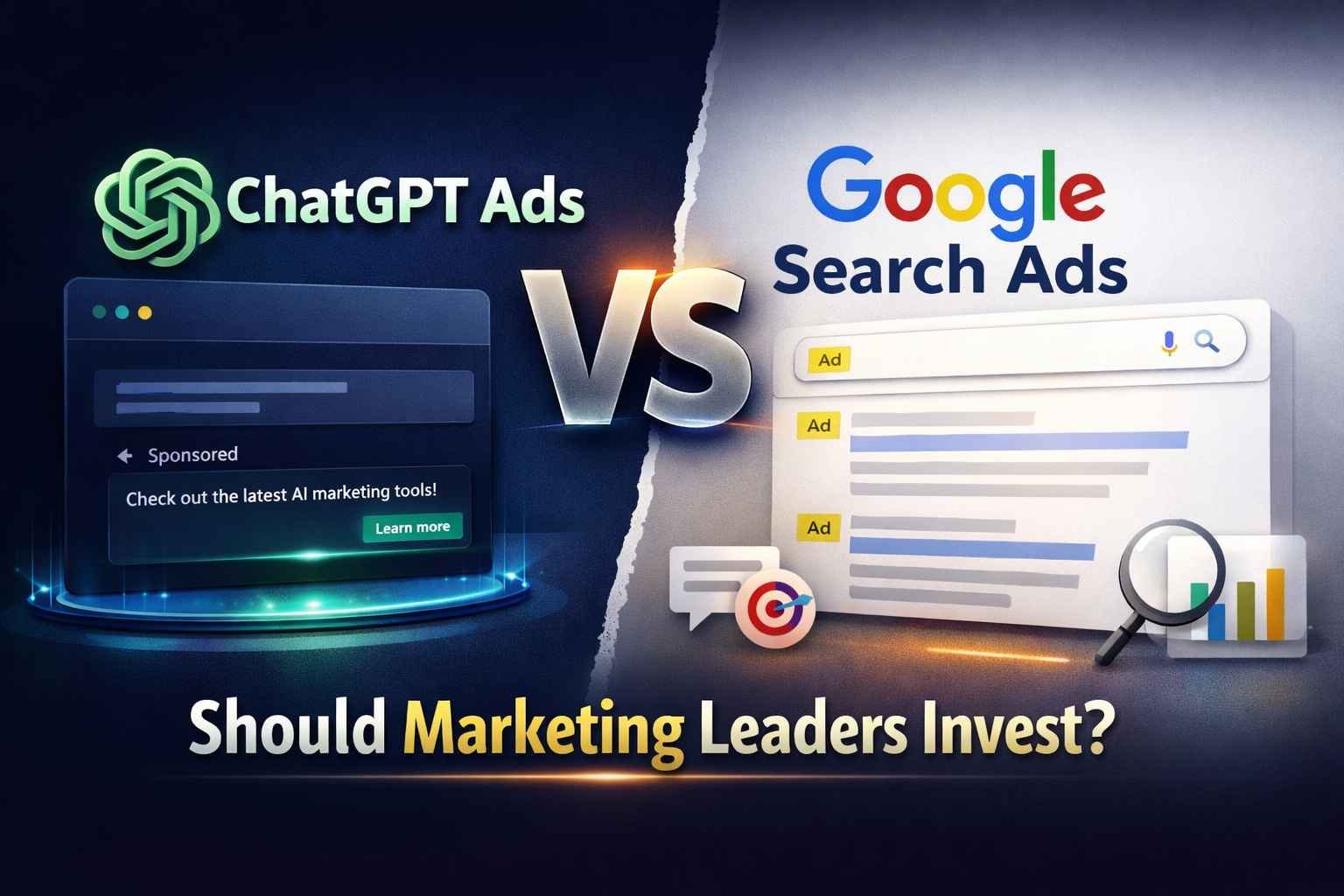
ChatGPT ads are launching soon, but should marketing leaders invest? This article compares ChatGPT ads with Google Search ads, looking at reach, targeting, user behavior, and strategy to help you decide where to spend your budget in 2026.
Table of Contents
ToggleChatGPT Ads vs Google Search Ads: Should Marketing Leaders Invest?
Let me ask you something.
If you are a marketing leader today, should you start paying attention to ChatGPT ads?
The answer is not simple. But it is very interesting.
ChatGPT has announced that it will soon offer advertising opportunities inside the platform. Naturally, marketers are curious. Some are excited. Some are confused. And some are wondering whether this is just another shiny object.
So let us talk like we do in a client meeting.
First, What Are ChatGPT Ads?
ChatGPT ads will appear at the bottom of chatbot answers.
They will be clearly labeled as “Sponsored.” That part is important.
But here is something you must understand clearly: ChatGPT ads will only be shown to Free and Go users.
If someone is using Plus, Pro, Business, or Enterprise plans, they will not see ChatGPT ads.
Users under 18 will also not see ads.
That immediately reduces the available ad audience.
Now compare that with Google.
How Google Search Ads Work
Google Search ads appear at the top of search results.
People are used to seeing ads there. They expect links. They expect options. They expect redirection to websites.
Google does not force ads where they don’t make sense. But when a keyword is commercial, ads show up.
Google also provides data.
You can see keyword volume. You can see competitiveness. You can estimate cost. You can calculate expected CTR and conversion rates.
That transparency gives marketing leaders control.
Now let’s compare the two directly.
Placement Difference
Google Search ads appear at the top of most relevant searches.
ChatGPT ads appear at the bottom of an answer.
That may sound like a small detail. But it is not.
In Google, users are searching with the intention to explore options.
In ChatGPT, users are asking for resolution.
They want answers inside the conversation. Not necessarily a link.
That changes behavior completely.
So the performance of ChatGPT ads may not follow traditional search patterns.
Audience Reach Comparison
Let’s talk numbers.
Google:
Around 5 billion users globally.
Around 5 trillion searches per year.
Average CTR: about 3.17%.
Average conversion rate: around 7.5%.
That is a massive ecosystem.
Now ChatGPT:
Around 803 to 858 million unique users.
Around 5.1 to 5.5 billion visits per month.
Impressive growth. Very impressive.
But remember: ChatGPT ads are not shown to all users.
Only Free and Go tiers.
So your actual reachable audience for ChatGPT ads is smaller than the total user base.
That is a key strategic consideration.
User Expectation Is Very Different
This is where most marketers are not thinking deeply enough.
Google is built for links. ChatGPT is built for answers.
When someone searches on Google, they are ready to click.
When someone asks ChatGPT, they often want the final solution inside the conversation.
So the question is:
Will ChatGPT ads feel helpful or disruptive?
We don’t know yet. But user behavior matters more than platform hype.
Targeting and Data: The Big Question
Now let’s talk about the most important part.
Targeting.
Google gives you keyword data.
You can analyze search volume.
You can analyze competition.
You can refine audience segments.
You can run A/B tests.
You can track conversions clearly.
With ChatGPT ads, things are less clear right now.
We know that conversations are private.
Advertisers cannot access personal conversation data.
Ad placement is described as “based on your current conversation.”
But how exactly will businesses influence targeting?
Will there be keyword bidding?
Will there be intent categories?
Will there be audience layers?
At this moment, we don’t have full clarity.
For marketing leaders, that uncertainty is important.
Without strong targeting data, it becomes difficult to scale confidently.
Is There a First-Mover Advantage?
Yes, possibly.
Whenever a new ad platform launches, early adopters sometimes benefit.
Lower competition.
Lower cost.
Higher visibility.
So testing ChatGPT ads early could give you insights before your competitors move in.
But testing is different from shifting budget heavily.
Smart marketing leaders test with controlled budgets.
They measure.
They compare.
They optimize.
They don’t gamble.
Is There Enough ICP Volume?
Another serious question.
Does your Ideal Customer Profile (ICP) actually spend time on the Free or Go tier?
If you are targeting consumers, especially younger audiences, ChatGPT ads may work well.
But if you are targeting decision-makers, CXOs, enterprise buyers many of them are already paying for Plus, Team, or Business plans.
Those users will not see ChatGPT ads.
So B2B marketers must think carefully before allocating significant budget.
ChatGPT ads might be more suitable initially for consumer brands.
Will ChatGPT Ads Perform Better Than Google?
Right now, nobody knows.
Google has decades of behavioral data.
Proven CTR benchmarks.
Proven conversion frameworks.
ChatGPT ads are new.
We don’t yet know:
What the CTR will be.
What the conversion rate will be.
What the cost per click will be.
What the ad format flexibility will look like.
Until real campaign data is available, any strong conclusion would be guesswork.
Organic vs Paid on ChatGPT
Now here is something very important.
Should you pay for ChatGPT ads?
Or should you focus on showing up organically in AI answers?
This is similar to early SEO days.
If your brand appears naturally in ChatGPT responses, that may build deeper trust than a sponsored message.
Organic AI visibility might become the new SEO battlefield. So marketing leaders must think in two directions:
Testing ChatGPT ads strategically.
Investing in organic AI discoverability.
The second one might offer long-term advantage.
Our Honest View as a Marketing Strategist
If I were advising a client today, I would say this: Don’t ignore ChatGPT ads.
But don’t overreact either.
Allocate a small experimental budget.
Track performance carefully.
Compare against Google Search ads.
Study user behavior.
And most importantly, build strong organic presence.
Because in AI-driven environments, credibility matters more than interruption.
Takeaway:
ChatGPT ads are not just another ad format.
They represent a shift in how advertising fits inside conversations.
Google ads extend search behavior. ChatGPT ads interrupt or complement AI answers.
That difference is massive.
For consumer brands, ChatGPT ads may offer exciting early opportunities.
For B2B brands, especially targeting enterprise buyers, caution is advised.
As marketing leaders, our job is not to chase trends.
Our job is to test intelligently, measure honestly, and invest strategically.
So yes — pay attention to ChatGPT ads.
But make decisions with data, not excitement.
The next 12 months will tell us whether ChatGPT ads become a major advertising channel or a niche experiment.
Until then, stay curious. Stay analytical. And don’t stop doing the organic work.
Previous Post
Next Post

- Artificial Intelligence
- Content
- Core Web Vitals
- Development
- Digital Marketing
- Display Advertising
- Google Ads
- Google Search Console
- GTM
- HTML
- HTML CSS
- JavaScript
- Keyword Research
- Link Building
- LinkedIn Ads
- Local SEO
- Meta Ads
- Mobile SEO
- Off-Page SEO
- On-Page SEO
- Paid Media
- Paid Media Analytics
- PHP
- PPC Strategy
- Python
- SEO
- SEO Basics
- SEO Tools
- Social
- Technical SEO